Generated virtual world experiment
John’s World
I found a strangely durable pocket of synthetic suburbia inside an image model. Then I built a harness to drive it until it started breaking in interesting ways.
Read this part first
Every image here is generated. John is not a real person, and this is not a documentary record of a real neighborhood. It is a public lab notebook for continuity, object tracking, world state, and the domestic grammar that keeps emerging from the model.
Part of Virtual World Corner
John’s World is the anchor project inside the larger Virtual World Corner: EQTS, Hermes world-builder harnesses, and simulation/state experiments.
Start here
The basic accident
The first article explains how a normal image-model test wandered into an HOA-flavored simulated world, complete with a fictional man, a phone, errands, doors, keys, vehicles, and the usual evidence that reality is held together by a lot of boring state.
OpenAI’s gpt-image-2 Has a Secret World
The discovery note, rewritten for the site: how “step forward 20 steps” became a generated suburban world with an emergent character named John.
Read the overview JW1925 field noteVivienne’s Movie Flashback Interrupts Reality
A luggage-room scene flips into a movie memory, returns like a light switch, and leaves Vivienne pausing on the stairs.
Read the note JW1925 stillsThree Stills From Vivienne’s Silent-Film World
Three frames return to the 1920s actress and preserve another look at the generated world around her.
View the stills Product salesThe Power of John’s World: Product Sales
A mirrored Substack article about using John’s World as a synthetic product-demo engine for a fictional coffee pot.
Read the article 1995 branchJohn’s World 1995
A first-party AdvisoryHour copy about Danny, a SNES-like console, mall-era atmosphere, and the button-press problem in generated worlds.
Read the article CrossoverJohn’s World: When Universes Collide
A first-party Substack mirror about Danny’s 1995 branch colliding with Vivienne’s 1925 silent-film world through generated video.
Read the article 1977 MicroverseJohn’s World: New 1977 Microverse
A first-party AdvisoryHour copy about returning to car coherence, audio-first world construction, and the palimpsest lacuna inside generated universes.
Read the article JW1925Did She Get the Part?
A mirrored Substack post about Vivienne, a generated silent-film actress, and the shift from walking around worlds to observing characters living in them.
Read the post Field noteJohn’s World Has an Unexpected Perk
The short Substack note that teed up John’s World as a synthetic product-demo engine before the coffee-maker article.
Read the note Field noteAn Idea Working Unreasonably Well
A short AdvisoryHour note on a John’s World workflow win, with Kira Commentary on scene handles, props, mirrors, and continuity probes.
Read the field note Field noteTinkering On—or In—John’s World?
A short AdvisoryHour note on a John’s World video probe, with Kira Commentary on the inside/outside boundary of generated-world debugging.
Read the field note Field noteCharacter, Timescale Switching
A short AdvisoryHour note on a generated kitchen-to-door movement sequence and why timescale jumps expose the world-state ledger problem.
Read the field note Field noteAbout to Set John’s World Loose
A short AdvisoryHour note announcing an epic John’s World run, with a local generated-video preview frame and Kira Commentary on long-run state tests.
Read the field note Field noteHad This Great Idea for John’s World
A short AdvisoryHour note on a staged-room idea, with Kira Commentary on set boundaries, production layers, and state probes.
Read the field note Field noteJohn’s World 1986 Stability
A short AdvisoryHour note on more car variety and multi-horizon stability in the 1986 generated-driving branch.
Read the field note Field noteExpanding the Sensorshell Video World
A short note on generated video worlds as a glimpse of artists brushing whole worlds and universes into being.
Read the noteFailure modes
What broke when the harness kept pushing.
These are not raw logs. They are short field essays about the points where a generated world stays coherent enough to tempt you, then reveals the accounting problem underneath.
Walking Into the Night
Run 00John completes the first task chain, then keeps walking down a wet suburban sidewalk because the system needs a next beat.
The Kitchen Loop
Run 01Keys, doors, and domestic preconditions become a tiny maze where the harness keeps asking whether the house is really secure.
Truckception
Runs 02-03The vehicle registry says one thing, the rendered world says another, and suddenly John’s truck is having an identity crisis.
Grocery Shopping Is Hard
Runs 04-05A boring errand turns into a stress test for objects, baskets, parking lots, stores, and task completion.
Missing Transitions
Runs 05-07The system skips the expensive middle: driving, entering, shopping, returning, and all the small state updates humans barely notice.
Problems fixed
The repair log after the weird parts got names.
The early essays document what broke. This mini-series follows the engineering repairs that moved John’s World from image-led continuity toward explicit state, maps, registries, and deterministic simulation.
The Picture Stopped Being the Database
EngineRendered frames became audit artifacts instead of the authority for time, location, phone state, vehicles, objects, and events.
John Needed a Map
SpatialRooms, roads, doors, stores, guardrails, and route segments became inspectable geography instead of implied scene text.
The Truck Got a Registry
VehiclesVehicle identity, route state, parking, carrier logic, and exit phases moved into durable records with tests behind them.
Names Became Records
CharactersGenerated contacts stopped being spouse-shaped vibes and became character IDs, manifests, relationship state, and presence rules.
Character persistence
Generated people need ledgers, not vibes.
The later runs produced spouse-name drift, persistent reference portraits, visit rules, relationship state, and enough duplicate household contacts to make the harness admit that names are not memory.
The Spouse Had Three Names
Identity DriftEmily Carter, Emily Harper, Emily Miller, Lisa Miller, and Sarah Carter are evidence that generated names need stable IDs.
Reference Images Are Not Memory
ReferencesGenerated portraits help preserve appearance, but visit rules and manifests decide whether a character belongs in the frame.
Social State Is Not Story
Social StateRelationship status, conversation style, and allowed locations are harness state, not evidence of real emotion or real people.
Running Some Tests in John’s World
Field NoteA May 10 field note on multiple generated characters sharing the same complex location, with six localized generated frames.
About Time to Write on the Newest Build
Field NoteAn Apr 2026 AdvisoryHour note on the newest portal-like John’s World build, where OpenClaw and Hermes agent activity becomes visible as a living-room multiverse.
The Virtual World in My Kitchen
Field NoteA May 14 John’s World note on the growing episode catalog, five characters with arcs, and the household delight of a pocket universe in the kitchen.
The Virtual World Running in My Kitchen Continues to Expand
Field NoteA May 30 AdvisoryHour note on the kitchen-world continuing to expand as model capabilities and the John’s World harness improve.
John’s World: Multi-Hour Simulated Run
Long RunAn eight-hour harness run where a generated character goes shopping, carries groceries home, takes a break, and exposes new world-engine failure modes.
Field Note: Upgrade Weekend
Field NoteA short AdvisoryHour note and character reference sheet on John becoming a more durable generated-world asset.
Field Note: A Trip to 1986
Field NoteA Substack note and Kira Commentary on using a late-night 1986 NYC cafe prompt as a retro branch for John’s World continuity tests.
Archived Substack batch
Recent John’s World field articles.
These migrated AdvisoryHour pieces extend the John’s World shelf with local Jetson loops, 1986 branch notes, video-model comparisons, West World experiments, toggles, vehicles, and long-walk observations.
John's World: 1986
Source archiveScreen captures from the 1986 video tests show the setting before it moves.
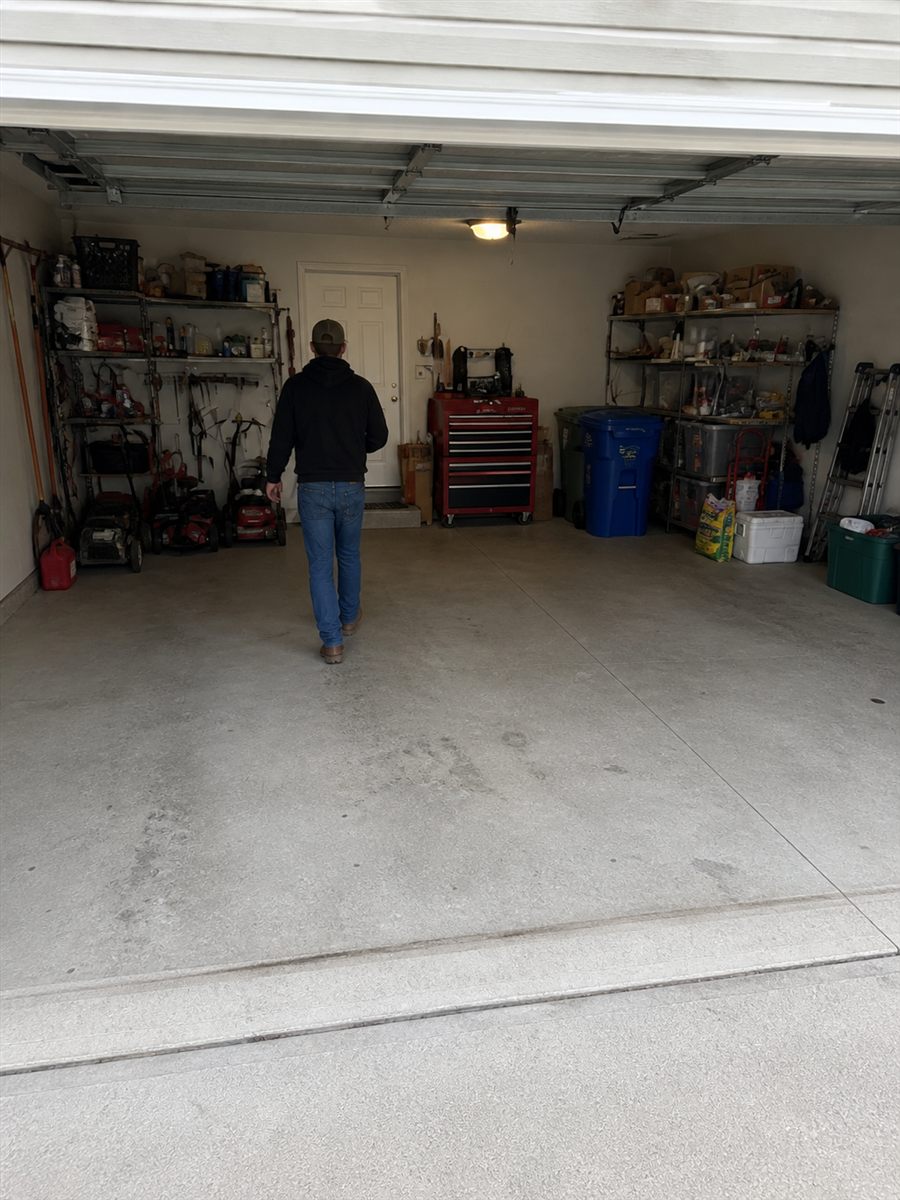
GPT-image-2 has a secret world
Source archiveA generated garage leads into an unexpected suburban branch of John's World.
John’s World: Jetson Edition
Field ArticleA local-AI experiment that turns a Jetson, simulated IRC chat, lightweight personas, and tool use into a slow but lively world loop.
Testpage of the Episodic Solve
Field NoteA short AdvisoryHour note preserving two generated world-engine test frames and the "watchable enough" observation behind the episodic solve.
Vivienne's Stage
Field ArticleA June 2026 AdvisoryHour post on the JW1925 silent-film-era lead Vivienne, with localized generated media, video preview handling, and early audio support.
JW1925: A dazzling display of cinema
Field ArticleA June 2026 AdvisoryHour post on pushing John’s World into a silent-film-era branch, with localized generated frames and video.
John's World: Google Omni vs Kling
ArchiveArchived AdvisoryHour article with localized media and source provenance preserved.
John's 1986 World: Vehicles
ArchiveArchived AdvisoryHour article with localized media and source provenance preserved.
John's World: Liminal House of Horror
ArchiveArchived AdvisoryHour article with localized media and source provenance preserved.
John's World: 1986, in motion
ArchiveArchived AdvisoryHour article with localized media and source provenance preserved.
John's World: Toggles and Such
ArchiveArchived AdvisoryHour article with localized media and source provenance preserved.
John's World: West World 0.1 is Here
ArchiveArchived AdvisoryHour article with localized media and source provenance preserved.
John's World: The Long Walk
ArchiveArchived AdvisoryHour article with localized media and source provenance preserved.
Kitchen World: Making Space
Field noteA small continuity record from the world’s expansion pass, preserved with its original public media.
Kitchen World Storyboard Sequence
Field noteA storyboard checkpoint that makes the episodic-world thread inspectable.
Nobot Joins Kitchen World
Field noteA character and world-state observation rather than a disconnected image post.
John’s World: 1977
Field noteAn earlier branch note retained as evidence of the project’s historical and visual range.
Disclosure
All character records, portraits, names, messages, and relationships in this section are generated artifacts. They are useful for studying continuity and state management because they are unstable, not because they describe real people.