Human performance · Épée
Fencing
Physical chess at full speed. Fencing is where I practice the same discipline I preach in engineering — reading a system under pressure, committing to a decision with incomplete information, and living with the touch light either way.
Medals
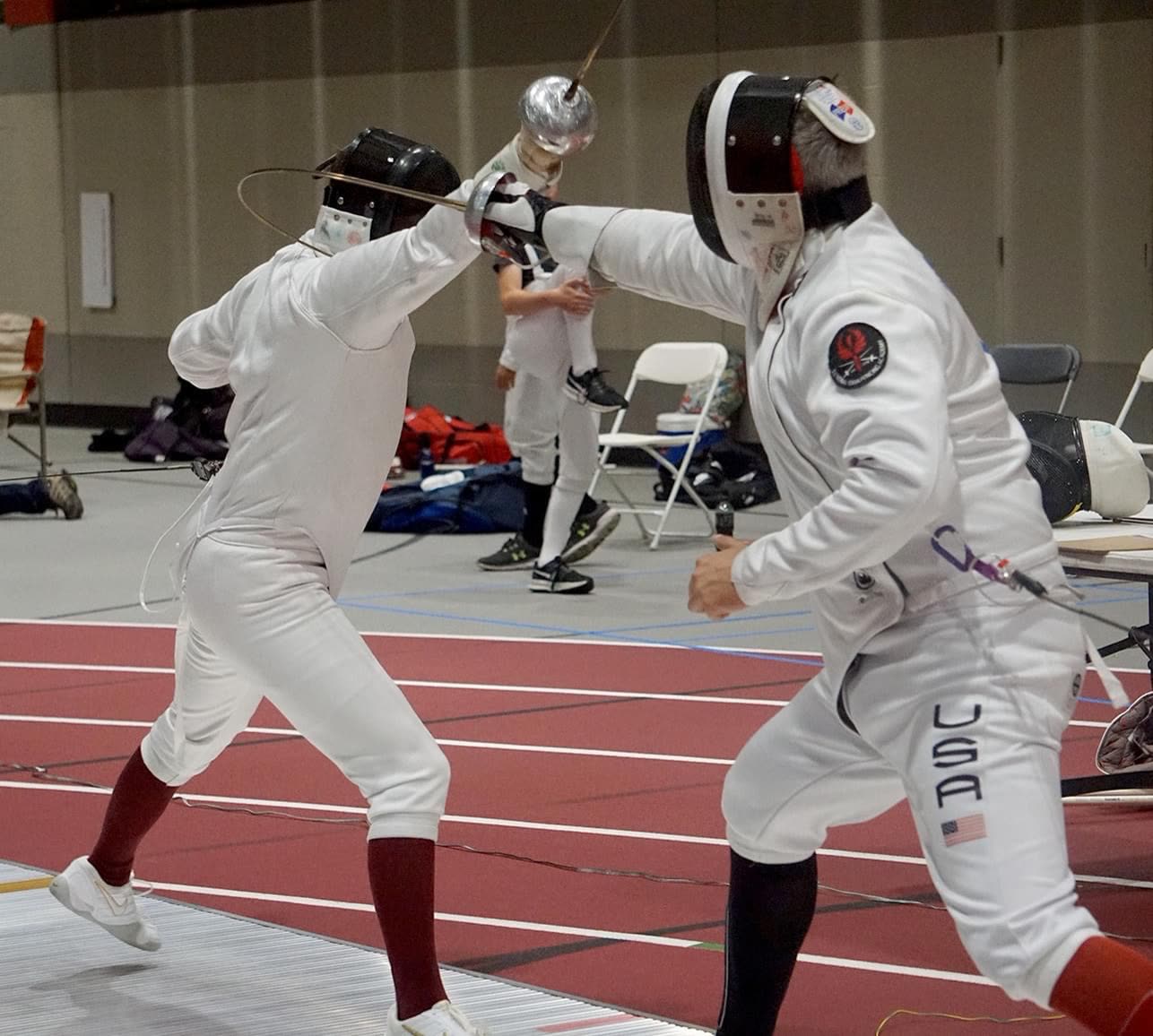
Competing in épée at the Iowa Games, Iowa's statewide amateur athletics festival presented by Grinnell Mutual.
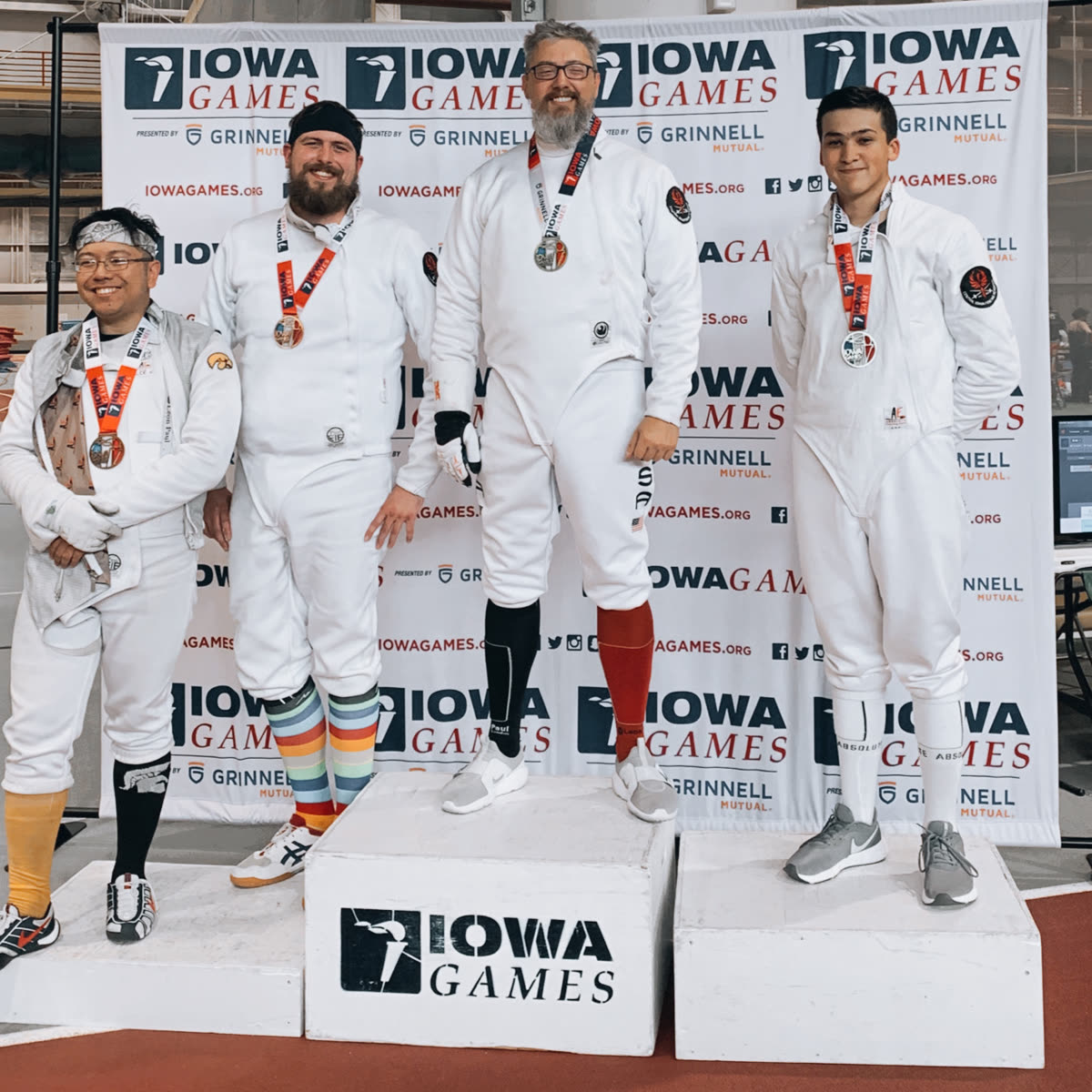
🥇 Gold — Iowa Games
Top of the podium in épée.
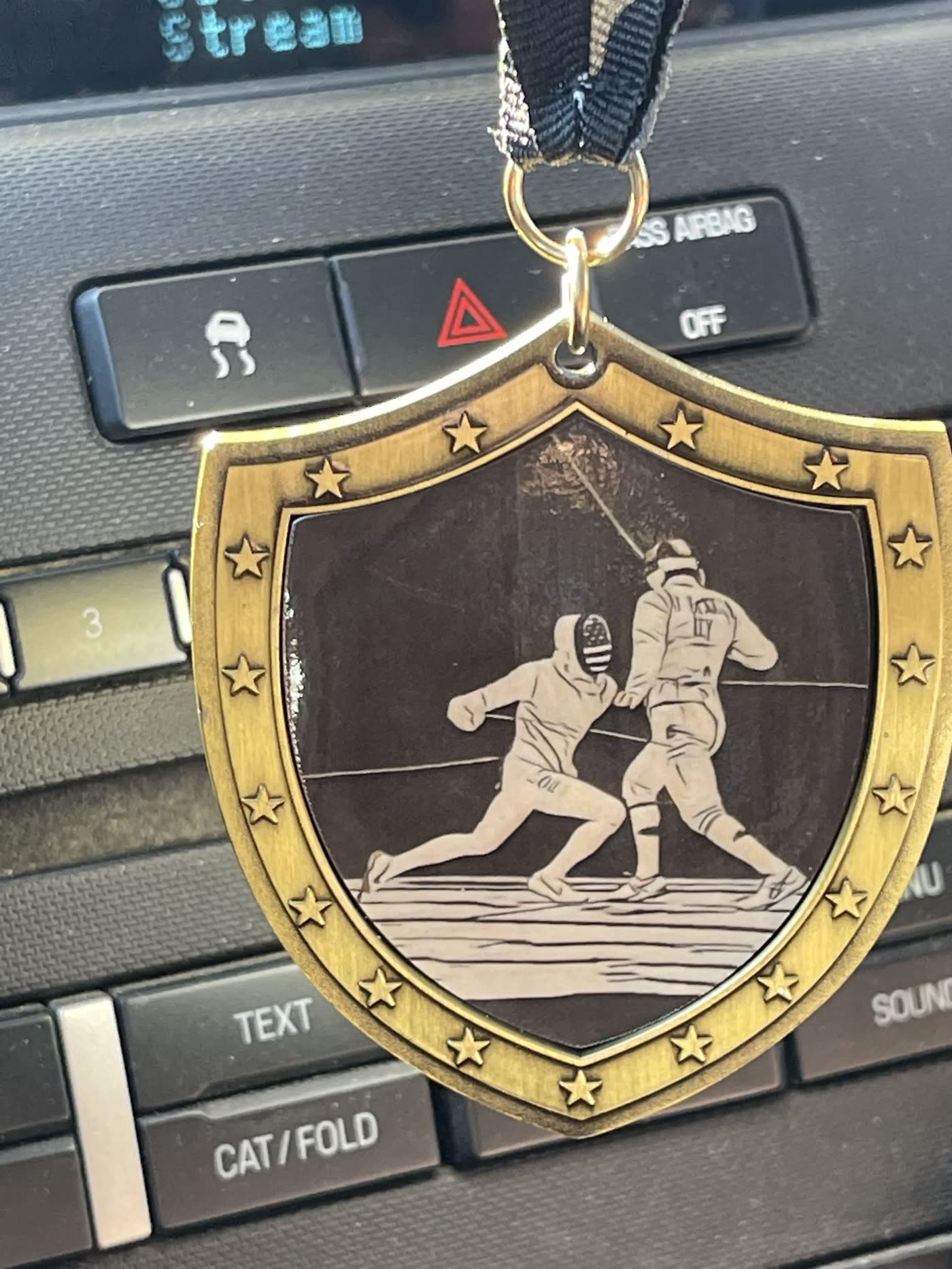
The hardware
Shield, stars, and two fencers mid-touch.
🥈 Silver — Iowa Games
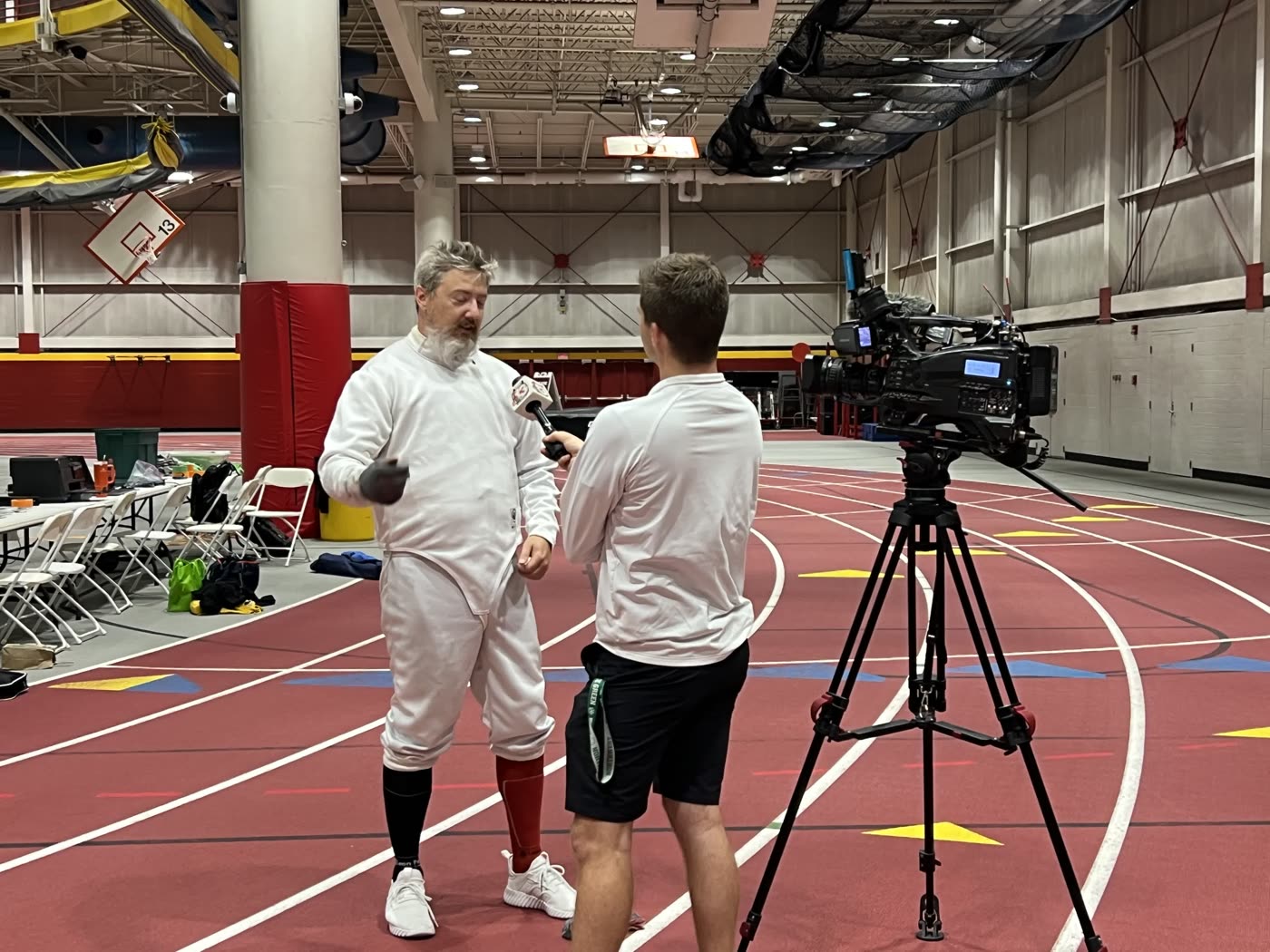
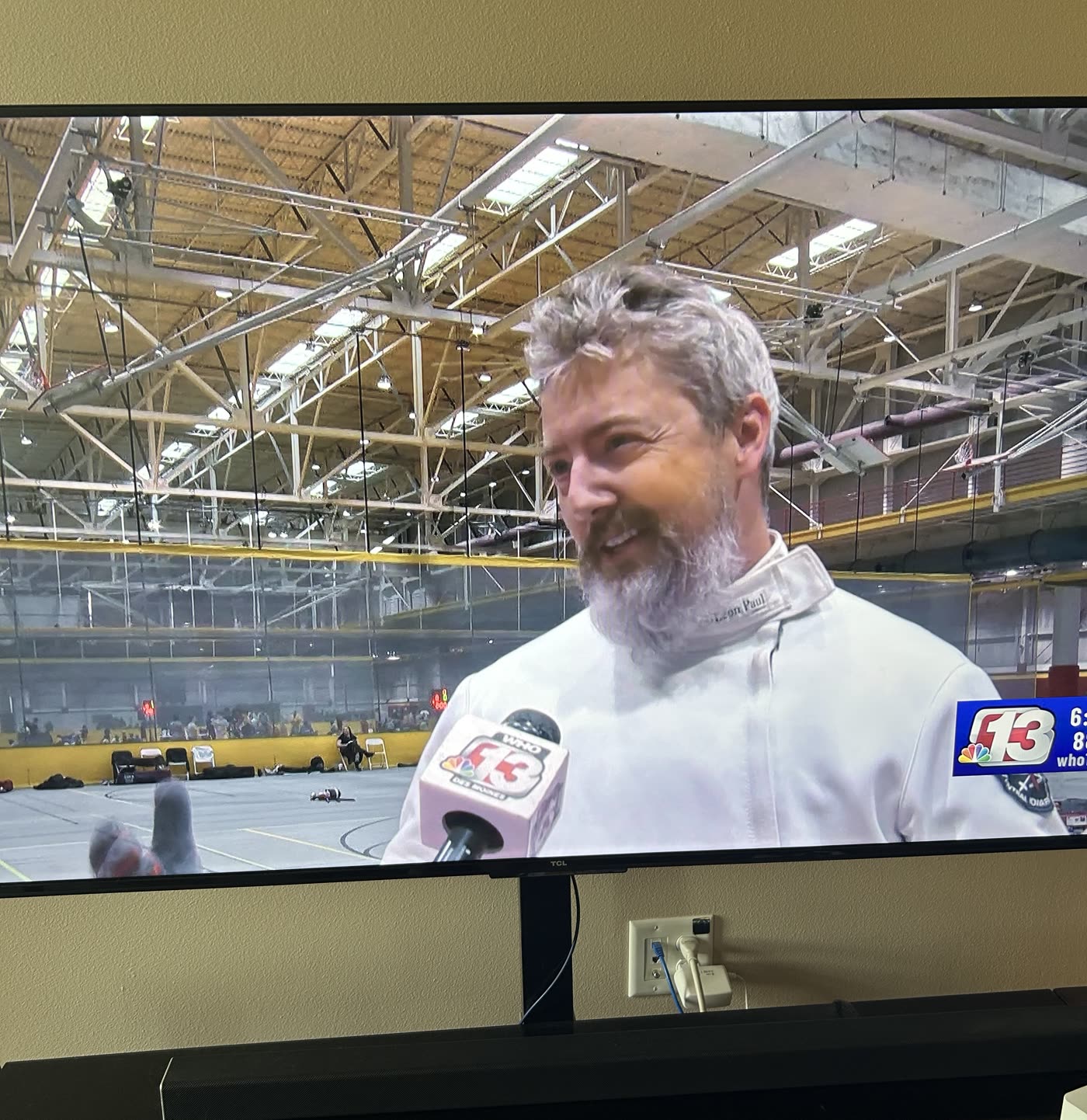
Second-place finish, and a turn in front of the cameras: interviewed in WHO13's coverage of the Games and their 10,000 participants. Read the WHO13 story.

On camera
WHO13 Des Moines covered the 2025 Summer Iowa Games and pulled me off the strip for an interview — still in whites, glove half off.
On the strip
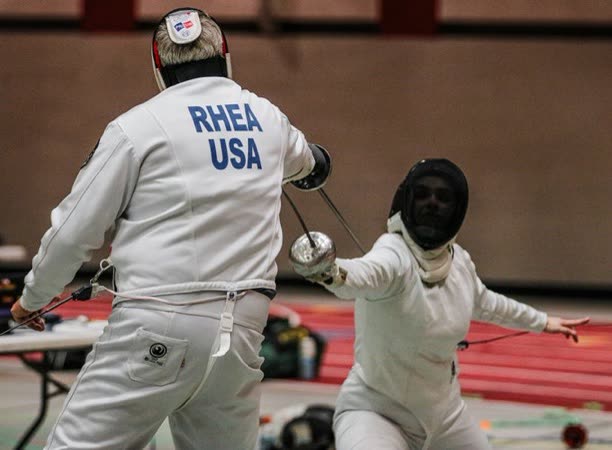
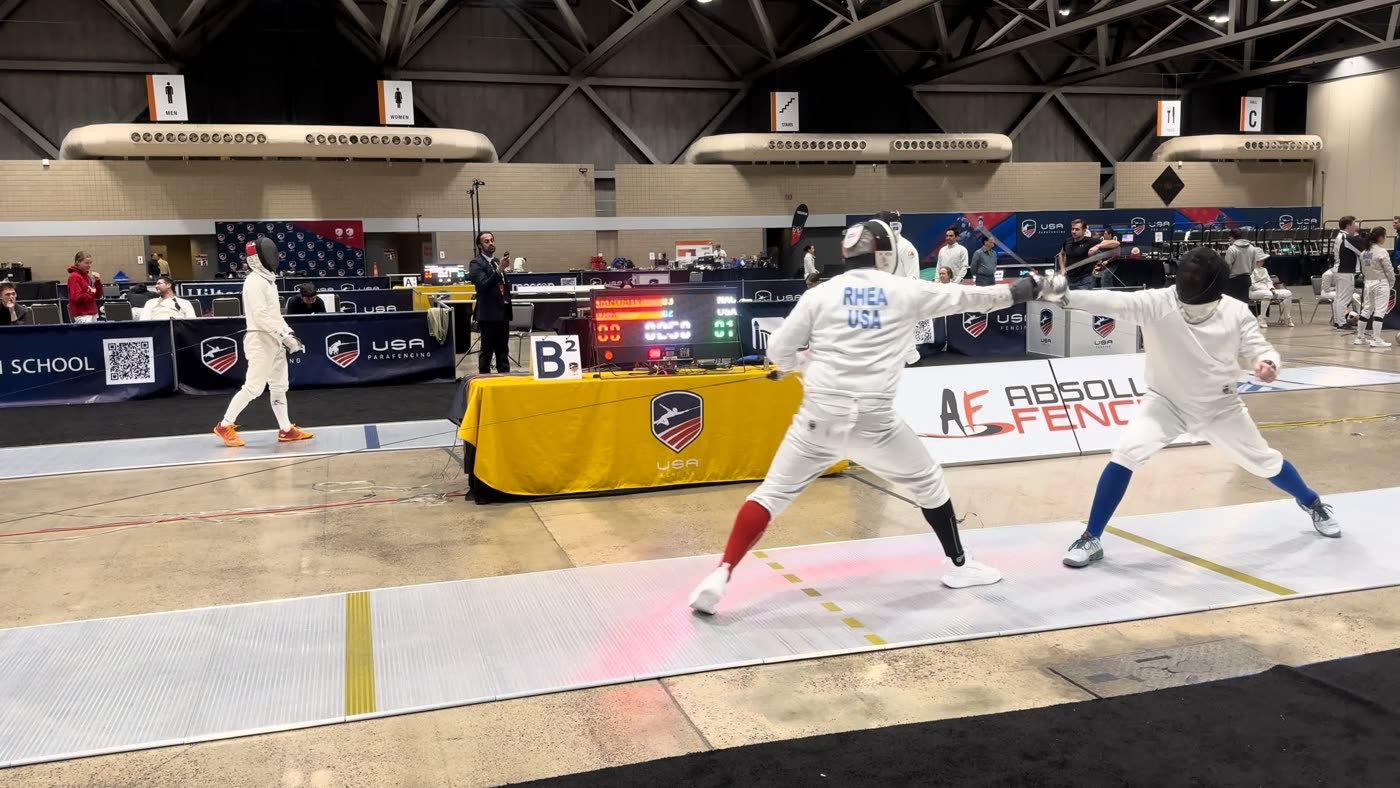
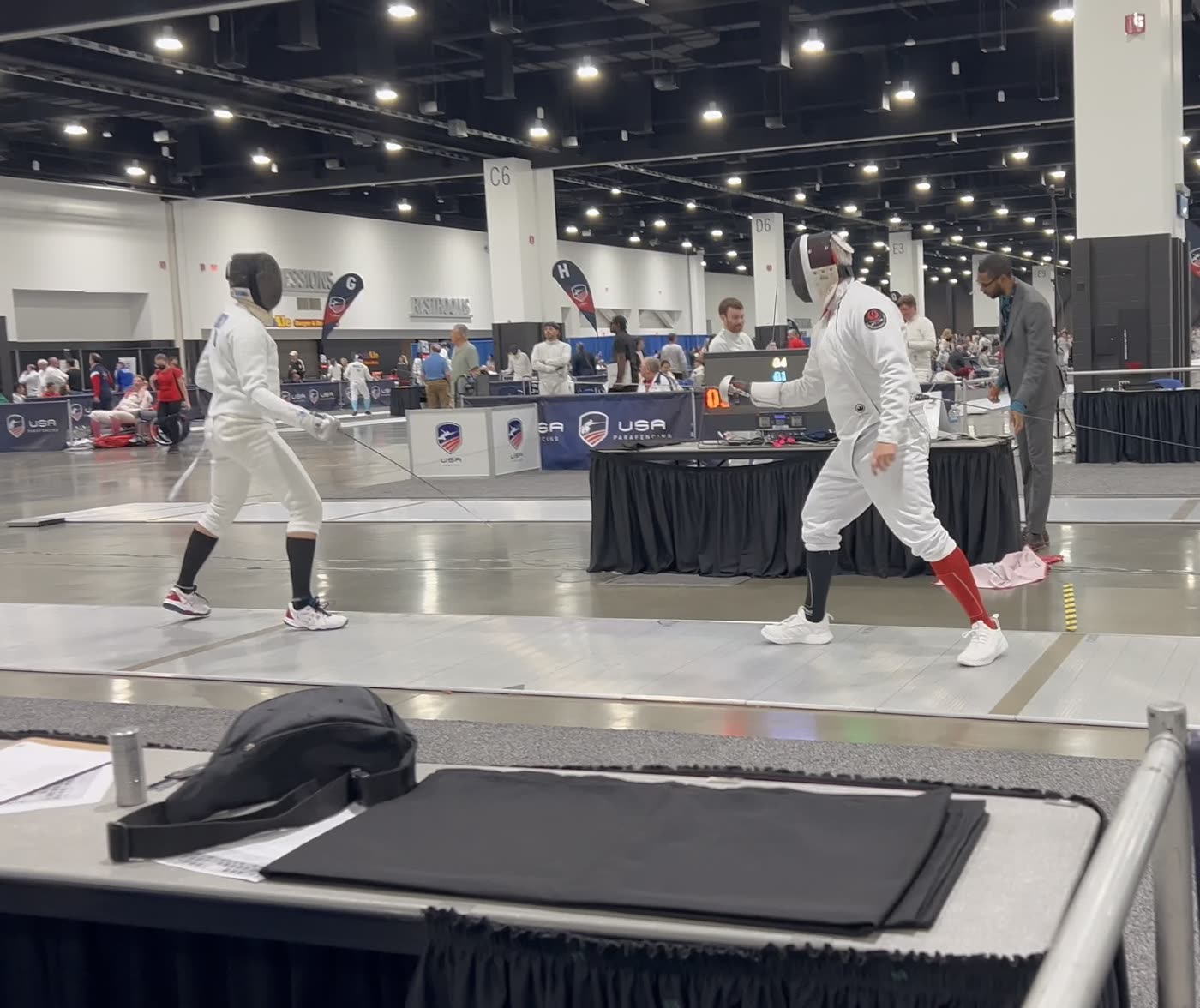
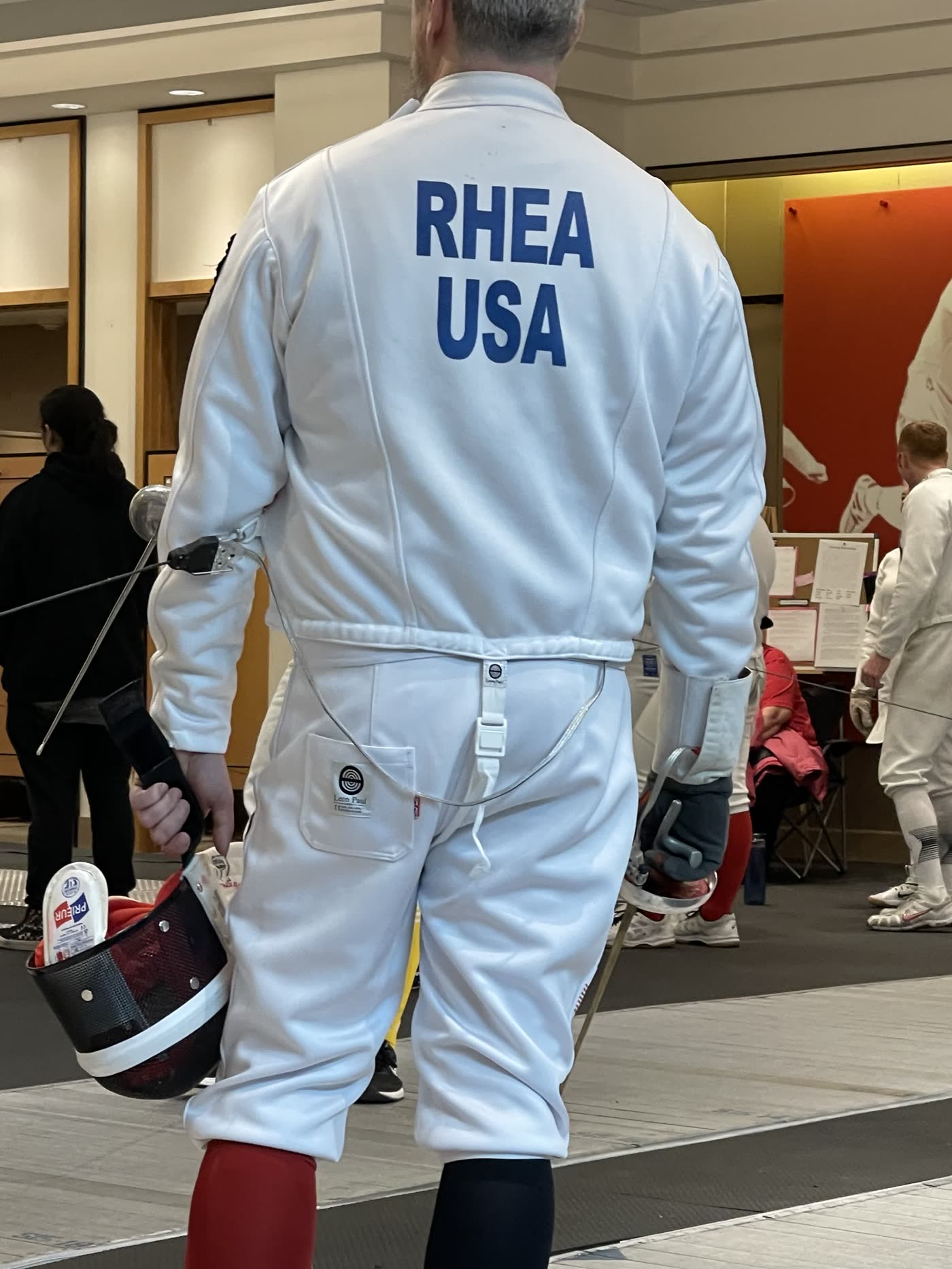
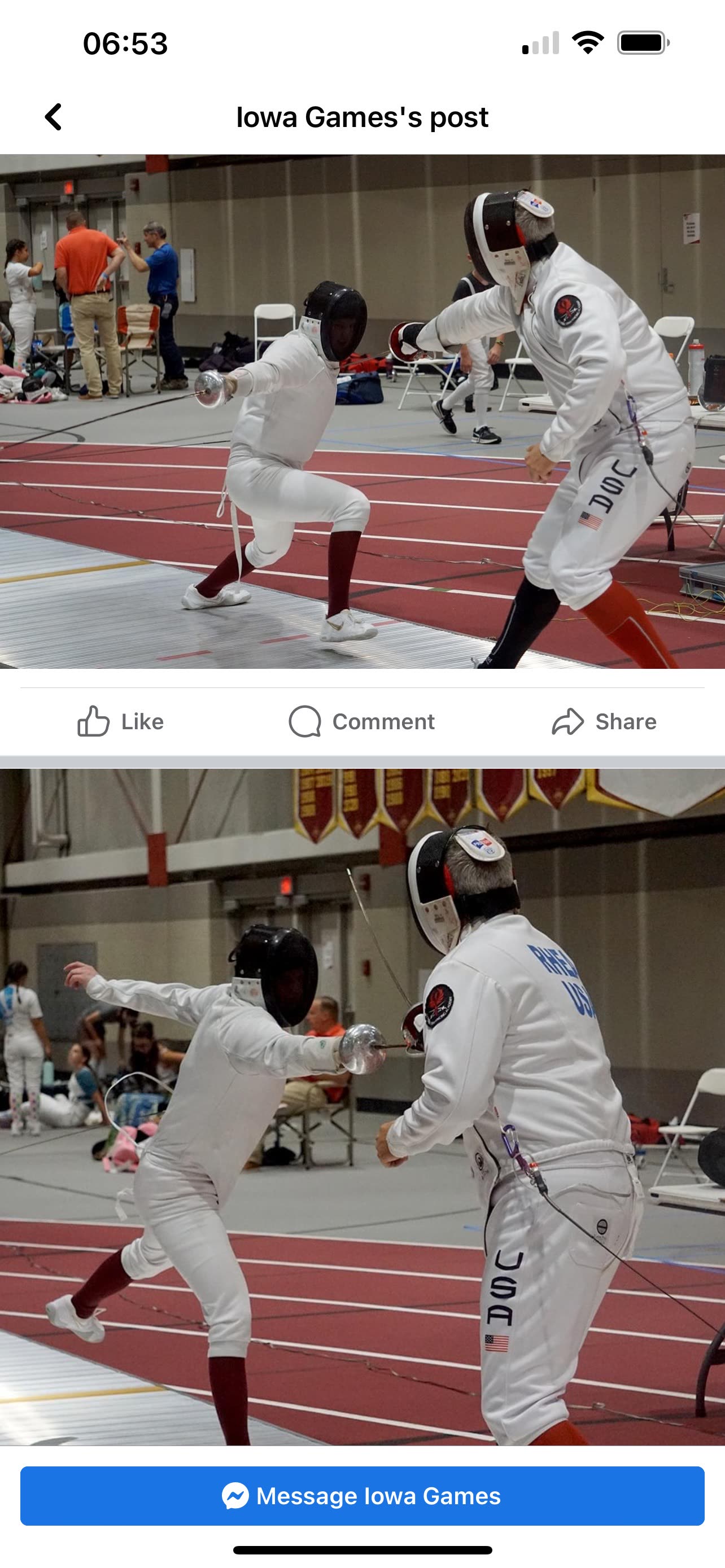
From Iowa Games bouts to USA Fencing national events — the RHEA USA jacket gets around.
Iowa Games coverage
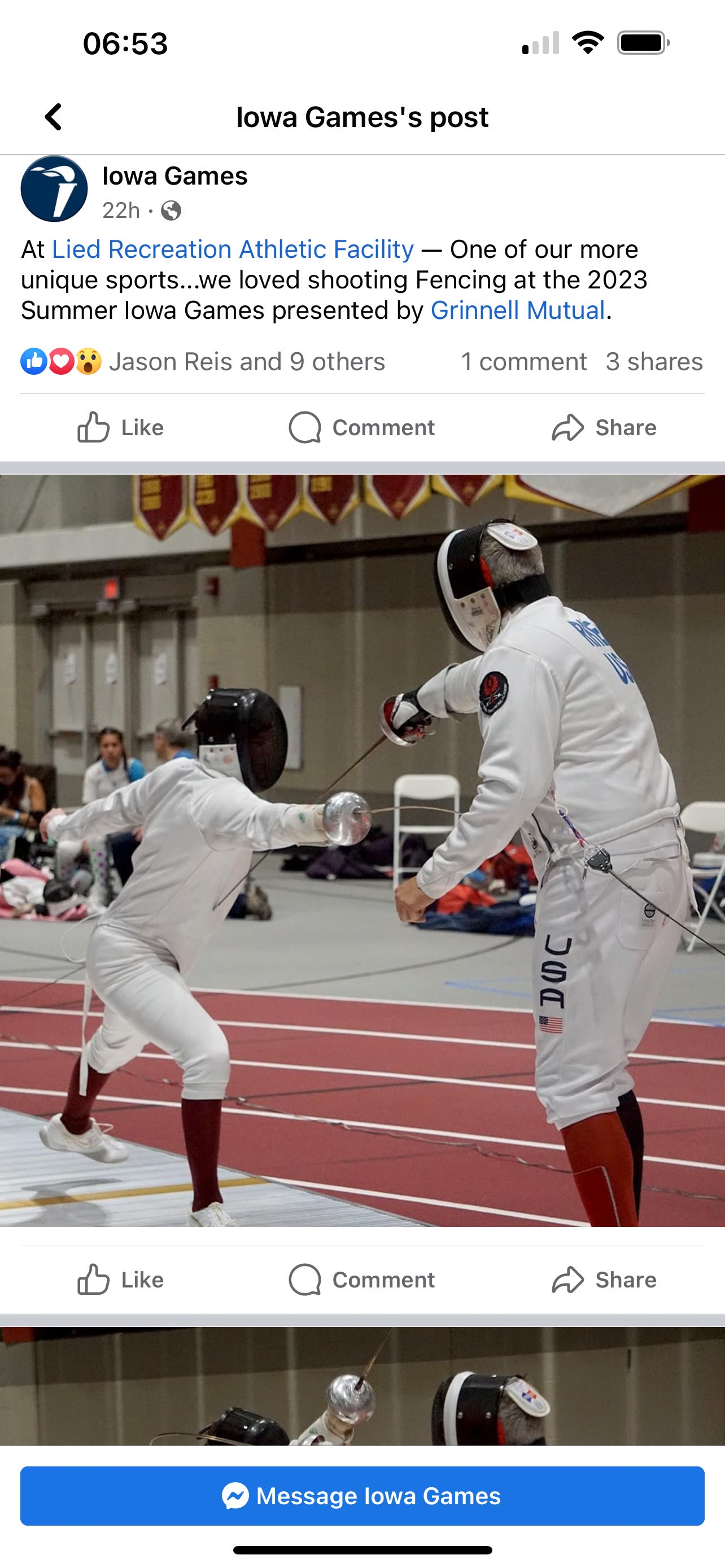
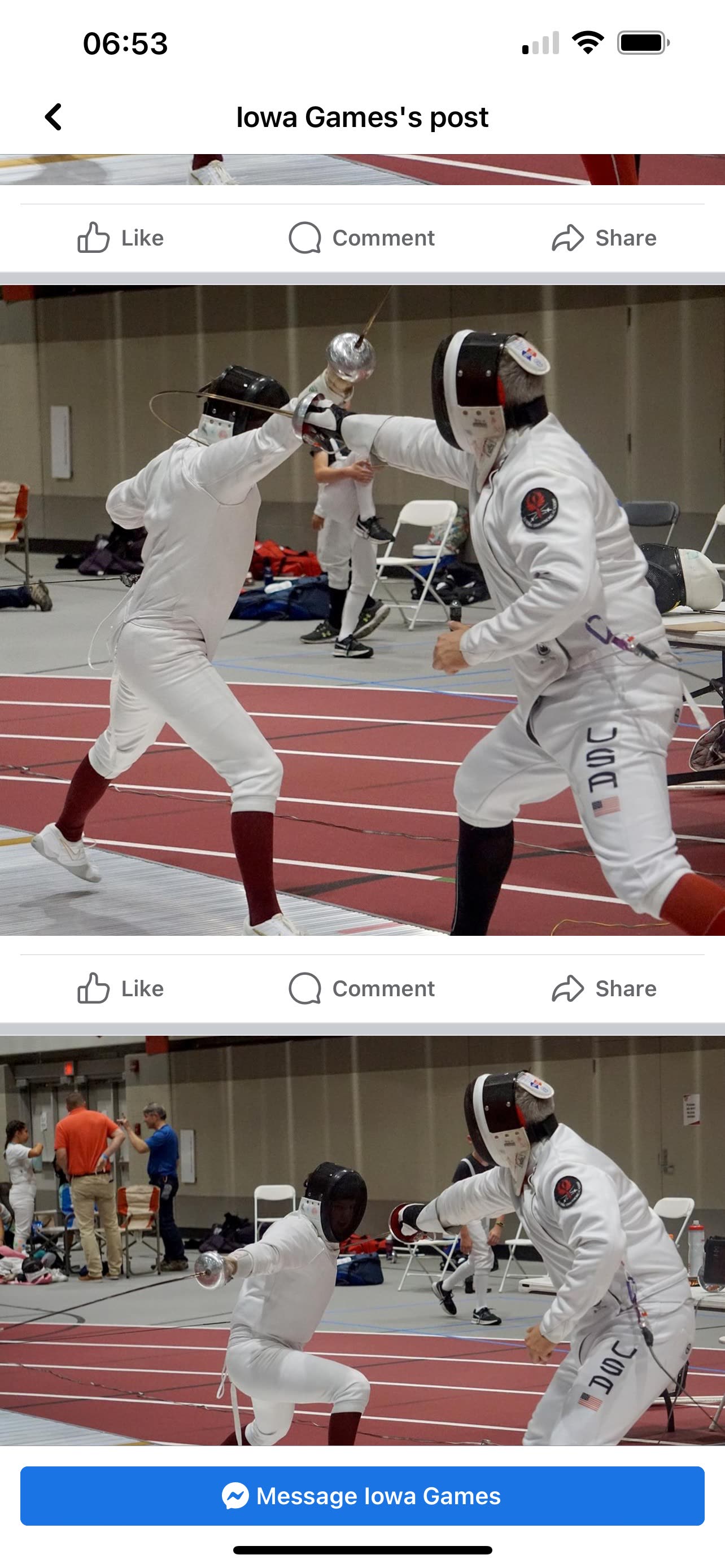
The Iowa Games' own social coverage of the 2023 fencing events — "one of our more unique sports" — featured these bouts, RHEA USA visible on the strip.
The playing card
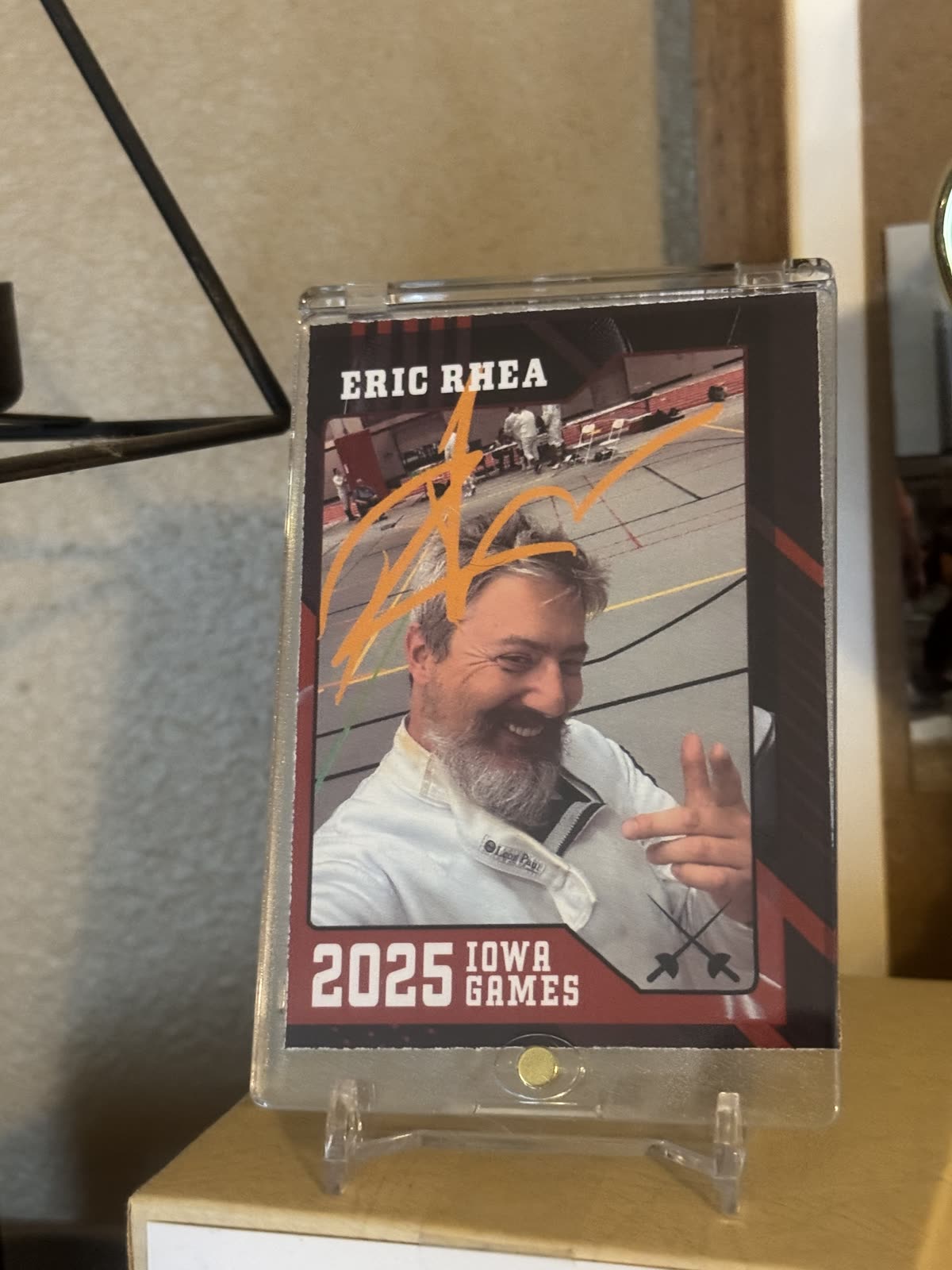
Made in 2025. Somewhere between a trading card and a warning label.
When you get immortalized in card form, you put it on the website. Those are the rules.
Why fencing
Épée is a decision system with a tiny scoring window. Every touch is a hypothesis about what your opponent will do next, tested at full speed, with immediate and unambiguous feedback. It trains the same muscles I use leading technical work: patience under pressure, distance management, knowing the difference between activity and initiative — and resetting cleanly after a touch against you.