The Pain Point
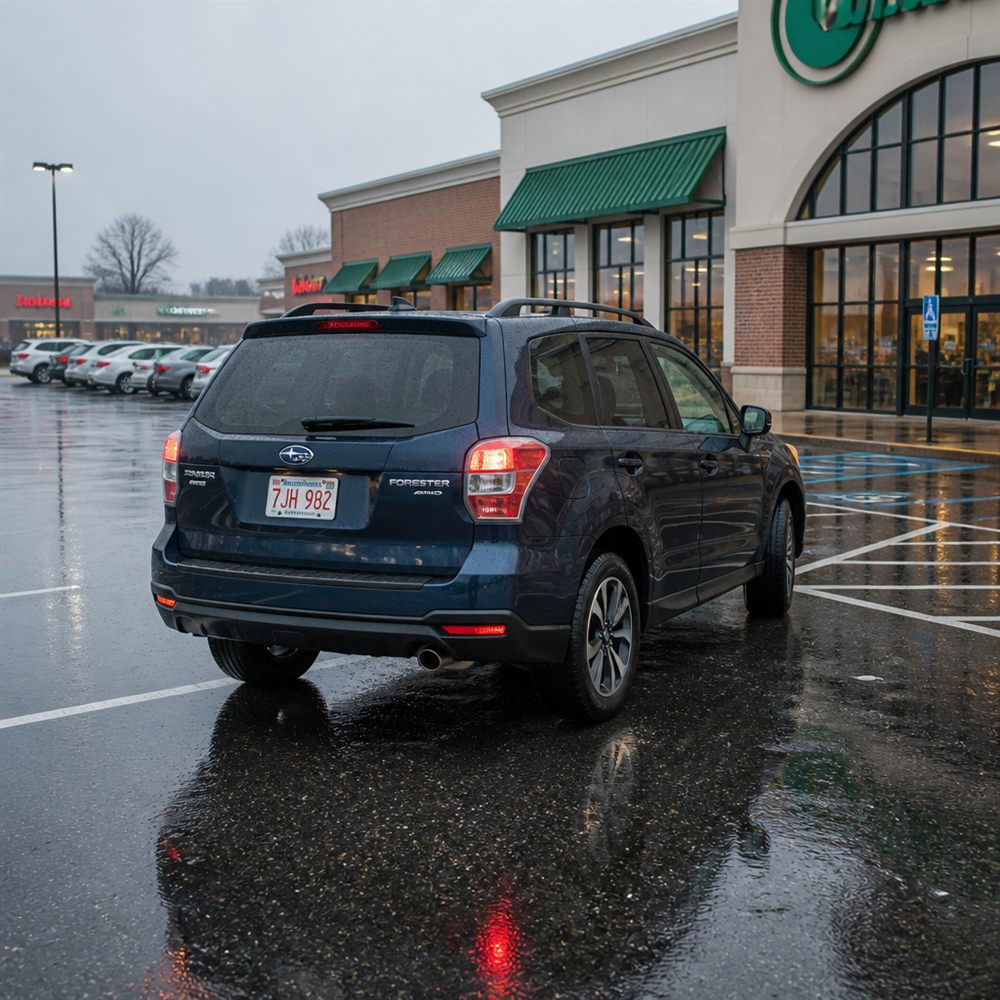
The truck problem started as a visual joke and became a state problem. John had a vehicle. Then the rendered world had a different vehicle. Then the text remembered one thing while the frame insisted on another. The result was not exactly a continuity error and not exactly a prop error. It was vehicle identity drift.
That matters because a vehicle is not just scenery. It is a carrier, a location, an object, a route participant, a parking state, and sometimes the boundary between public movement and private phone use. If the truck changes identity, everything riding on it gets soft.
In everyday terms, this is the difference between “John’s truck” and “some truck-shaped object in the scene.” If your neighbor borrows your pickup, you still expect it to be the same pickup when it comes back. If the story says you drove your old white truck to the store and the next photo shows a gray SUV, you do not shrug and call it continuity. You ask what happened to the truck.
The early world did not have a strong enough place to ask that question. It could recognize a vehicle-ish thing. It could prompt for a vehicle-ish thing. But the identity of the vehicle lived too much in visual resemblance and too little in persistent state.
Why It Was Hard
Vehicles create compound state. John can be outside the truck, entering it, inside it, driving it, parking it, exiting it, or unloading something from it. The camera can be inside the vehicle, behind it, beside it, or tracking it. A route can advance while John is no longer visible as a full body.
If all of that is inferred from the latest frame, the system keeps re-solving identity from appearance. A gray SUV shape can replace a truck. A driveway vehicle can become a store vehicle. A route can complete without the intermediate carrier state being clean.
A vehicle is also a pocket of private world state. The groceries can be in it. John can be in it. His phone can be safely ignored because he is driving. The route can be halfway complete. The parking phase can be pending. If the truck is only a visual prop, all of those facts are attached to fog.
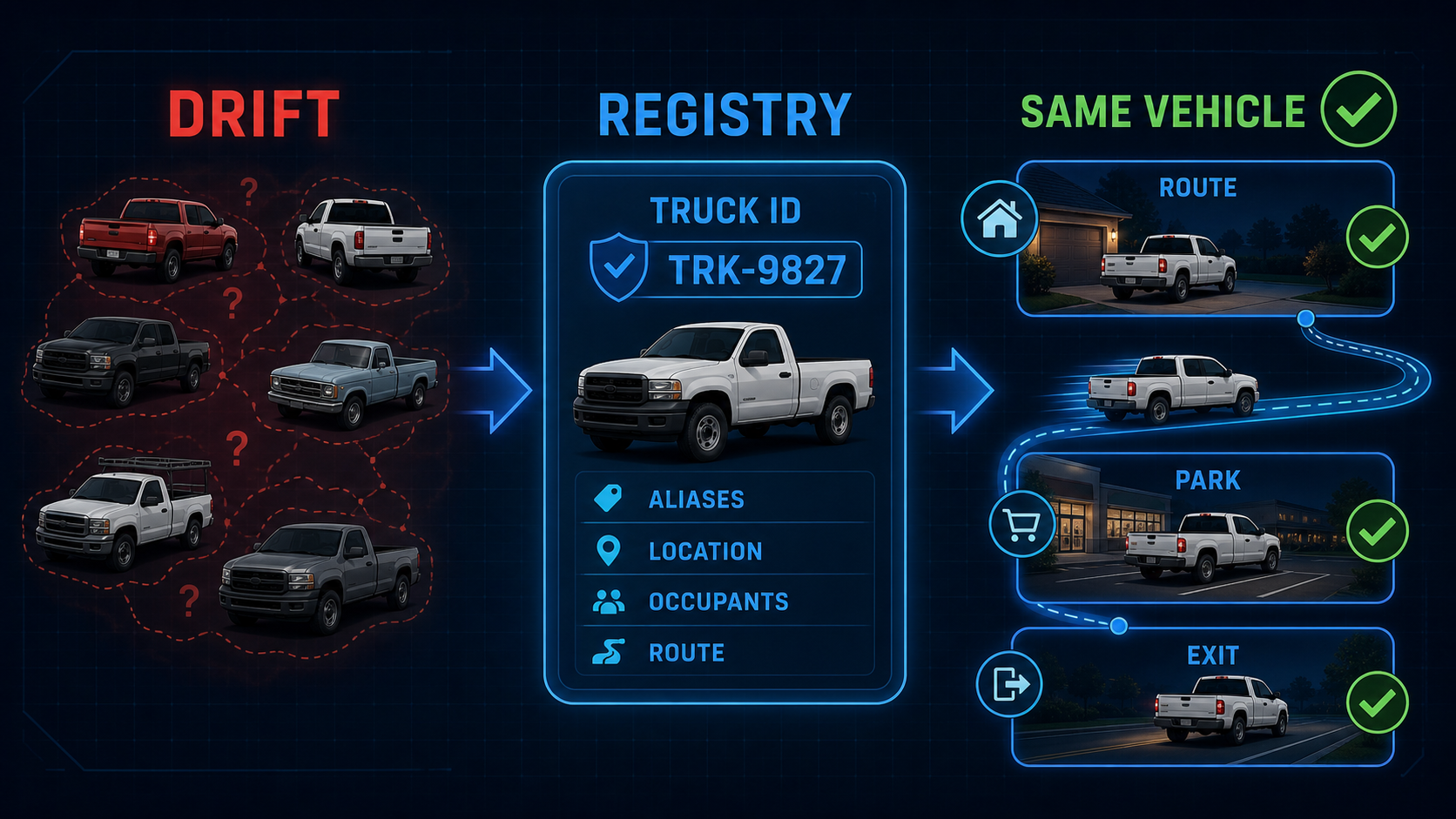
Commit-backed fix: the vehicle registry gives vehicles stable profiles, aliases, locations, route state, and transport semantics. Frame advancement then treats vehicle movement as a bounded route or parking maneuver instead of an arbitrary scene jump.
What Changed
The registry makes the vehicle an entity with durable identity. It can have a type, canonical description, aliases, damage notes, current location, route context, and occupant relationship. Transport code can track whether John is being carried by the vehicle rather than simply standing near something the image calls a vehicle.
Frame planning also gained vehicle-specific movement rules. Parking and departure are small visible maneuvers. Driving advances by route segments. Exit phases have to be visible before John is shown outside the vehicle. The prompt can still ask for a documentary frame, but the state model now knows what the frame is allowed to represent.
The result is a less cinematic but more accountable truck. It stops being a recurring suggestion and becomes part of the world’s ledger.
This is the same kind of bookkeeping a person does without noticing. You know whether your car is in the driveway, at the shop, parked by the grocery entrance, or being driven by someone else. You also know that you cannot unload the trunk before you arrive, and you cannot step out of the vehicle before you park. The registry gives the harness that boring competence.
It also separates identity from camera angle. The truck may be seen from the rear, from the side, from a dashboard view, or as a small object in a parking lot. Those render choices should not create a new vehicle. The record survives the angle.
What This Unlocks
Vehicle state makes errands possible. Store trips, returns home, parking-lot handoffs, unloading tasks, and phone interruptions can now be tested without treating the vehicle as a decorative continuity hint. A route can fail, but it fails as a route, not as a mysterious new car in a familiar parking lot.
This is also where generated-world work starts to resemble ordinary simulation engineering. The hard part is not drawing the truck. The hard part is knowing whether John is in it.
Once that is true, the truck can carry consequences. If John puts the basket in the bed, the basket should travel with the truck. If he parks at the store, the next valid action might be exiting, not suddenly standing in the cereal aisle. If a phone message arrives while he is driving, the system can prefer a safe stop over a magical screen closeup.