This page mirrors my original Substack note for the John’s World section of EricRhea.com. The original remains available at substack.com/@advisoryhour/note/c-259260419.
The note
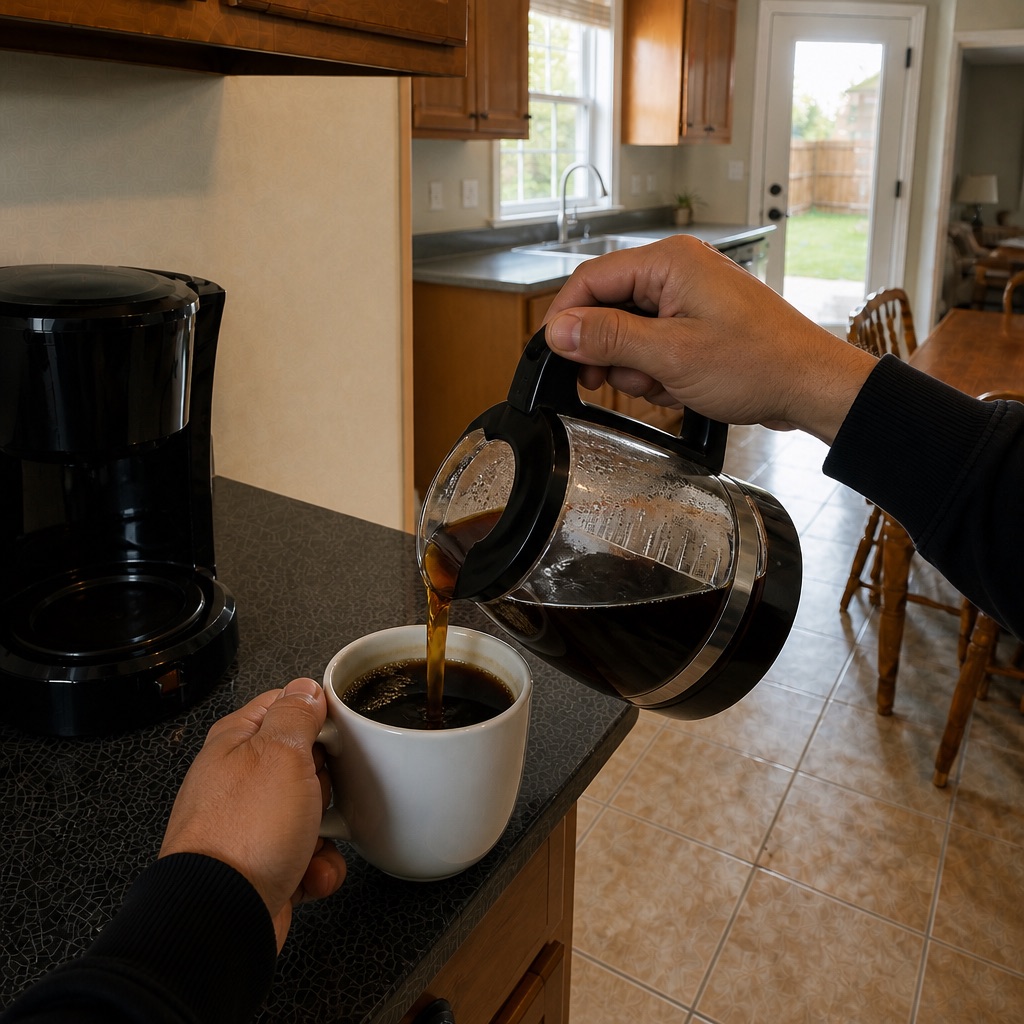
John’s World has an unexpected perk. It can be used to show how a product works. Tomorrow I’ll be publishing an article as black mirror as it gets: using an entire virtual world to hustle a $10 coffee maker.
Why this matters
The product-demo angle is a useful stress test because it makes the world do something concrete. A generated place can look coherent in a still frame; a product demonstration asks for object identity, hand position, camera angle, sequence, cause and effect, and enough scene memory to make the next frame feel like it follows from the last one.
That is why the coffee maker matters. It is not a glamorous object. It is a small, boring appliance with a familiar task loop. Fill the water, add the filter, add the grounds, press the button, wait, pour. If John’s World can stage that loop legibly, the experiment has moved from image vibes toward a synthetic demonstration surface.
The follow-up
The note points directly at the longer product-sales piece: a full John’s World article about using the pocket universe as a sales engine for a fictional coffee pot. Read that next for the gallery sequence and the black-mirror part of the argument.
Next read: The Power of John’s World: Product Sales.