This page mirrors my original Substack article inside EricRhea.com. The original remains available at advisoryhour.substack.com.
Welcome back, dear reader.
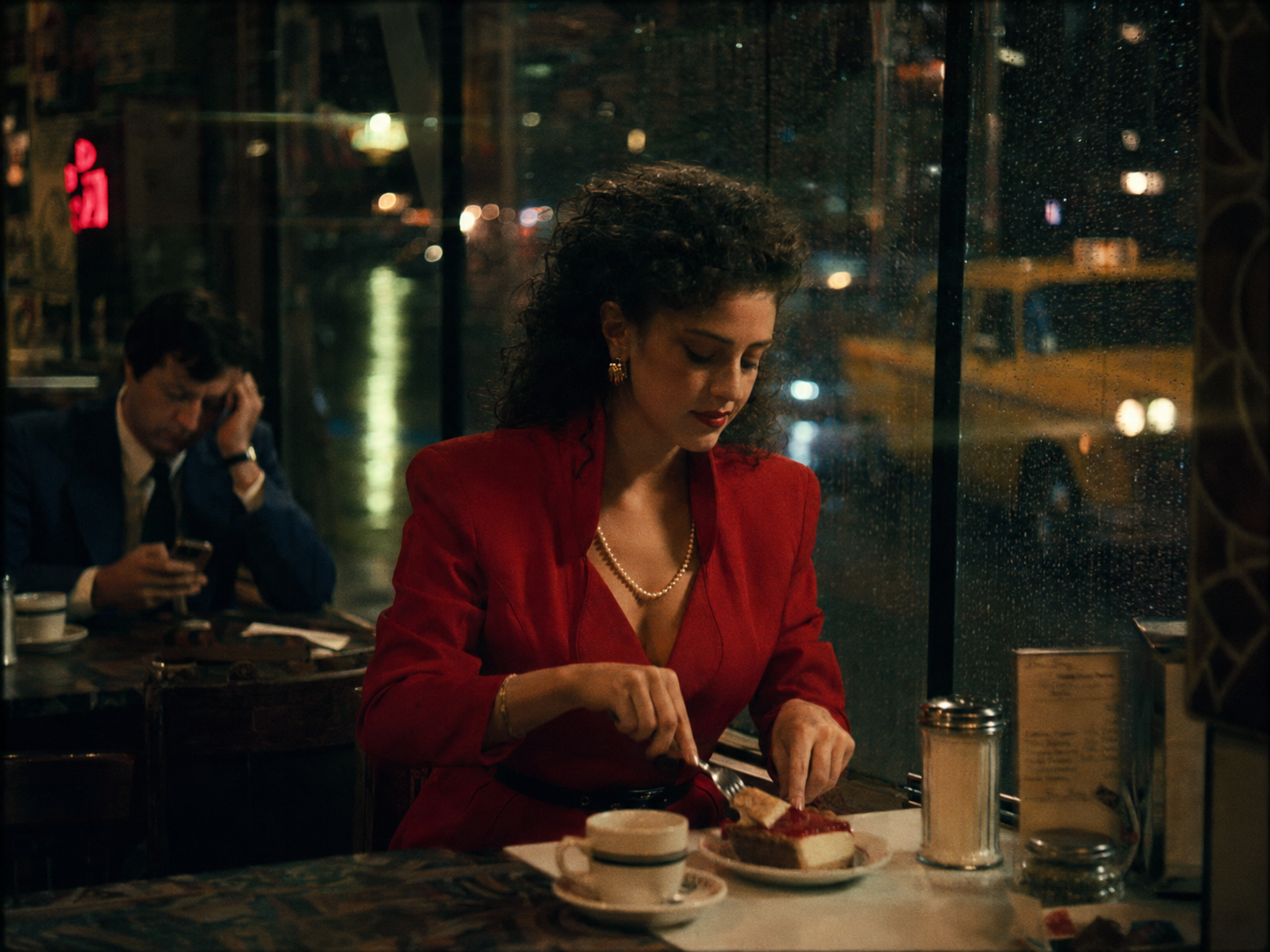
A few days ago I was experimenting with OpenAI’s `gpt-image-2` model to see how well it could capture specific times of day through scenes inspired by famous paintings, but reimagined with a modern twist. I wanted something that carried the emotional residue of the original work while feeling contemporary…familiar in a way you can sense before you can quite name it. That may be the feeling you get from the image above. The woman in red, eating a slice of pie.
It’s loosely inspired by Nighthawks. Even if you don’t immediately place it, there’s a good chance it triggers that subtle recognition: I know what this is-by vibes somehow?
The image preserves many of the same tonal motifs: a woman in red, a man in a suit, the hush of late-night city life, and that peculiar urban emptiness that feels inseparable from wet pavement and recent rain. It doesn’t copy Hopper’s painting outright, but it borrows the emotional architecture: isolation, stillness, and the strange intimacy of people sharing a space without truly connecting.
If you’re new to the idea of emotional architecture, it’s a concept that is one city block away from information architecture. Information architecture helps you organize say components on a screen, or services in a network ecosystem. Emotional architecture is a craft in how you elicit an emotional response from whatever it is you’re building.
What impressed me is that `gpt-image-2` didn’t just reproduce objects or composition cues. It managed to convey, well, atmosphere. There’s a real sense of place in the image, which is harder to pull off than surface resemblance. That got me thinking about how John’s World could evolve beyond peddling $10 coffee makers and into something more cinematic, more emotionally legible, and frankly more alive.
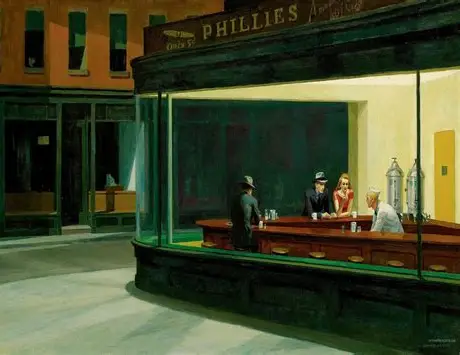
For context, Nighthawks is a 1942 painting by Edward Hopper depicting several people sitting in a downtown diner late at night. It remains Hopper’s most famous work and one of the most recognizable images in American art, largely because it captures something timeless: the loneliness of modern life under artificial light. Here’s the painting, which if you haven’t seen warrants some level of study and understanding-a tremendous amount of American culture is compressed into and from this image.
I’d also posted a note earlier wondering what this version of 1986 might actually look like if you could step inside it instead of just gesturing at it with mood boards and nostalgia. It was a “ok, now what” move. John’s World had already proven the mechanics of action: I could follow a character through slices of time with a surprising level of consistency, which is not nothing. I’m still surprised that system works. The more common result is systems forget what they’re doing halfway through a thought. Gradually I began to wonder: what other worlds can I push through the same machinery?
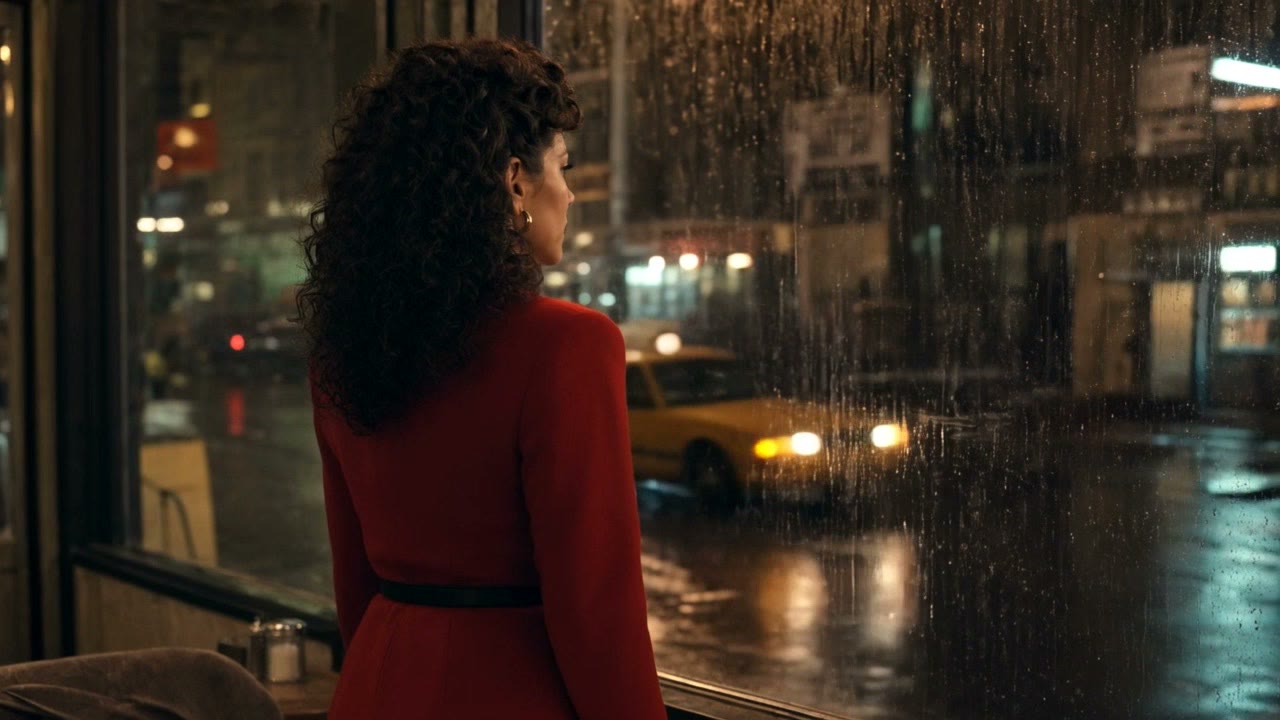
That’s where `gpt-image-2` inspired new ideas. The rendering is good enough to carry atmosphere, place, and continuity without everything collapsing into visual soup. It already proved its value in the much more absurd-but-useful experiment of using a virtual world to sell coffee makers…ahem… because of course one of the first serious tests of a new storytelling medium would be retail theater. Grim, hilarious, very on-brand for the internet.
The next real pipeline shift was broader than image quality. It was the realization that this system shouldn’t be locked to a single setting or protagonist. It doesn’t have to be only John’s World. It could just as easily become Jane’s World, or someone else’s entirely, with the same temporal consistency and environmental logic but a different social texture, aesthetic vocabulary, and narrative center. A machine that I can use to explore the multiverse and across time.
Obviously, “John’s World” and “Jane’s World” are placeholder names at best. They sound less like speculative media environments and more like the world’s bleakest children’s educational software… “Good news! your parents were cloned digitally and we’re using them until the heat death of the universe to sell $10 dropshipping product!”.
I’m going to need a better title for this experiment. One suggestion lobbed at me was “Black Mirror 2.0,” which I politely declined. But underneath the clunky naming is a more interesting idea: not one persistent world, but a repeatable method for building many of them.
But wait, why not video?
Since I was going thru the effort of leveling up the system to support multiple “universes”, I felt it was time to try piecing together video. I’ve written before about using video for virtual world construction-the kitchen’s virtualworld with Awren, Vesper and others is still doing quite well. Video can be an interesting construct.
After the revision to support multiple universes, there’s now support for keyframing which allows for interesting video experiments such as the video below. There are little details it gets right, and bigger details it gets… weird. Weird in a fun, almost comedic way. I particularly enjoy the way payment is collected, or when the cab drives off, not even bothering to close the door.
There’s almost a movie arc in that video. It’s broken in coherence, but the weirdness feels like a snapshot window into our own point in time. Still, the gritty place as weird as it is, feels like a place. I’ve learned I need to spend time figuring out how to get this system to both open and close doors of all kinds.
Until then, are you interested in a $10 coffee maker? Check this article out next.

Thanks for reading! Subscribe for free to receive new posts and support my work.