The Pain Point
John kept arriving places the world had not earned. A garage became a driveway. A driveway became a store parking lot. A phone beat swallowed a physical transition. Sometimes the system knew the right destination but not the route, which is how a generated suburb turns into a slideshow with door handles.
The painful part was that most frames looked plausible. The issue was not that the model could not draw a house, a street, or a store. It was that the harness did not have a sufficiently explicit map for saying which places touched, which exits existed, and which intermediate steps were mandatory.
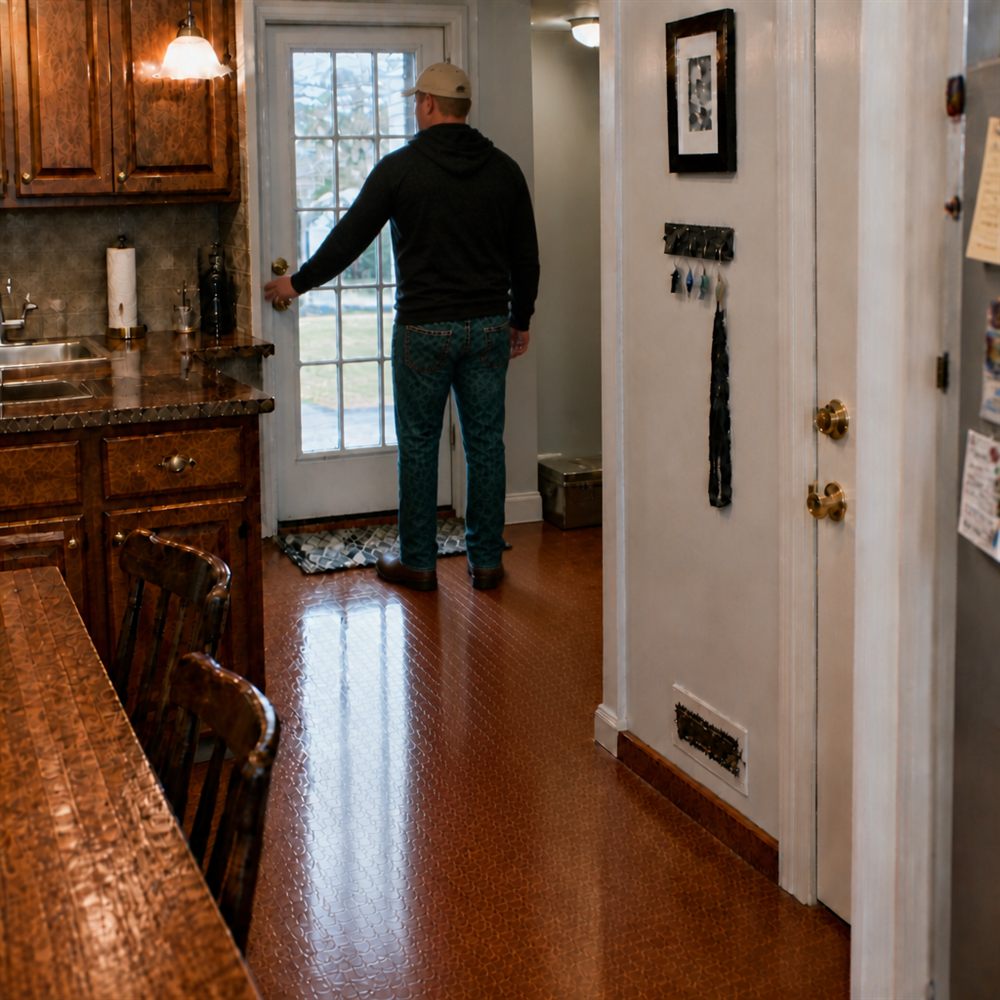
Think about leaving the house on a normal errand. You do not simply become “at the store.” You put on shoes, find keys, walk through the kitchen, open the garage door, get into the vehicle, back out, drive to the road, turn into the lot, park, and then walk inside. The trip is boring because every step is familiar. It is also exactly why the world needs a map.
The model knew the errand shape, so it kept trying to summarize. John would appear where the story wanted him to be. But a working world needs the floor plan version of common sense: doors connect rooms, streets connect addresses, parking lots connect stores, and some transitions require visible intermediate states.
Why It Was Hard
Spatial continuity is not a caption. Saying John is in the kitchen does not prove whether the backyard door is adjacent, whether the garage is reachable, or whether a store parking lot can appear next. The world needs atomic locations, portals, roads, capacities, placements, and guardrails.
Without that structure, every movement check becomes a local special case. Garage-to-driveway gets one patch. Store entrance gets another. Phone-screen closeups need a reminder not to relocate John. Enough patches can make a run look better, but they do not add up to geography.
This is the difference between giving someone directions and giving them a vibe. “Go to the store” works for a human because the human brings the map, the car, the memory of the neighborhood, and the instinct not to walk through walls. A generated harness has to write those assumptions down or it will eventually route John through the cinematic shortest path: cut to destination.
Commit-backed fix: the newer code adds spatial registries, OSM-backed atlas work, guardrail validation, navigation simulation, and an admin spatial visualizer so the world can inspect its own map instead of guessing from frame text.
What Changed
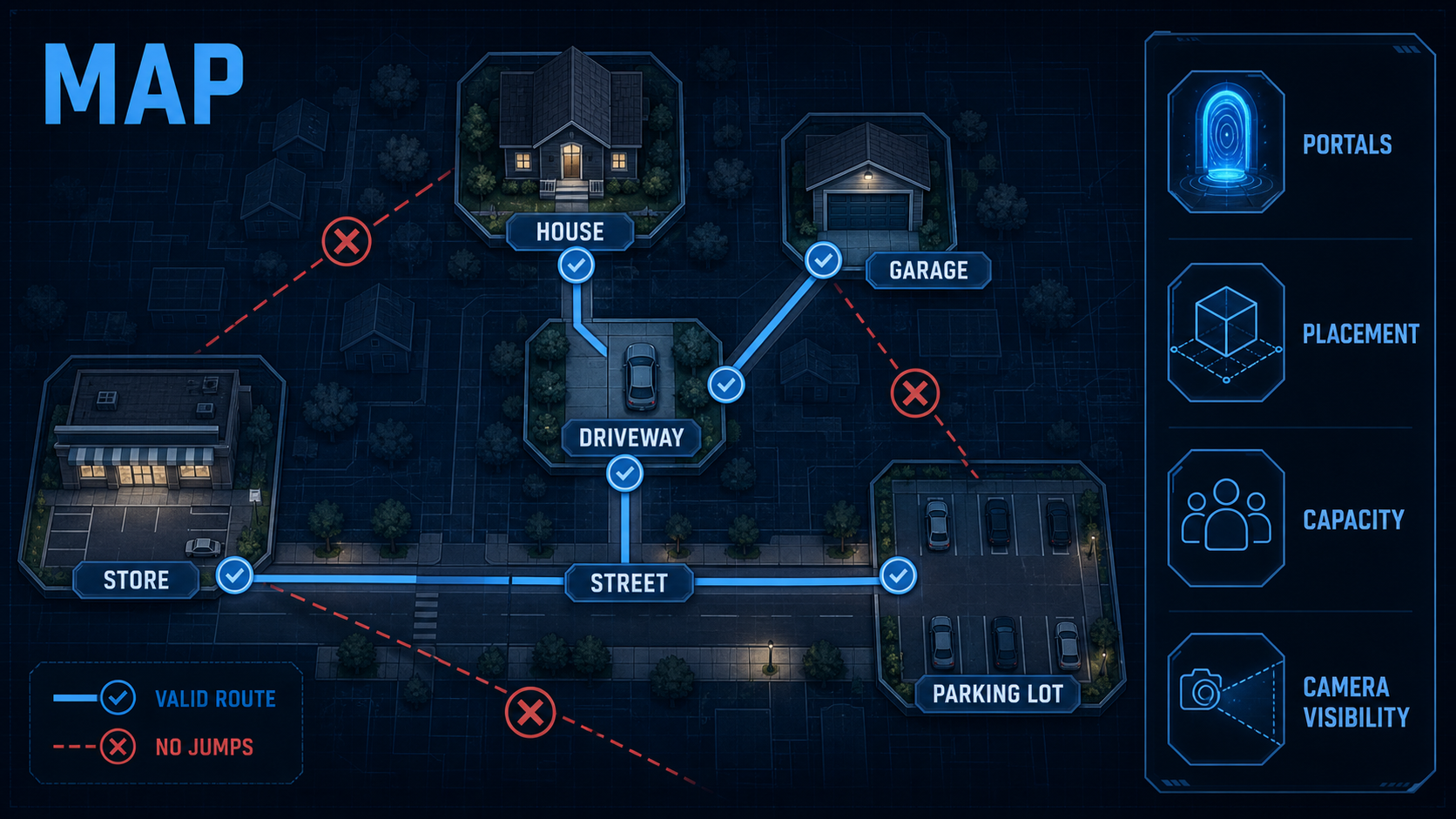
The repair turns places into structured records. Locations have IDs. Connections are explicit. Placements describe where actors, objects, vehicles, and references belong. Guardrails check portal integrity, placement uniqueness, room caps, retail zone caps, and camera visibility constraints.
Navigation also becomes testable before it becomes visual. The simulator can advance through route segments, validate connected movement, and expose where a path should go next. The admin visualizer gives the system a top-down view of the same facts: locations, portals, roads, placements, and inspector data.
The important shift is that movement no longer depends on the model’s sense of what probably happens next in a suburban errand. The map says what can happen next.
That makes the fix practical instead of poetic. If John is in the kitchen, the system can offer nearby actions and connected destinations. If he is in the driveway, vehicle actions make sense. If he is in a store parking lot, the entrance is nearby but the kitchen is not. The map shrinks the action menu to the world John is actually standing in.
It also makes bad frames easier to diagnose. When a render jumps from the garage to the store, the issue is not “the story got weird.” It is a missing route, a skipped vehicle segment, or an invalid state transition. Those are things an engineer can test.
What This Unlocks
With a real map, the harness can reject impossible movement for a principled reason. It can tell the difference between entering a room, approaching a threshold, driving a route segment, and standing still while checking a phone. It can also make future worlds larger without multiplying one-off movement rules forever.
John can still get stuck. But now getting stuck is data. It tells us the route, portal, object placement, or action model is underspecified. That is a much better failure than discovering three pages later that the house and store have been sharing a quantum driveway.
The relatable version is simple: the system finally knows where John left his keys and which door he can actually use. That is mundane, but mundane is the whole game. Generated worlds do not fail only on dragons and spaceships. They fail when a guy cannot get from the kitchen to the garage without the universe quietly editing the hallway.