Source note: First-party copy of an AdvisoryHour Substack post. Article images found in the public post body are mirrored locally; profile/avatar images and subscription widgets are intentionally excluded. Read the canonical Substack post or subscribe to AdvisoryHour.
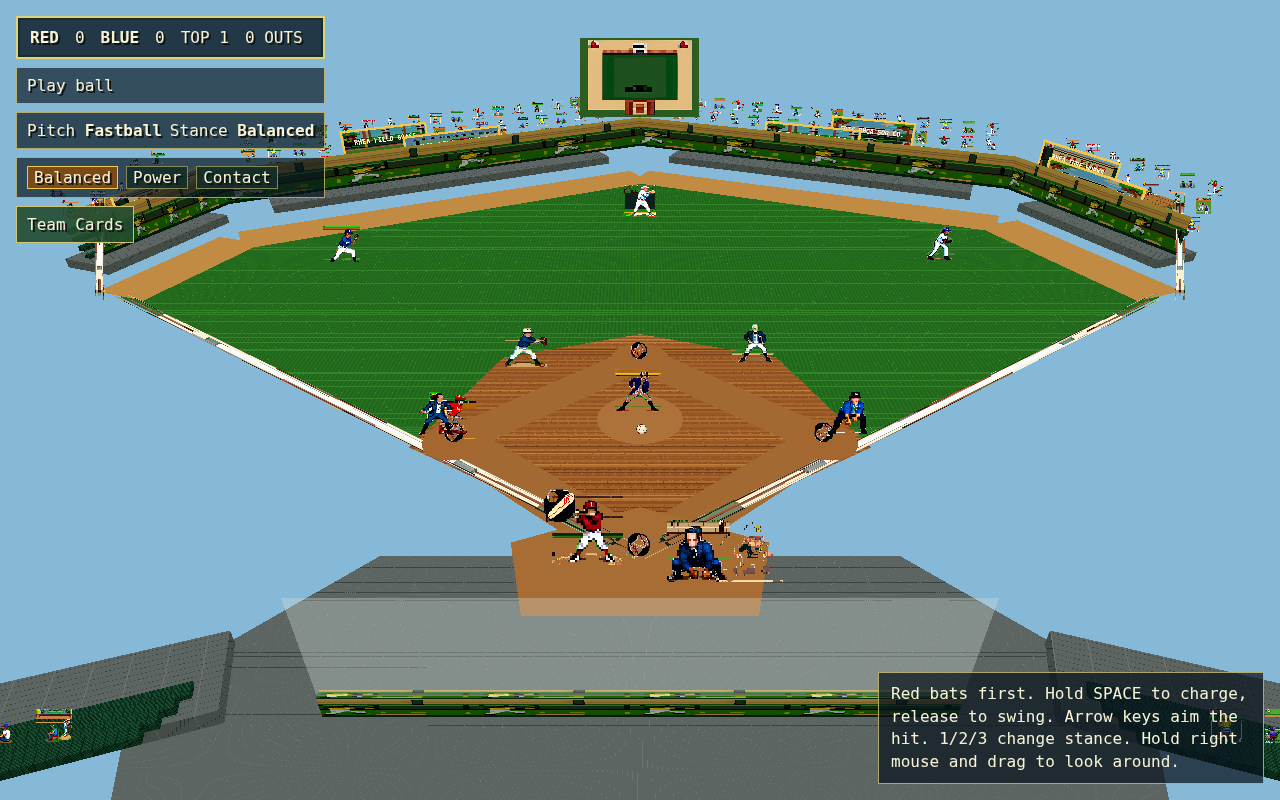
The first attempt at Timestorm I had the model build out the geometry of the entire stadium inside ThreeJS. This technique often works for me. That is, I find I can often just have an AI model build out an entire world inside of a ThreeJS build and move along happily from there. However, Timestorm taught me many humbling lessons.
Sprites in a Suit
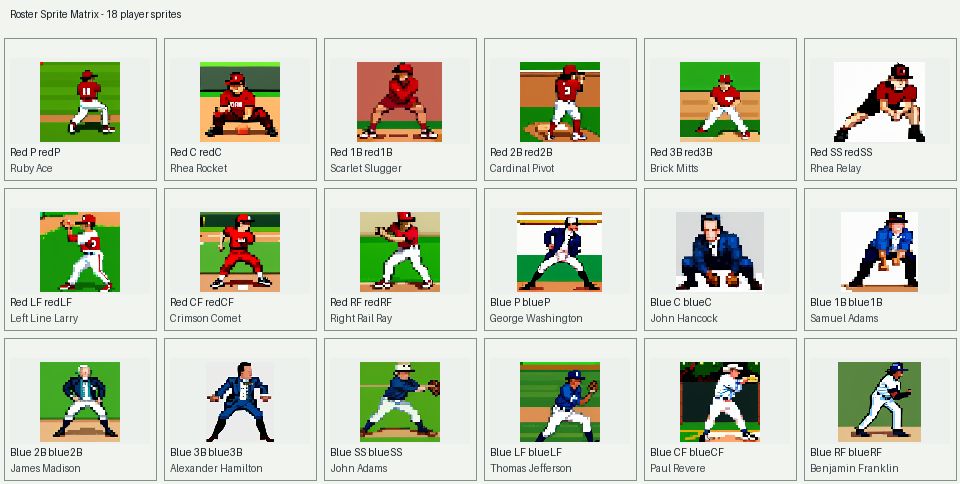
Among those lessons is that the sprite generator I was using requires more effort-way more effort-than just downloading a sprite capable model. Consider the sprite sheet used by the initial build of Timestorm. Each individual sprite on it’s own is quite something-I never realized a baseball game featuring players in different styled uniforms could be so interesting. However, when these are placed in the same game engine it all just falls apart. The visual coherence cracks apart like a dropped egg smacking the kitchen floor.
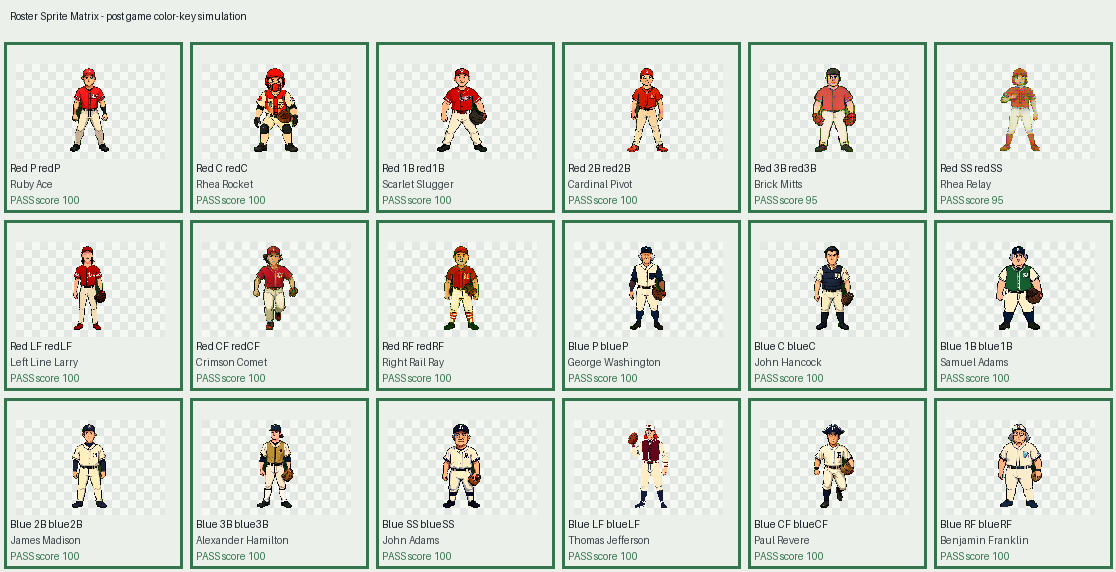
Determined this was a fixable situation, I put in a little time during Timestorm to figure out how I might at least get to something like consistent sprites of a genre. I did get pretty far, but not far enough to make the cut for the week1 cutoff.
Sprite Engine 1.0
The first sprite engine is capable of building better sprites.
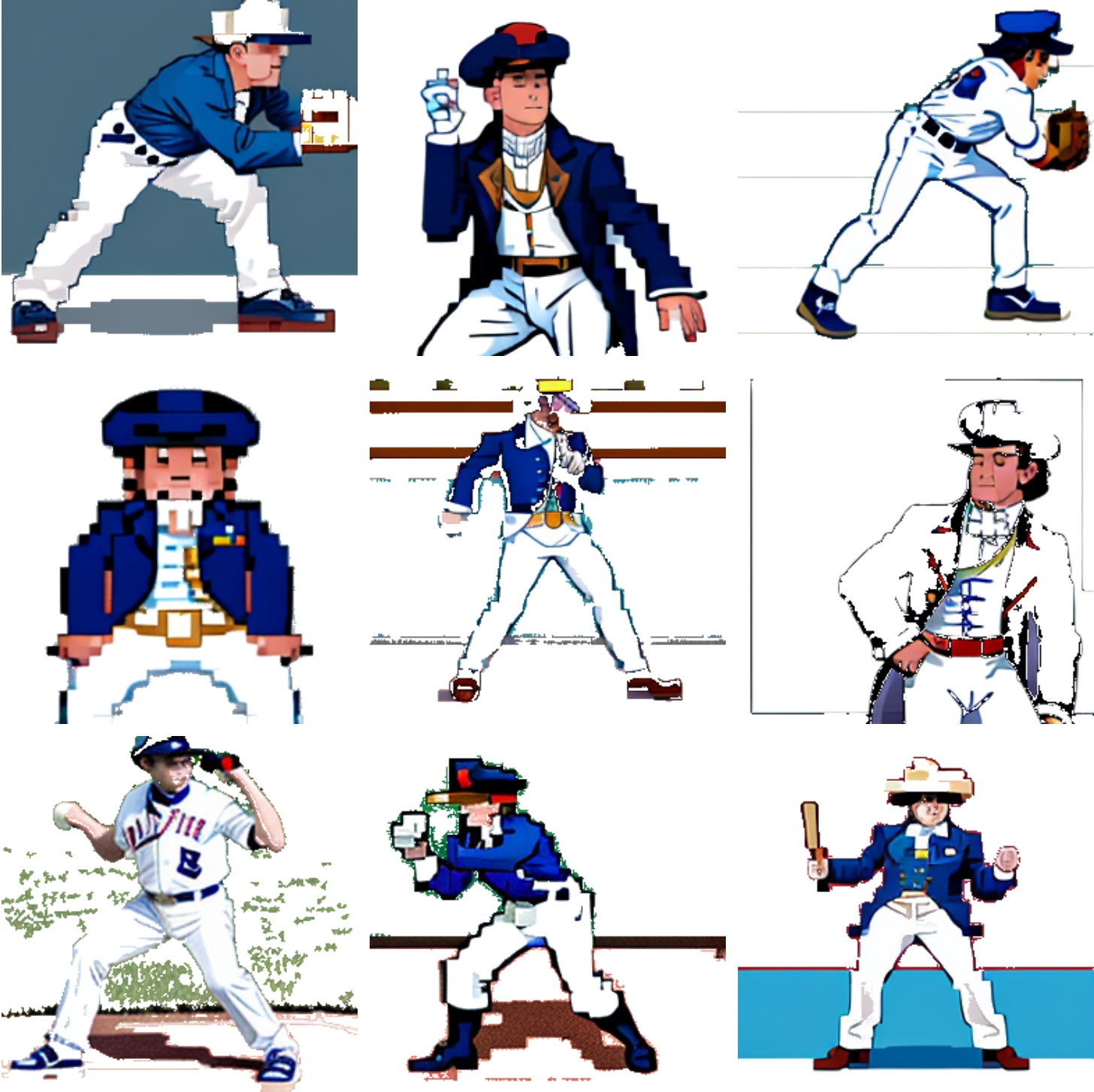
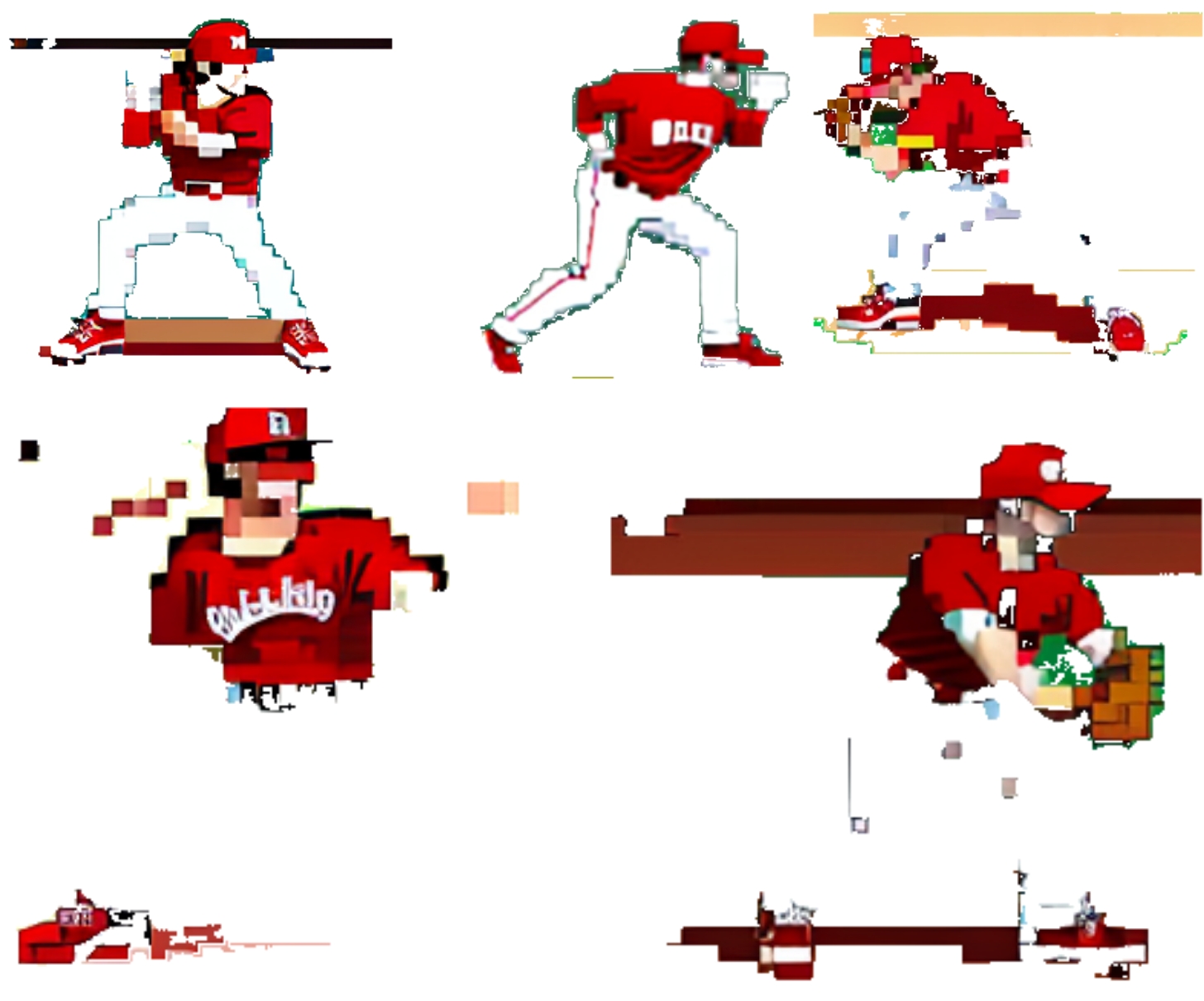
Not always, mind you. Consider this gallery of curious failures. Each sprite is almost good.
These become especially difficult to use in a scene, as one wants them to be animated. For example, these are animation sets-or were, that was the hope, of my first run of building out a sprite engine. Here you can see all the problems with a sprite generation like this. Perhaps with some work I could manually clean up each sprite-however, I simply had not the time for it.
Stadium Woes
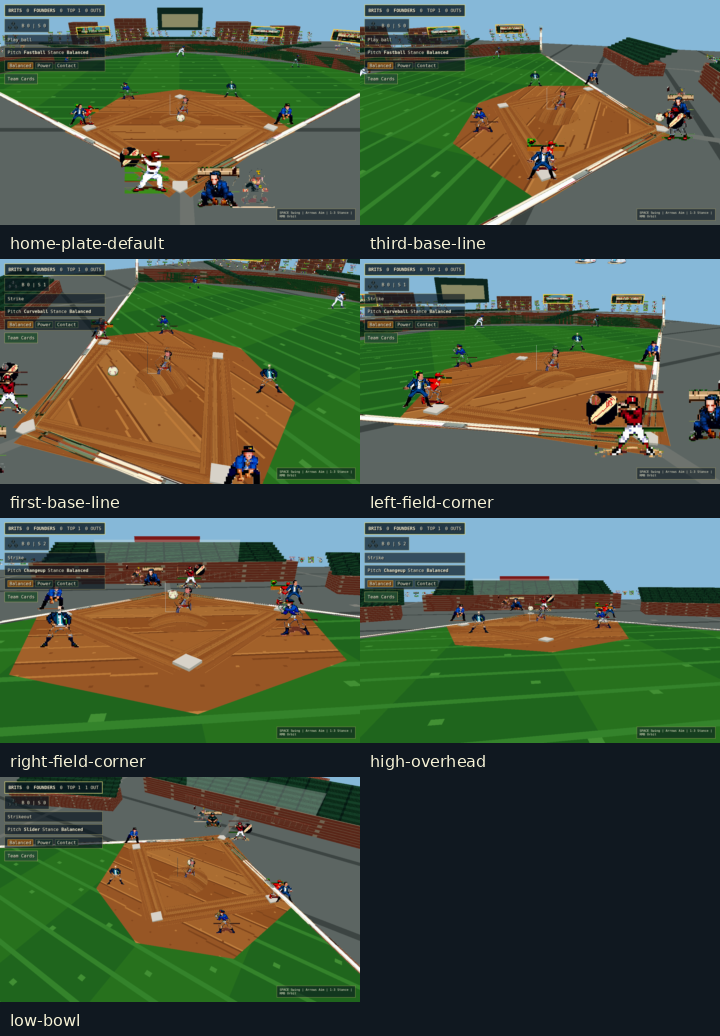
The Stadium was… ok. It wasn’t great. With a little more work perhaps it’d even be great. However, the models I used really confused the construction of Wrigley Field-it turns out Wrigley Field is an amazing benchmark of capabilities of your AI models. Can it build the stadium and surrounding area? As these shots showed, this particular build never quite got there.
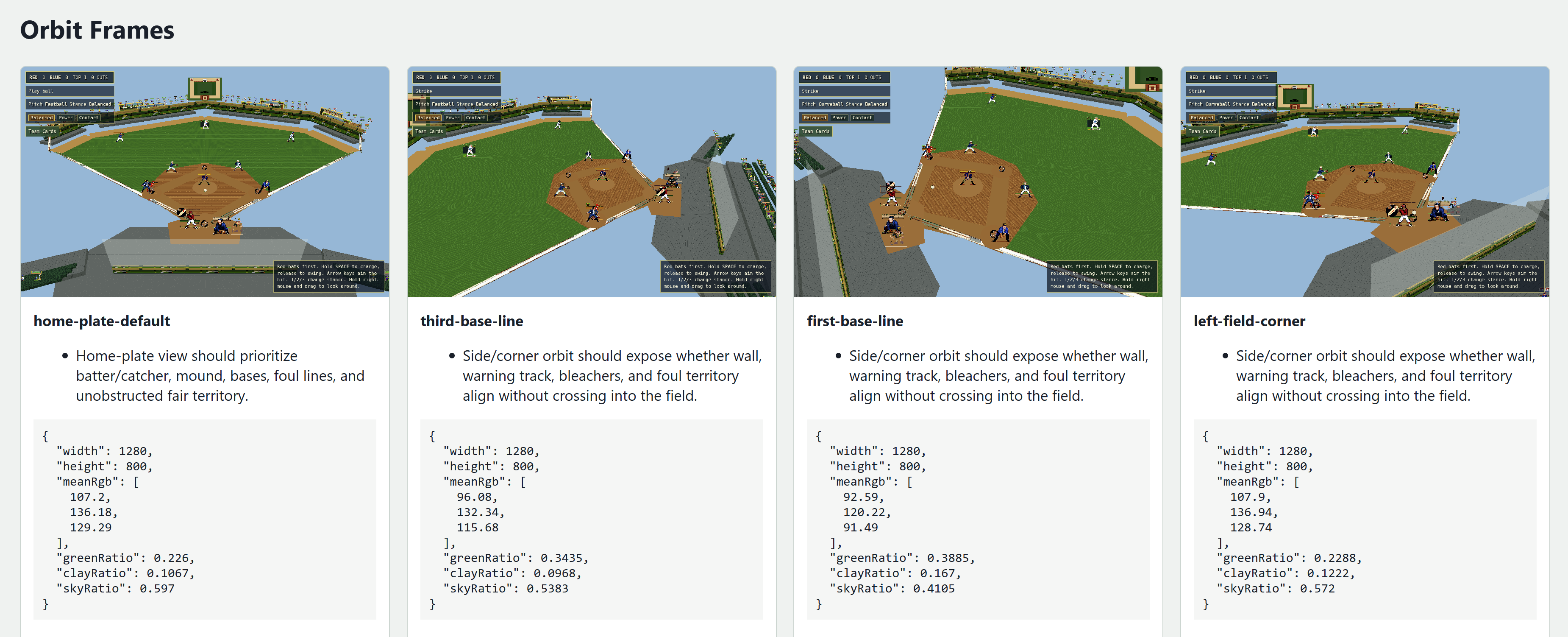
I did push the images thru a vision service (not the more advanced one on the Snapdragon, but a light weight one). And it was interesting to see how a vision model thinks. Technically, from the perspective of the vision model these images are exactly what they say they are. Taste is very difficult to push into vision without a comparison of “it must look like this other thing”
I’ll have more fun builds of Timestorm Baseball coming up on this Substack. So many mistakes were made.
Thanks for reading! Subscribe for free to receive new posts and support my work.
Original source
Canonical Substack URL: https://advisoryhour.substack.com/p/timestorm-baseball-early-builds.