Source note: Local copy of a Summer Into AI 2026 submission originally published on Substack. Screenshots, video, and audio found in the post body are mirrored locally when publicly accessible; profile and avatar images are intentionally not copied. Read the canonical post.
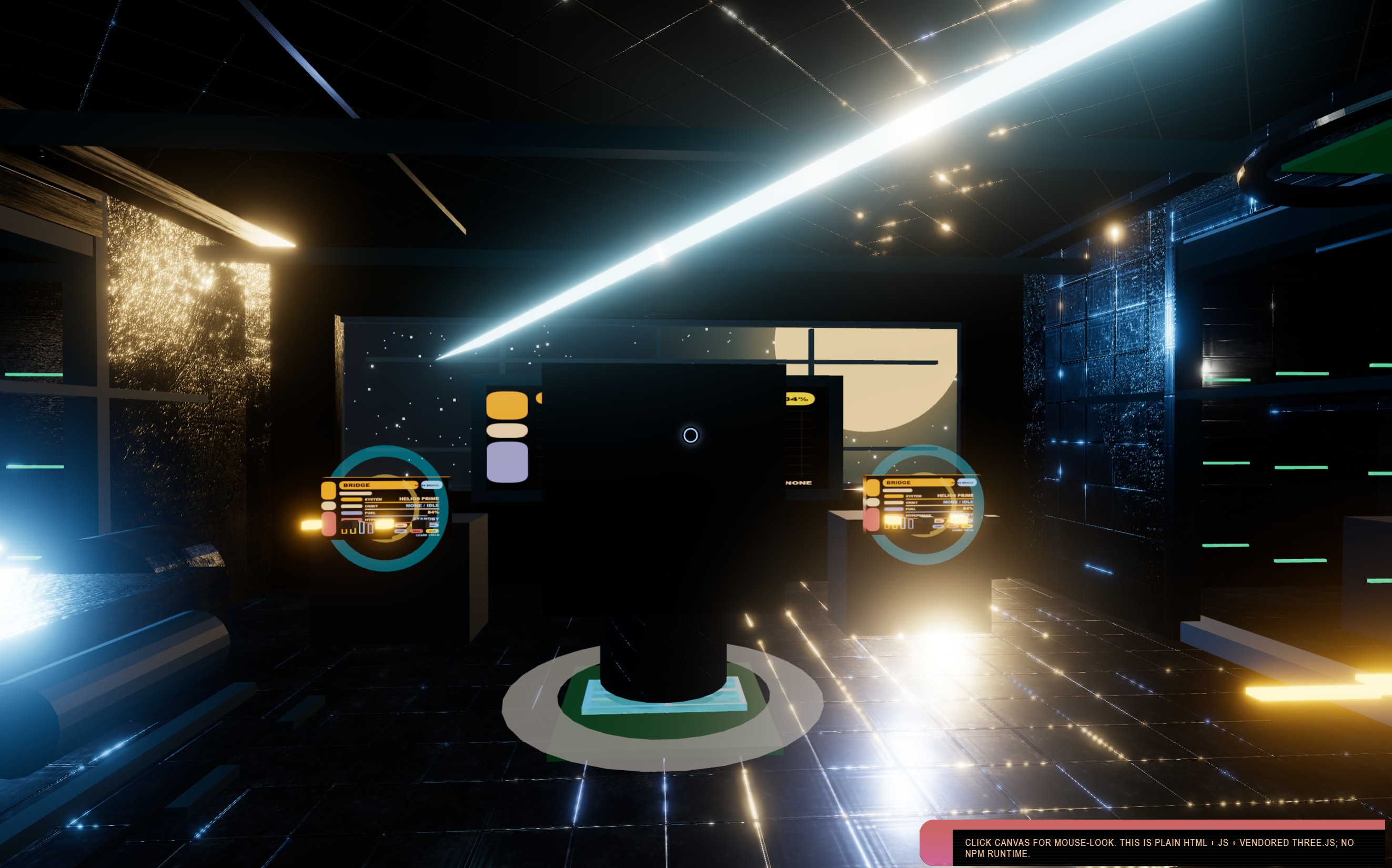
A ward (stronger than “word”) of caution-it is very unlikely this experience works on your mobile phone. In fact, it’ll barely work because of the debug UI you can’t hide. The postprocessing effects related performance optimizations I’ve set aside as a future exercise.
Wait, what is that?
It’s something between Star Trek and NoMansSky.
In Week2 I experimented with isometric and 2d platformer, and so I wanted to push this time into more 3D. I found the AI models could emit the 3d geometry, much like what Kyles mentions in his Boomtown project.
But I wanted to see how far I could push the AI to build with geometry without having access to frontier tech like Fable or Mythos. Could good old 5.5 or another model solve it? Turns out, yes.
What I did was to use Hermes and asked it to do two things: first, install blender. Second, install the blender MCP. And then we did some test projects (I had an idea for week2 that didn’t quite make it).
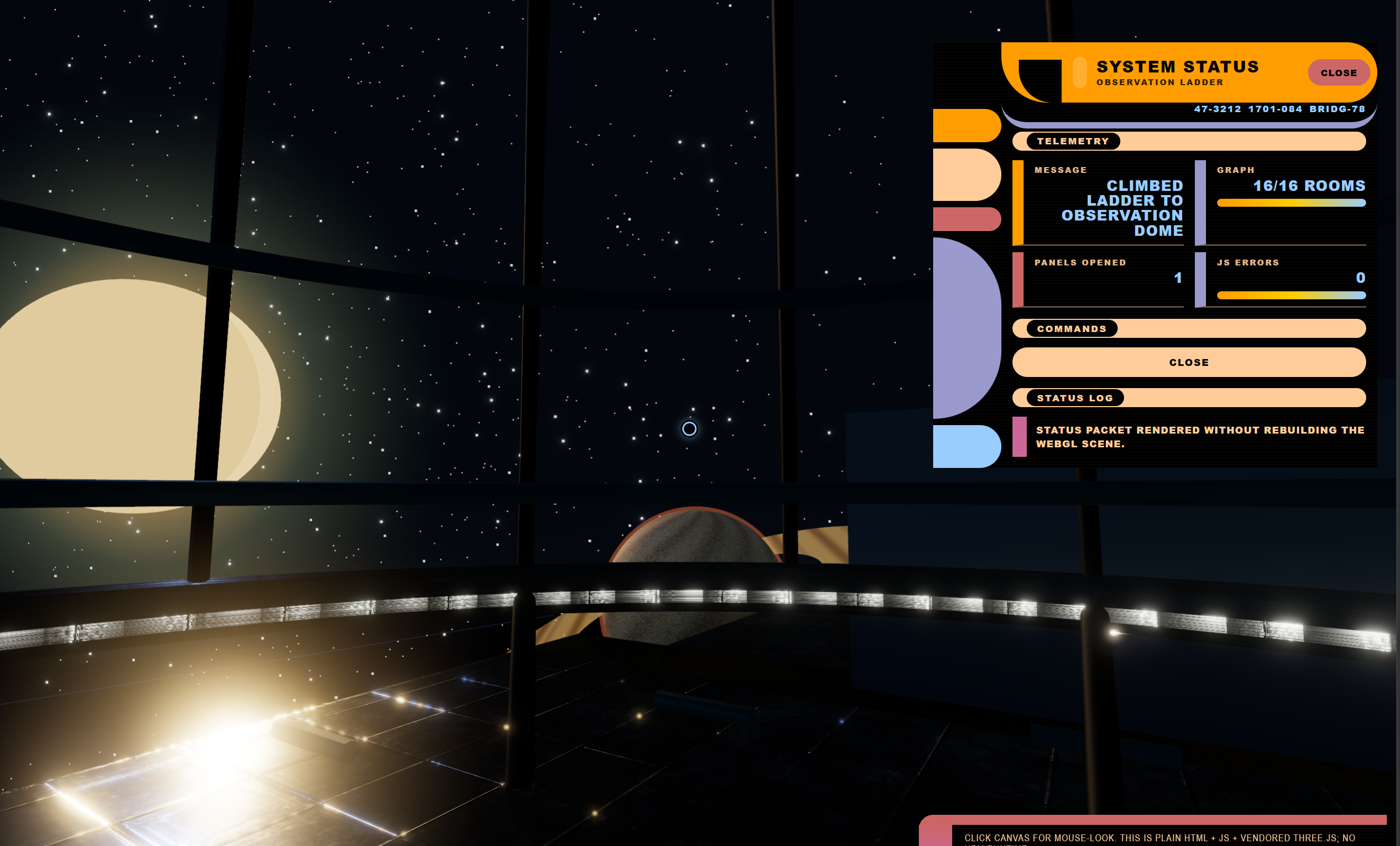
There is a dome observation unit on the Main Starship. This was constructed using the model guiding a 3D software package to build and assemble the aesethetic, and then it wired the model into the scene.
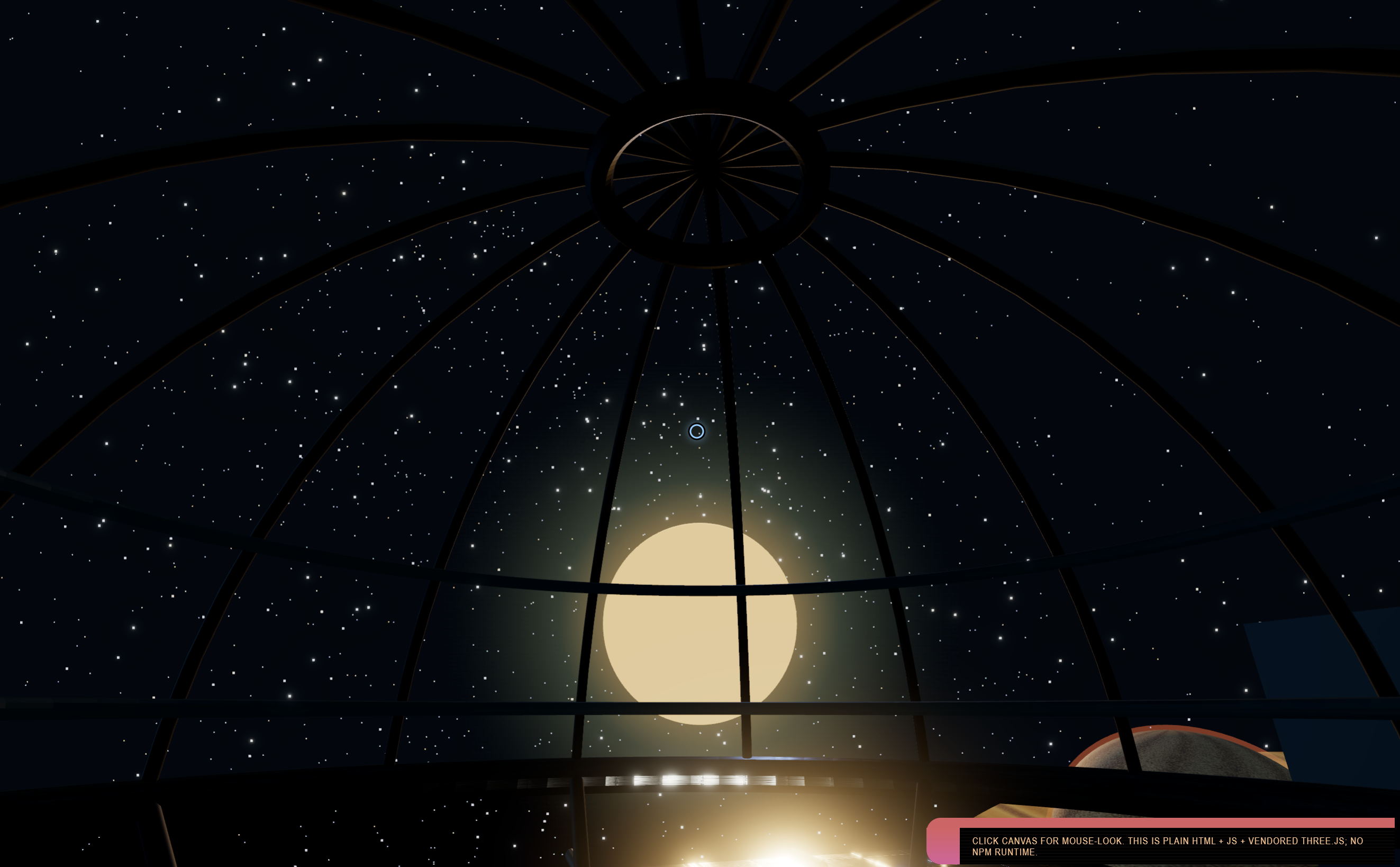
You can hide almost all of the debug or other panels of the experience pushing the ‘7’ key (or pushing ‘7’ will bring it all back, and on the observation deck you can watch solar system bodies movies thru space as your starship flies thru. The experience makes for some banger screenshots. Instead of showing a static image of this, I want to share this video clip because it shows a very subtle mechanic: the planetary bodies also have their own rotational dynamics.
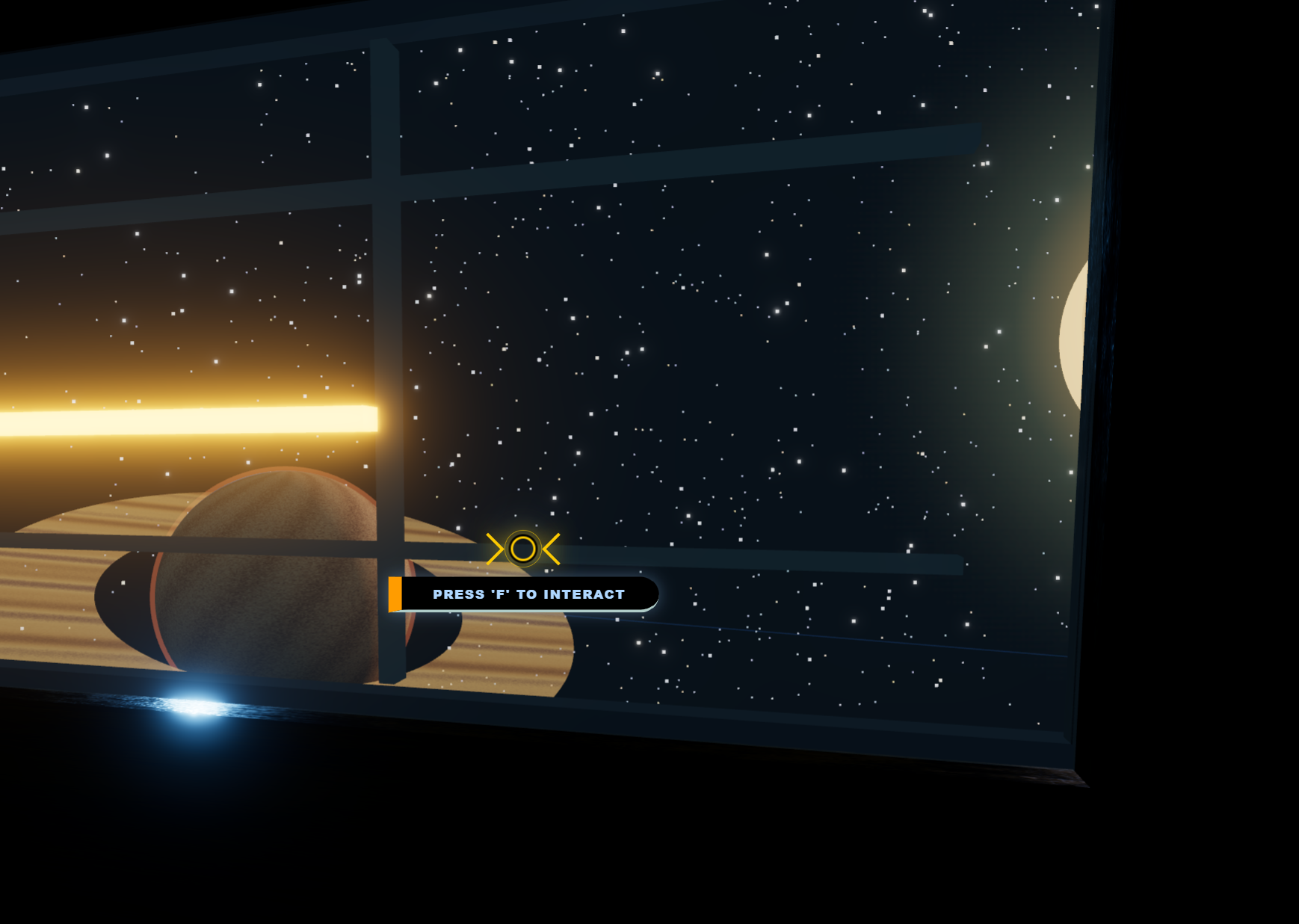
Quick note: it is a little tricky to enter the observatory. The detector is a little small and awkward, but it is there. It’s on the bridge, near the ladder in the corner.
And if you drop onto the bridge you can see the same perspective unfold. The bridge really deserves it’s own section. So I’ll cover that next.
The Bridge
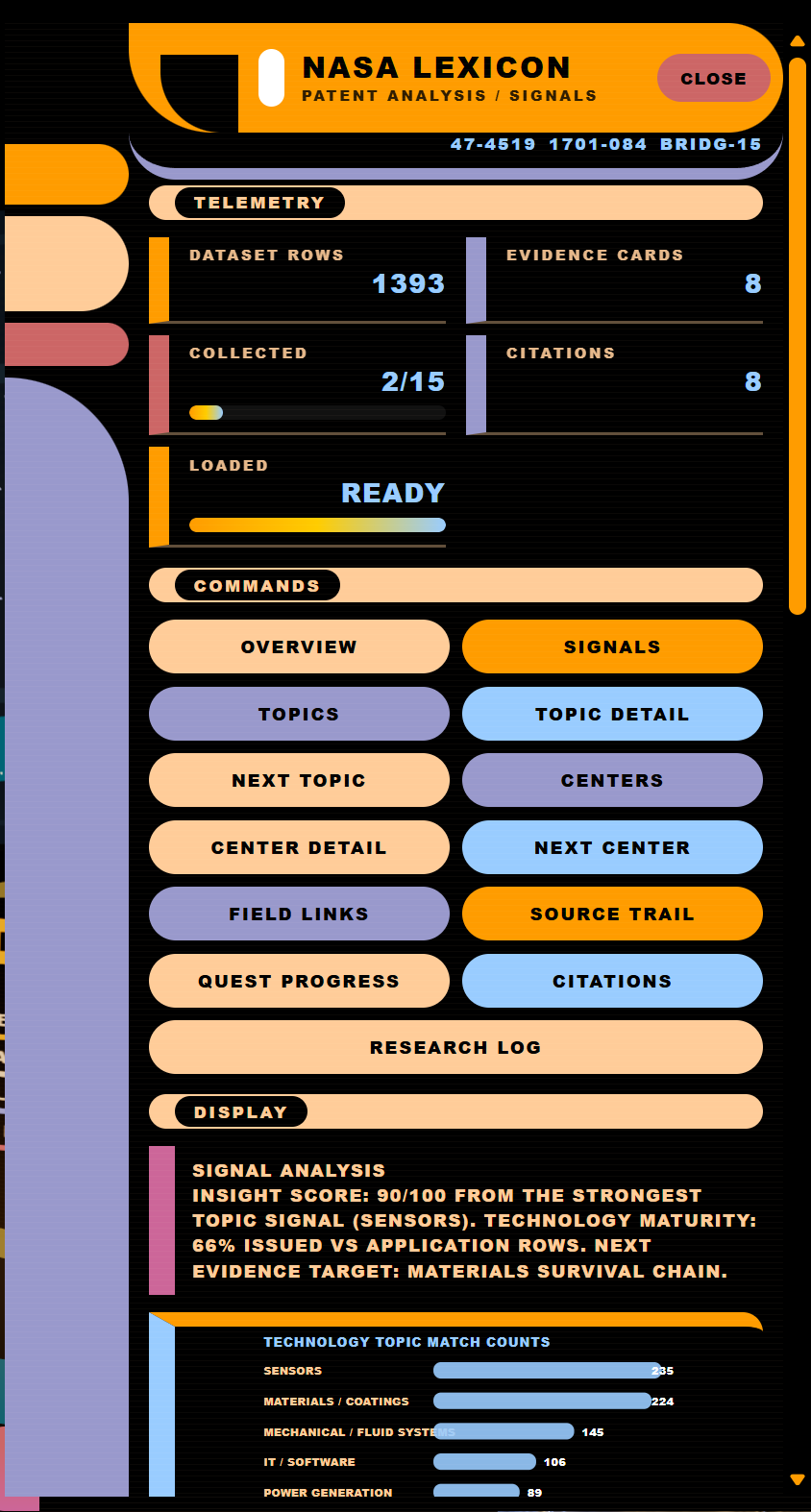
The Bridge has three doors, an escape hatch, a cartography panel, and a NASA lexicon of data collected from data.gov for nasa related patents. I used this data to create quest lines and lore in the universe, and there’s a deeply rich Star Trek style interface you can use to interact with the data. There’s an even a scrollbar there on the right, which is another reason why I don’t think this experience would hold up on mobile-and really, sometimes I think that’s OK.
The dataset is a real dataset and the analysis here is a real analysis. What I attempted to do was to build an entire game engine as the data analysis tool. So instead of dashboards and charts, there’s a cosmos out there to explore. Plus some mix of punk and space rock for tunes.
One of the many, many things I learned how to do in this build is this new technique (for me) of having 3d UI that updates in near realtime. I didn’t even realilze that it was possible to do this in threejs. So the main cartography screen of the bridge? It reflects the solar system as a live map-your starship and the relative positions of the planetary bodies all in view.
You can also open the cartography section of the bridge and plot a course. You have a few options. You can direct your ship to fly itself towards a planet. You can instead, like Star Trek or Star Wars, take a shuttle down to a planet. Or, if you want, you can enter Hyperspace and warp to another solarsystem all together. It took so many tokens to figure out this effect.
Taking a Shuttle
I suggested one could instead of entering hyperspace and leaving a system, that they could also take a shuttle. So this video shows an example of the shuttle experience. You select the planet that you want to visit and then you’ll get to take a shuttle on down to collect the NASA inspired research reports of their data set.
I didn’t have time to get free flight enabled on the shuttle. I don’t think that’ll be too hard based on how I have the code structured, but what might be challenging is to figure out the NMS like detailing system that allows for smooth transit. Still, the ruins are neat and there’s some variation between planets. This has hooks to be expanded in so many more interesting ways.
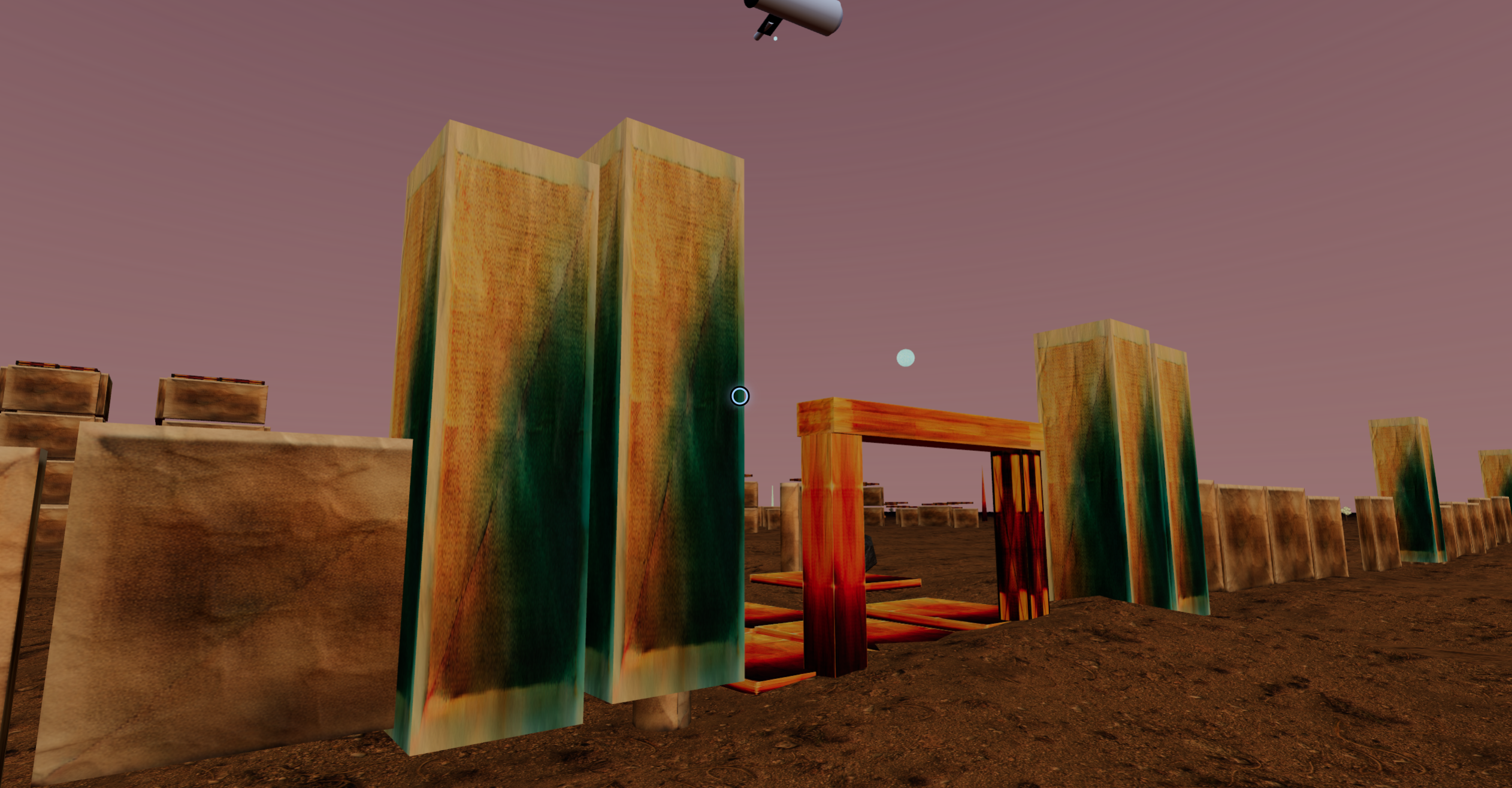
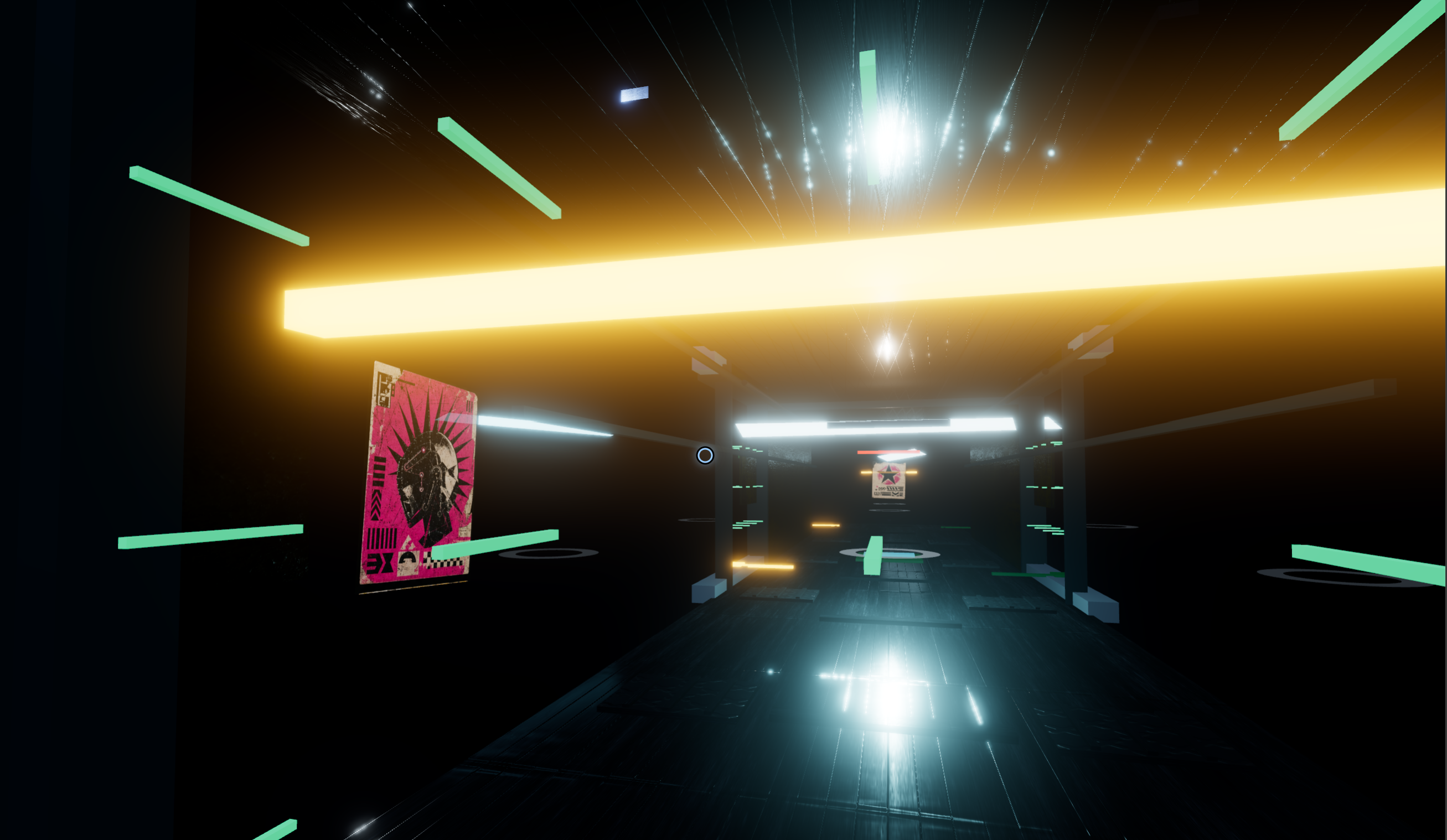
Since the theme is data.PUNK, I also include some interior decor-I need more, but there’s a small lob of it. The idea I was running with is you’re a punk, in space, that took this shuttle over and you’re gathering up these NASA patents to uncover the real secret hidden in the data. That used to sound pretty sci-fi as a concept until people discovered a way to take a large glob of text and make the text talk back to you (LLMs).
Lighting and Materials
It’s probably clear by the screenshots that I’ve found a handful of new and fun tricks with threeJS that I didn’t even realize were possible. You can create these glowing, bloom like effects for lights. And the threeJS material system, it turns out, can handle far more complex surfaces than I realized. These scenes aren’t winning awards, but what they are doing is teaching me how to build with these kinds of elements. It’s incredible this just works… in a browser, in javascript, without any server side processing.
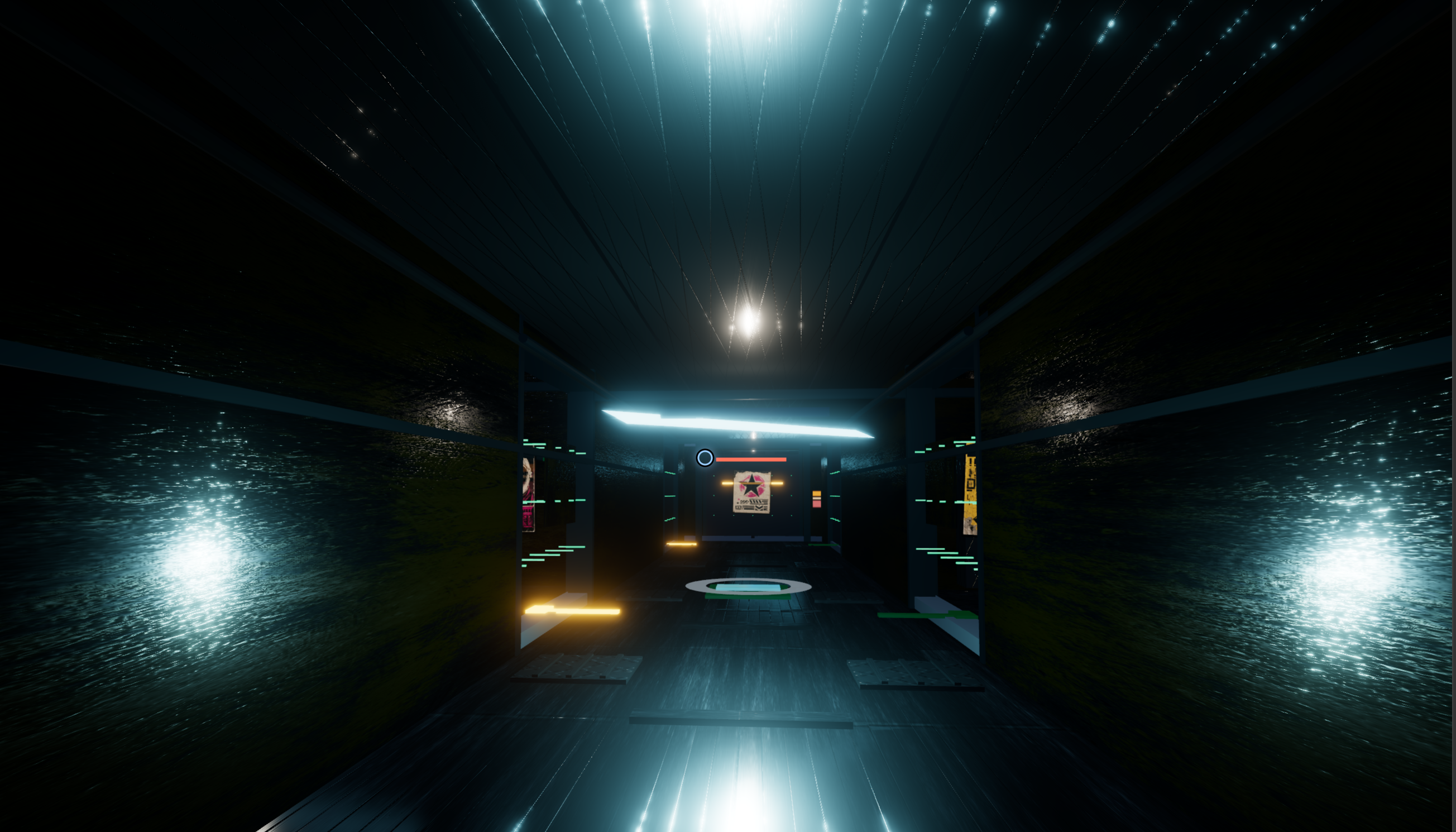
So this exploration of the nasa data really unlocked some big new ideas that I didn’t realize were possible. If 5.5 can build geometry like this without a harness or any assist tooling in blender (as blender’s ecosystem is massive and there’s a ton of generators!), then with a little elbow grease there’s no doubt even cooler and way neater things that could be built. I should note: this was blender on ubuntu. I never once opened it.
As someone who spent many years learning and building in blender, this is shocking to me. AI can just… build in blender? I don’t have to open it? I worry I’ll forget the shortcut keys.
The lighting and textures are intentionally over the top-it’s a “huh, I didn’t realize I could do this?” opportunity for me for a threeJS project. So now I am wondering how far I can push these ideas.
The framerate WILL drop-it’ll recover. This is due to several bugs in the build. I mentioned before there’s a lot of performance optimizations that still need done, but I’m out of tokens so need to call it until the reset. Well, that and there’s a car show I need to attend. I’m still stunned I can just solo out something like this. We live in a remarkable time. Next project will be experimenting with these bloom effects more!
Links
** Press ‘7’ to toggle the debug panes. Ensure you’re on desktop.
Cycle the tips in the upper right of the loading screen.
Play: https://www.ericrhea.com/gamelab/projects/nasapd/viewer/index.html
Read more: https://www.ericrhea.com/gamelab/nasapd.html
Original source
Canonical Substack URL: https://advisoryhour.substack.com/p/summer-into-ai-erics-week3-submission.