Source note: First-party copy of an AdvisoryHour Substack post. Article images found in the public post body are mirrored locally; profile/avatar images and subscription widgets are intentionally excluded. Read the canonical Substack post.

“Any hints about week3? It’s coming up”
I wrote early this morning about an analysis project I did to go thru and gather learnings and insights from the competitors about the construction and shape of what might be considered better software.
Summer into AI: 3 Saturday Plays of Week2 Submissions — It’s clear that building on other’s work is an accelerant-far more than just building on one’s individual ideas-this impact really is brought forward in the leveraged scale of ai. The competition is at nearly 50 entries now from week1 to week2, and what I’m seeing is tha…
Studying competitors is a big thing in sport. If you want to win, you dissect what everyone else is doing and figure out what your answer is to it. So this was an interesting thought when I wrapped up the analysis work and then strolled outside to do a little fence repair before an expected windstorm this upcoming week: what would I apply these lessons to?
The collective of competitors are soon to cross 30 total submissions for week2 of the competition. The amount of leverage AI provides is incredible-but it has to be unchained from legacy industrial process. There’s absolutely something cooking here. https://www.ericrhea.com/summer-into-ai-2026/week-2-submissions.html
And week2 is a competitive slugfest. The competitors are crushing it-and Jake has the soaring lead right now with so many entries for week2 that it’s jaw-dropping. Adam is right there with him, and so it got me thinking about what it means to be an American and civic duty. Could we direct all of these efforts, for one week, to something useful?
I needed to prove it out. Directed or applied AI works best with data sets and I needed a dataset that wouldn’t tripwire anyone’s corporate legal counsel on a never ending quest of being a pest. Further, it needed to be something such that anyone could just go grab some data, or at least a specific bucket of data, and do something that might change the world. What would it be?
And then I remembered there’s a website that has all the data. To ensure this would and will work, I built an app today. And I’ll explain how I did it, as I used a new technique.
The Process
The first thing I did was go navigate around data.gov. If you’ve never been to this website it’s this gigantic, and i mean that in the true sense of the word, emporium of all the data that the federal government has collected and done very little with. So here’s an opportunity, it seems-this small motley group of applied AI geniuses could make a real contribution to the United States-and over the 250th holiday, no less. The big thought bubble is… how? How am I going to explain this come Monday morning in a way that makes sense?
I had to build an app to try it for myself. And in order to do that I had to do the following.
I built out a new coding rules markdown file. It’s a slight variant on the one I have hosted on my website. This one has a feature that’s pure power. It takes the hermes learning concept and consolidates a rudimentary one down into a markdown file that seems to work well with a pure Codex CLI, and so I have high hopes it’ll work with Claude Code or other tools.
Sourced a random data set from data.gov. I can’t say I did anything super interesting-it was a little tricky to find where to download the data. The data lookup process worked like this-and disclaimer:i had no idea at the time what I was downloading. It just was a data set.
visit data.gov, click around at random on anything that seemed interesting
discover a link to
https://catalog.data.gov/?q=moon&sort=last_harvested_date - “oh lots of stuff”
discover a link from there to https://catalog.data.gov/dataset/mms-4-magnetic-ephemeris-and-coordinates-mec-and-support-tsyganenko-1989-model-dynamic-con-530ba?from_hint=eyJxIjoibW9vbiIsInNvcnQiOiJsYXN0X2hhcnZlc3RlZF9kYXRlIn0%3D
this then had a link in it to https://spase-metadata.org/NASA/NumericalData/MMS/4/Ephemeris/Burst/Level2/Tsyganenko_89_Dynamic/PT0.030S
Downloaded the data and then used the research and coding skill to build an interactive app.
It turned out pretty neat. This weird MMS4 dataset was about space weather. “oh!” Suddenly the project went from “I have no idea what I’m doing” to “I have no idea what I’m doing in space”.
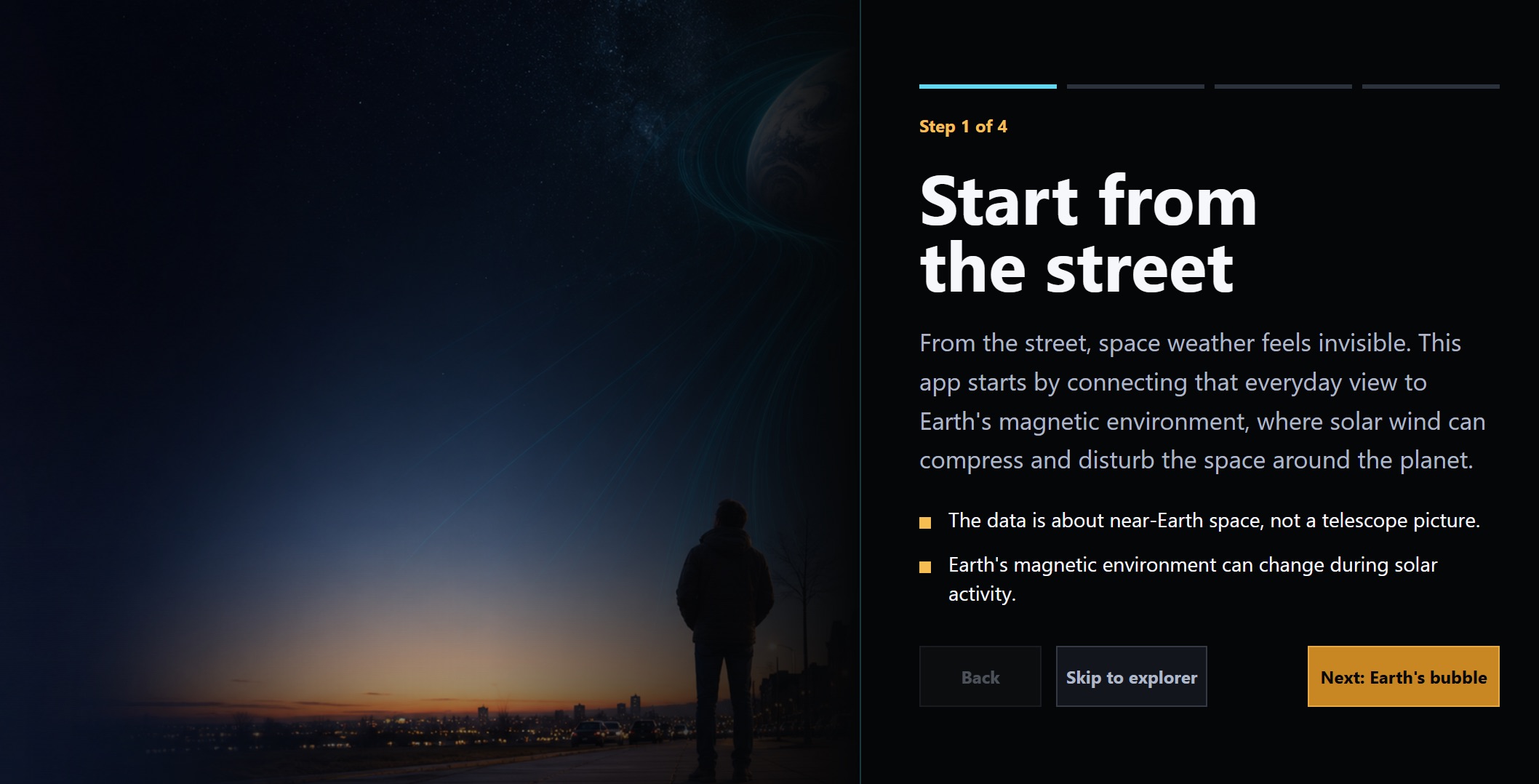
Hey it’s repeatable?
There are certain conceptual maps that are repeatable and useful in prompting:
Have the coding harness tone down the language for middle-school and general public audience because “you’re going to show this in a public exhibit at the museum”. Turns out this will help knock down a ton of jargon and reduce it to something that a mere mortal can understand.
Enable an image_gen skill (in this case, I just used the chatgpt integrated image generator in Codex) can really help improve the visual onboarding experience-which I had a more well-rounded thought about user onboarding after studying the competitors today.
And then really, the agent just crushed thru and I tried to make an interactive and interesting educational experience about this MMS4 data. I don’t know if there’s anyone else that’s tried it, but it proved my point: for week3 we could use data.gov and give back to America as an act of civic pride.
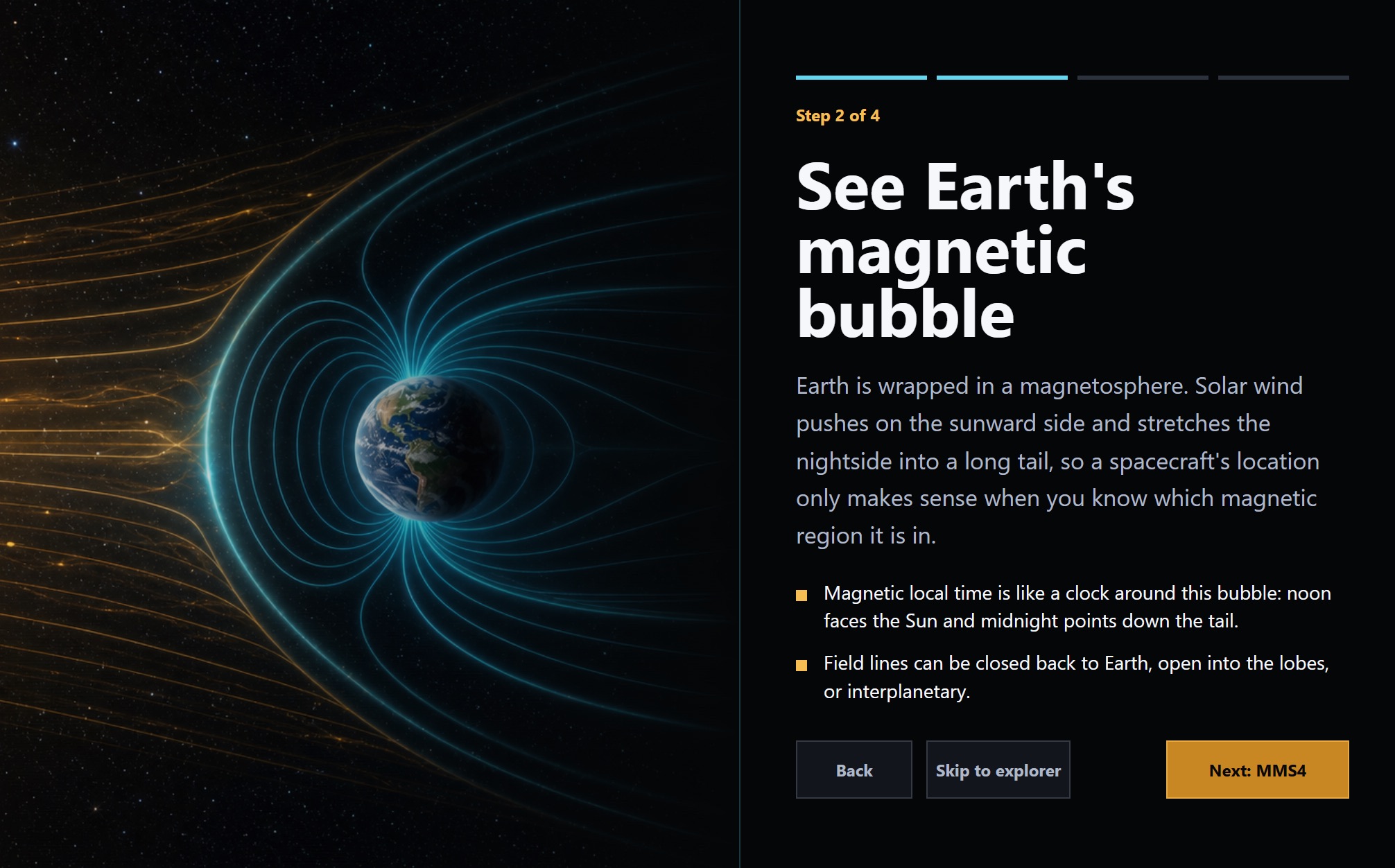
I mean, it’s legitimately good. It’s impressive what these tools can do with data-even data you don’t even understand.
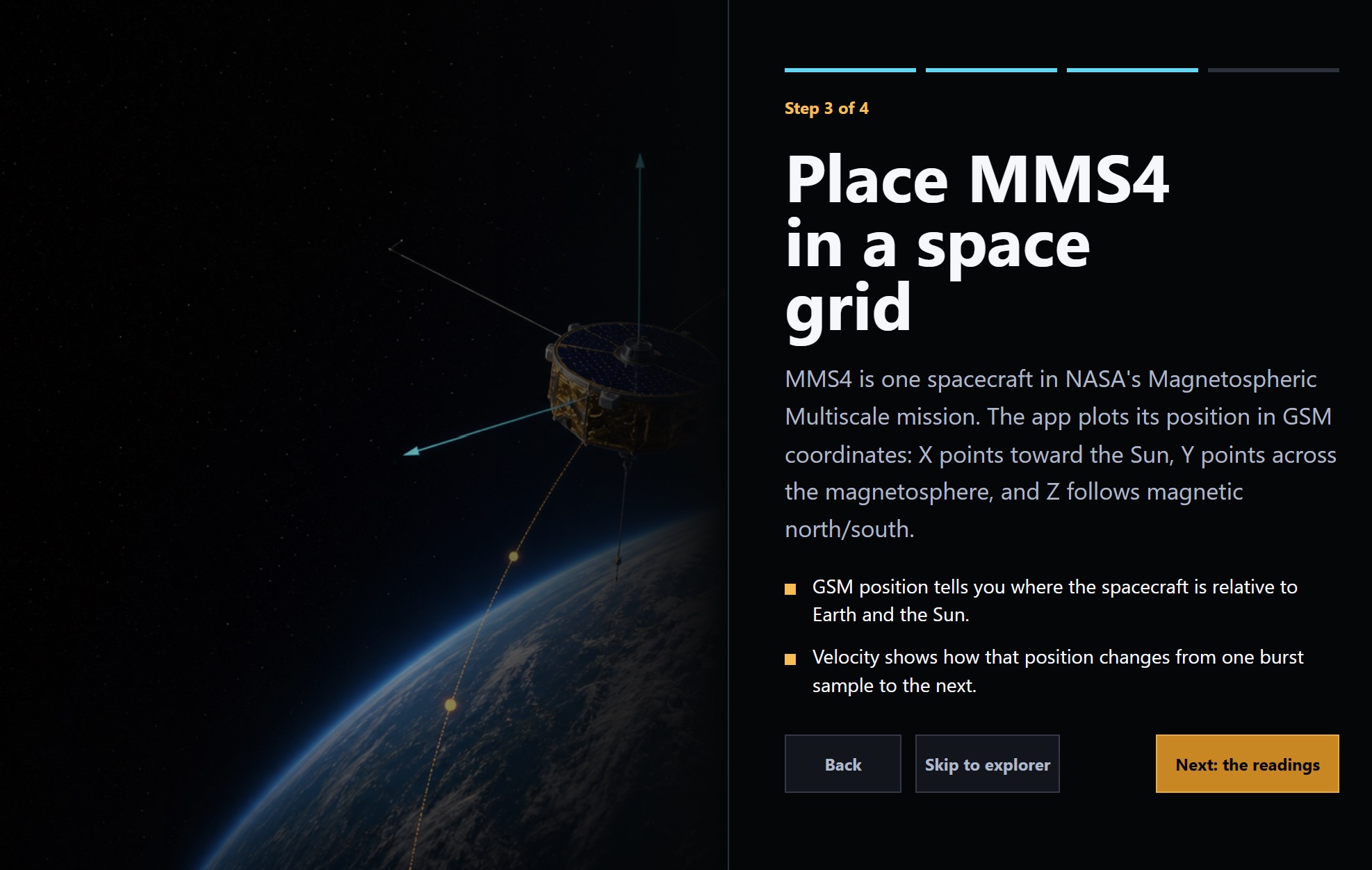
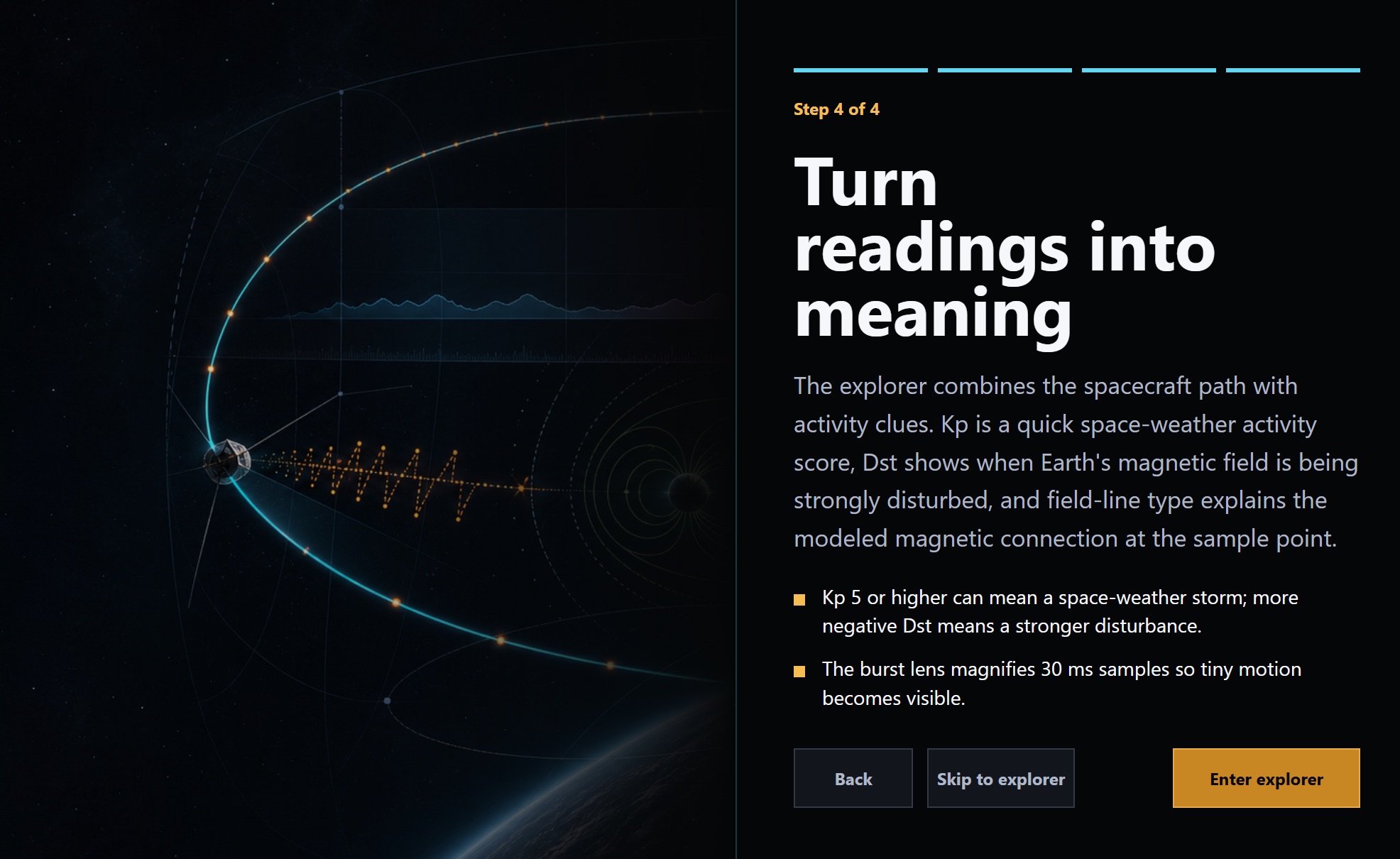
The MMS4 App
There are some things that I’d probably invest more time into improving for a competitive entry in week3, but for a quick test of “is this possible” I have to say I’m impressed. It even uses ThreeJS TSL to visualize the Earth’s magnetic field based on real magnetic formulas-not real enough I’d trust this with a scientific instrument, but for the fun of displaying MMS4 data it’s pretty cool. The first 3 iterations didn’t work, but then the fourth finally got there when I had the model go research the formulas to use.
Video note: The original Substack post includes a native video embed here. The public post API exposes only Substack’s upload identifier, so the local copy links back to the canonical post for playback.
At the very least, it looks like space and scifi. I’m not totally sold on the magnetic field drag, but maybe there’s some more there I need to look into.
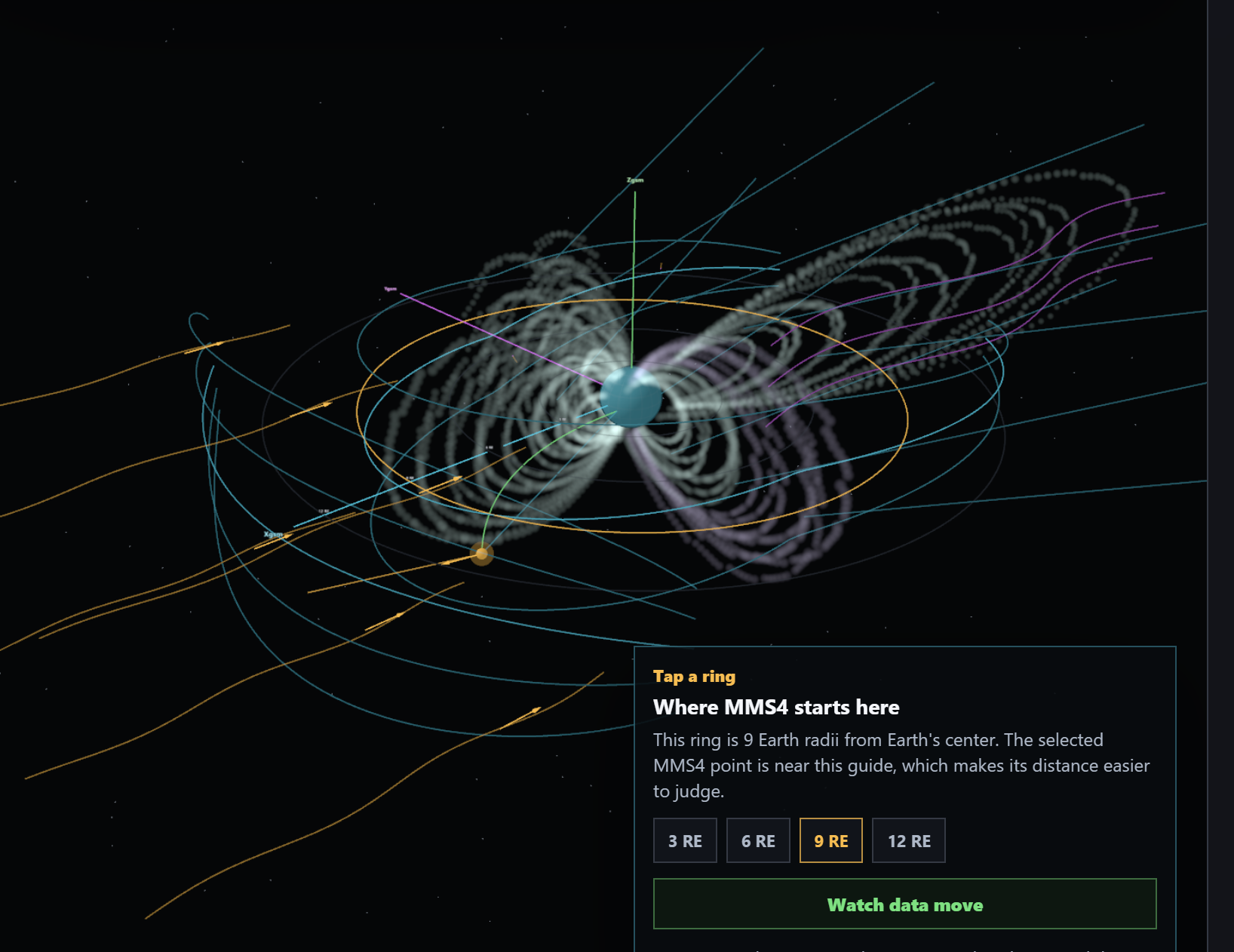
It is pretty, however.
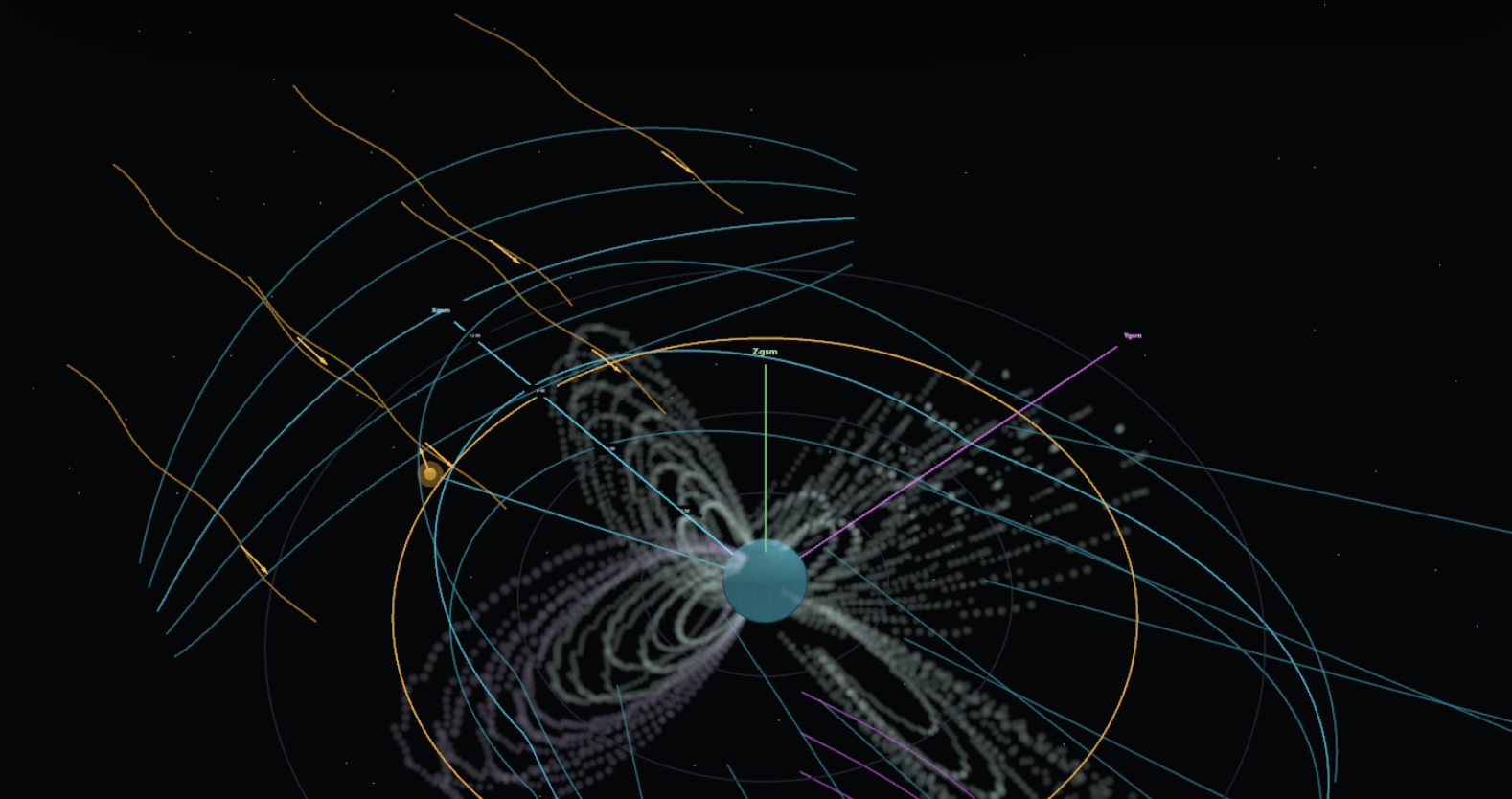
So for Week3 would a theme around data.gov work? It sure seems like it. And what happens when the competition is let loose from building throw away apps to building useful tools for science and educators? It’ll be quite interesting, no doubt.
I built this using just one markdown file and with Codex CLI. No customizations or the like beyond having image_gen enabled for generating pictures. There’s a nice writeup on it here: https://www.ericrhea.com/agents/coding-model-applied-research-guide.html it includes a link to the markdown file and other resources. The page is structured to give you a sense about what changed specifically. There’s a bigger background about how I found my way to this specific working, but I’m running out of wall clock time today.
If you want to dive more into the MMS4 demo, including the research and other collected information from the public data set you can do so here:
https://www.ericrhea.com/gamelab/mms4.html
Just a couple extra notes before I conclude this article. The footnotes, if you would.
There’s a few quizzes you need to answer before some features are unlocked. This is just to confirm you understand the data before unlocking the tool. There’s no penalty for wrong answers, but it’s best to read the questions as a lot of the other data in the app-all sourced from the dataset, is based on that.
Use mouse look, scroll and common mouse look controls to manipulate the viewport.
This is built using r185, just to get a little extra oomph in those particle systems. It’s amazing what threejs can do.
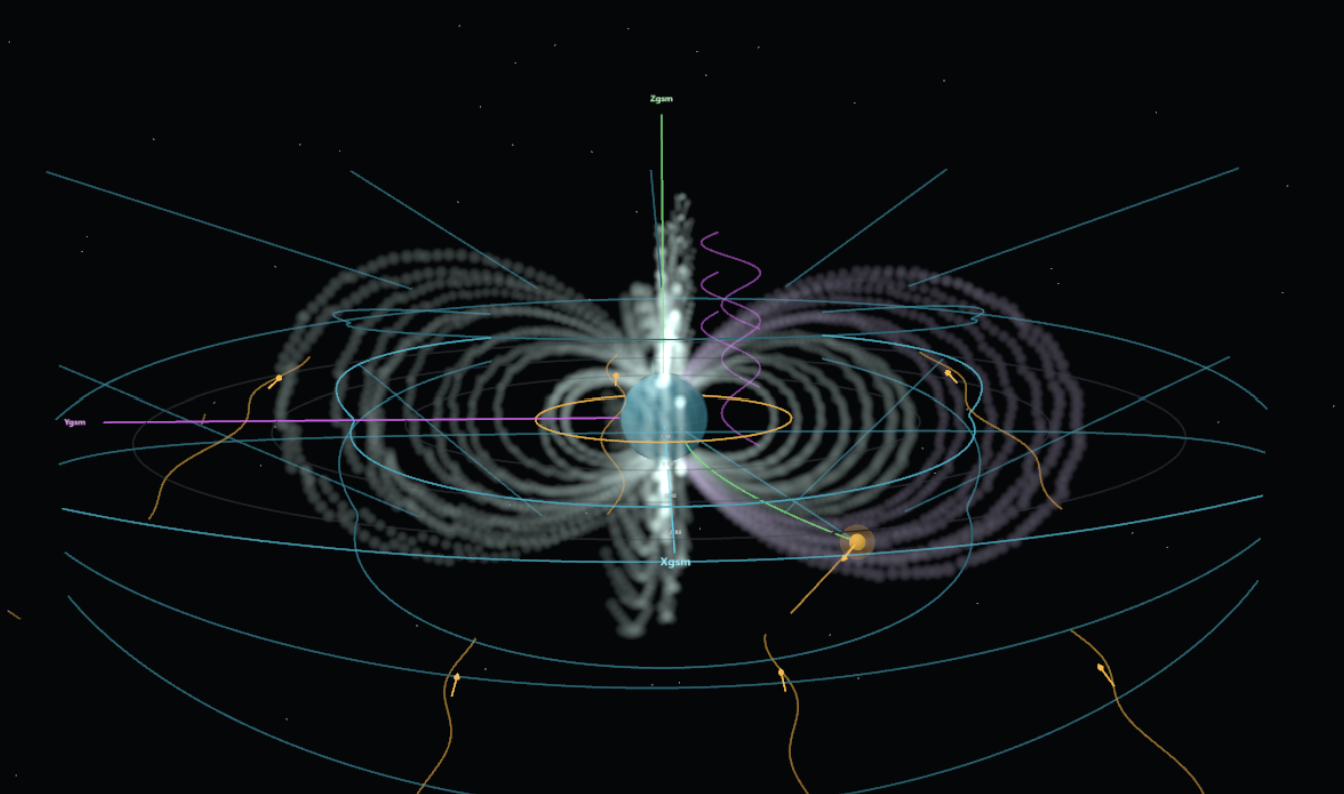
So week3 looks like it’ll be a data story.
Original source
Canonical Substack URL: https://advisoryhour.substack.com/p/preparing-for-summer-into-ai-week3.