This page mirrors my original Substack article inside EricRhea.com. The original remains available at advisoryhour.substack.com.
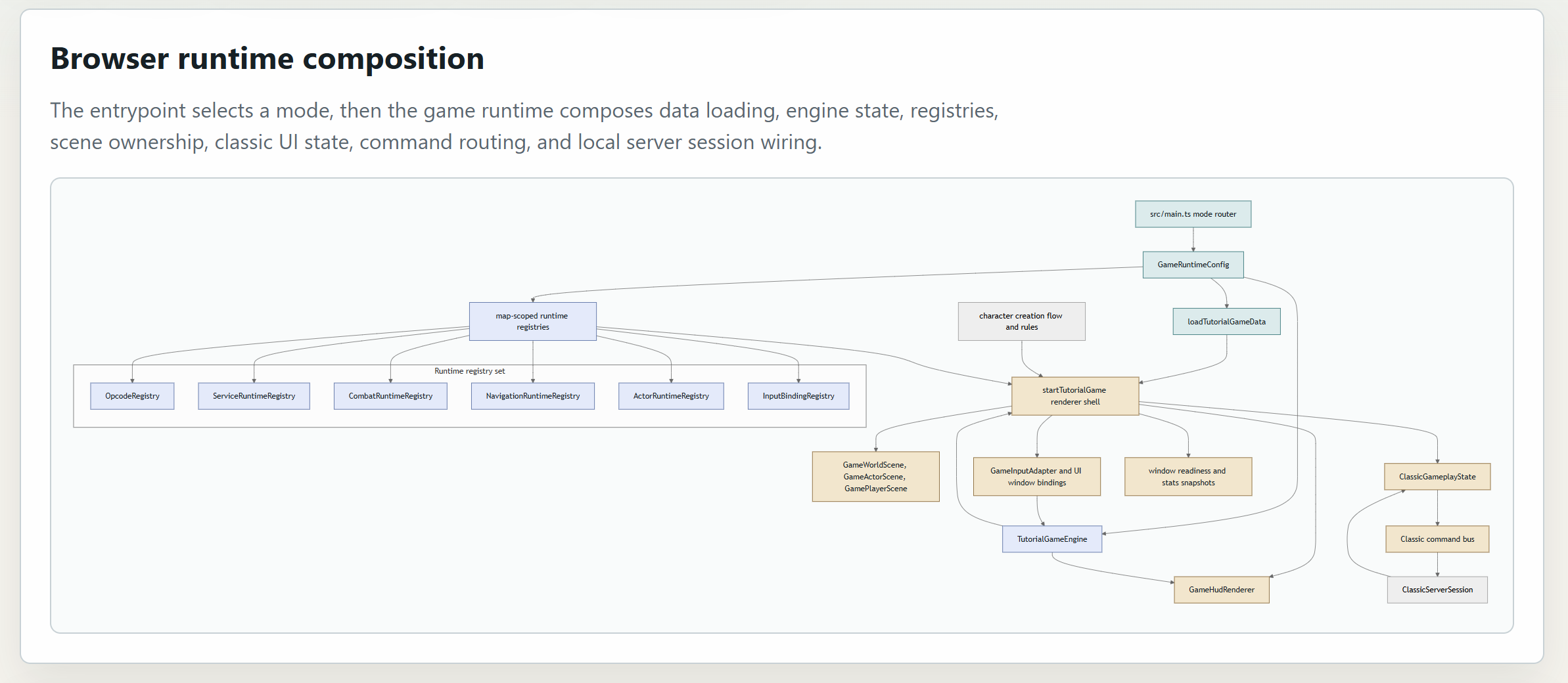
It’s an impossibility to use this one article to explain every component and how everything fits together for TSEQ. However, you can get a pretty good feel for the entire project by taking a look at the relationships of components and systems.
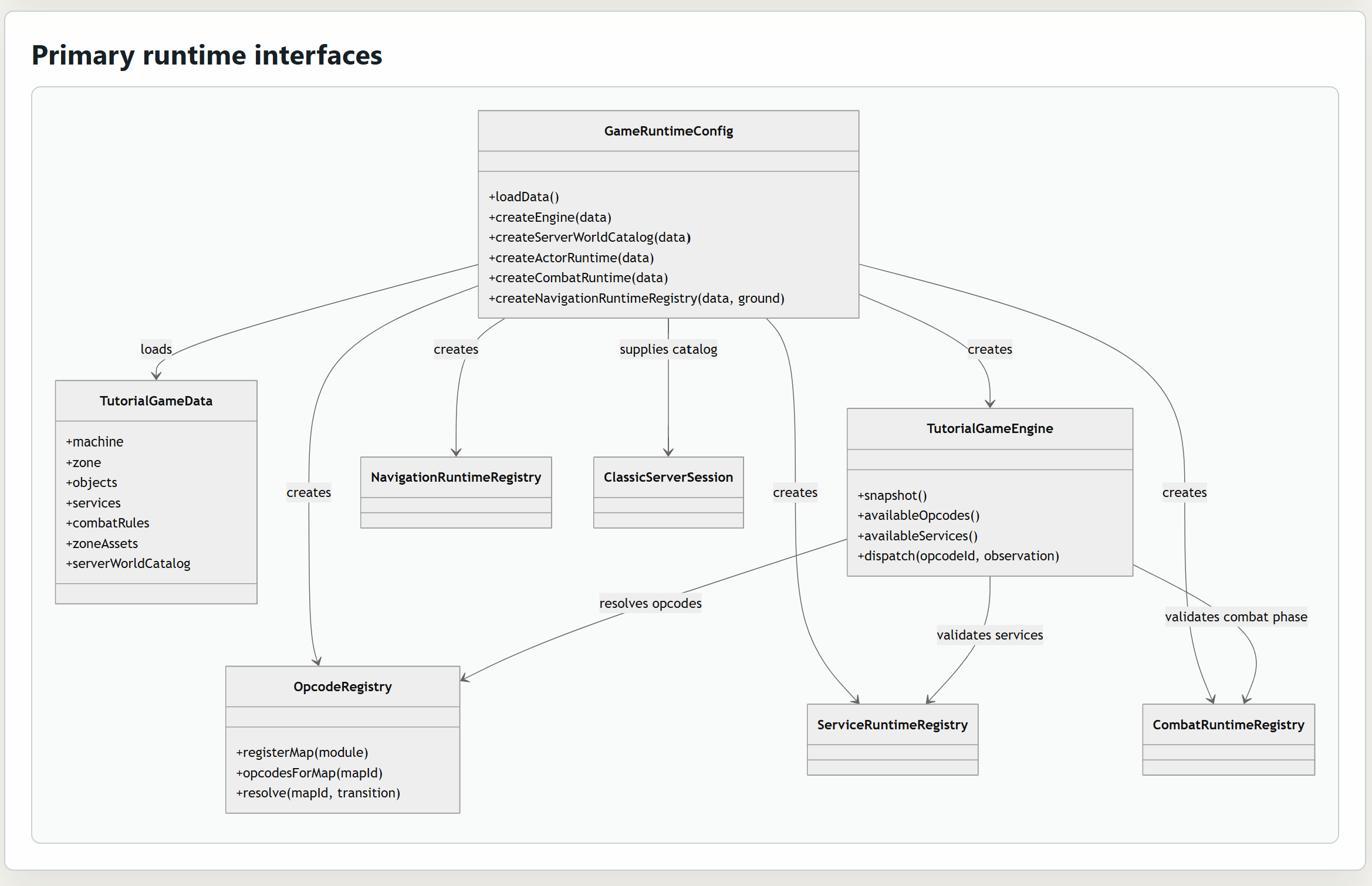
Let’s consider the primary runtime interfaces, which you’ll identify seem capped to the tutorial aspects of the game and aren’t supportive of the broader game. You’d be correct. That’s exactly what is going on here. The engine isn’t a full MMO; it takes the tutorial stage of the game and treats that as the extent of what needs to work.
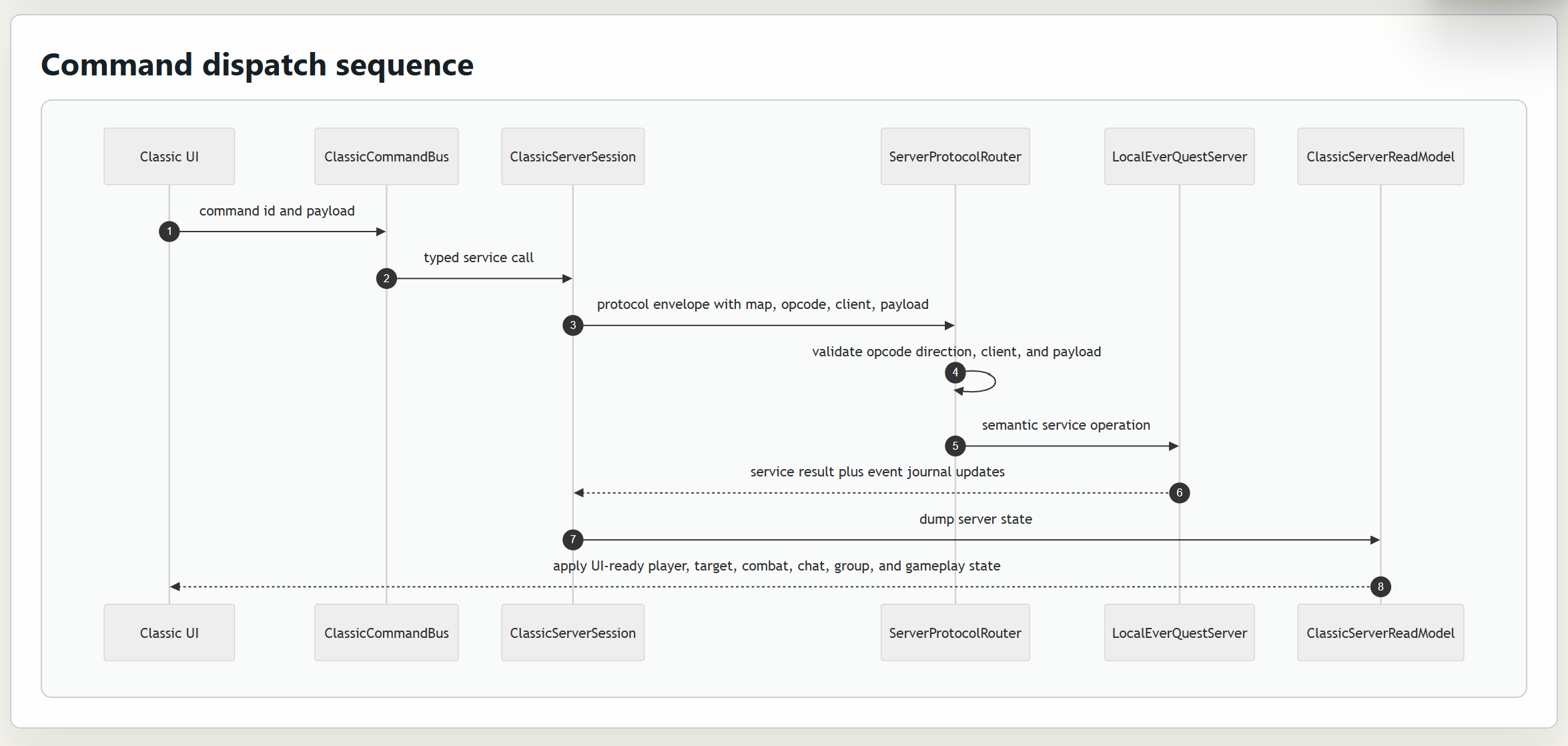
This doesn’t mean it’s a shallow inspired work. There’s a command dispatch pattern, which has a clear sequence flow. Consider this dispatch sequence.
The most important aspect, and likely what interests someone reading this, is how to repeat such an experiment on other software from last century. The trick is to think of digital archaeology as a pipeline, not a one-off system. A pipeline is useful because as new information is discovered, it gets picked up and worked in the overall pipeline. You don’t need multiple agents in a complex and brittle orchestration. You just need one, with clear rules and deterministic harness tools.
Consider this, which is a current version of the recovery project as I’ve found some other things online to improve the fidelity and accuracy of the port.