This page mirrors my original Substack article inside EricRhea.com. The original remains available at advisoryhour.substack.com.
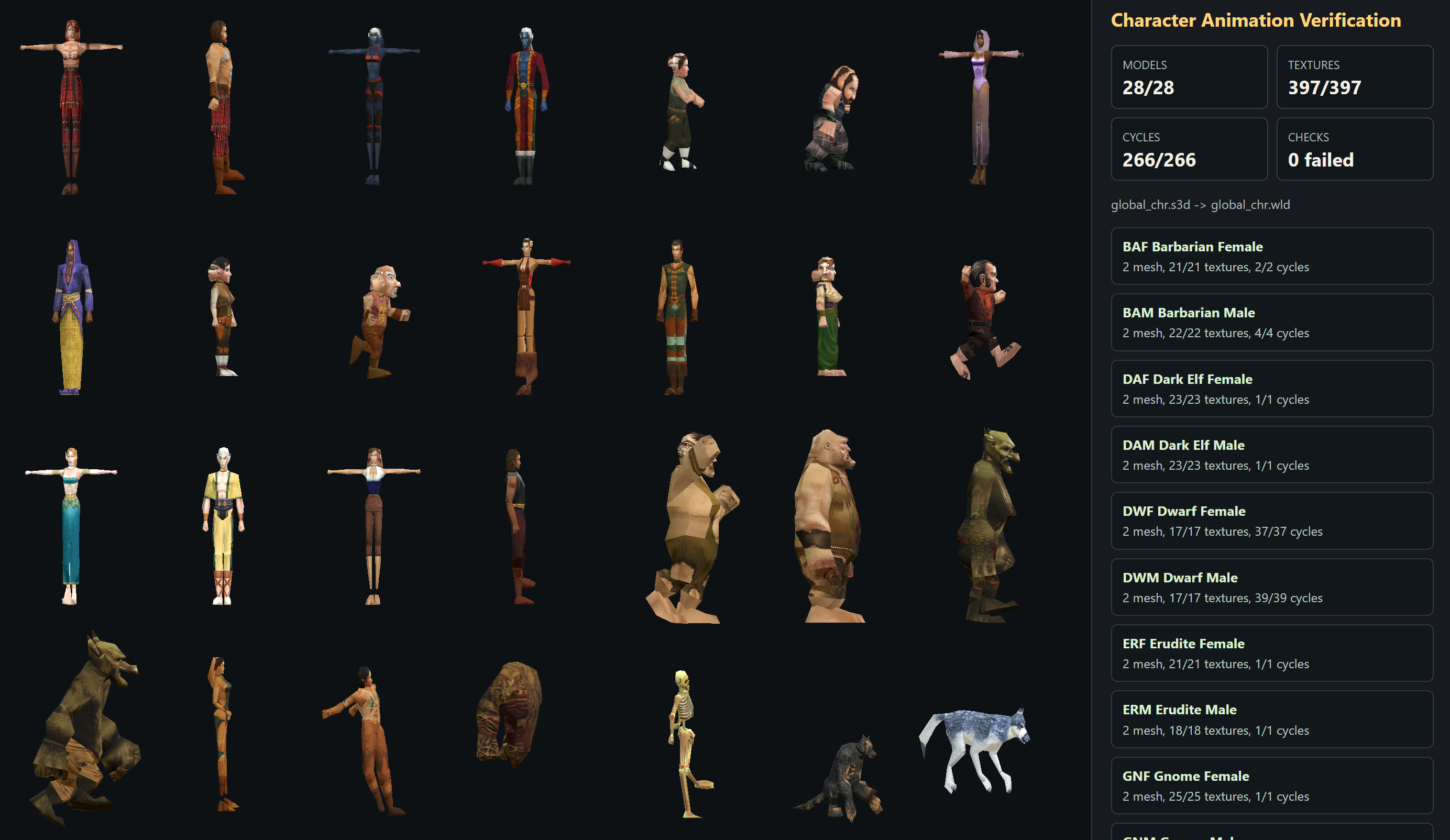
One of the interesting recovery objectives of an ancient game file is figuring out what content exists, and really ensure you have proper lanes of communication for your agents to work to make sense of it all. In this case, it’s an animation cycle lane.
So one trick is to arrange all the game characters and aniation cycles into an assortment that looks something like the video below demonstrates. You can see all the weird and nuanced problems, all at once. For example, some characters have obscure texture UV wrap issues and others are OK, but the animation cycles aren’t deep meaning Codex missed some in the decompilation phase.
The more enticing thing for me is that I’ve got a great data model now for how characters are constructed as well as their animation cycles. This means, conceptually, I could have Codex dream up new characters on the fly. After all, gpt-image-2 is more than capable of creating these textures. Further, the geometry doesn’t always need to be fully net new, a little deformation or subtle tweaks are probably fine.
Now, not all is quite well beyond texturing. For example, I had Codex give me a grid of the full beastiary of EverQuest to make sense of what all animations were working or not.
Behold, The Glorious Mess.
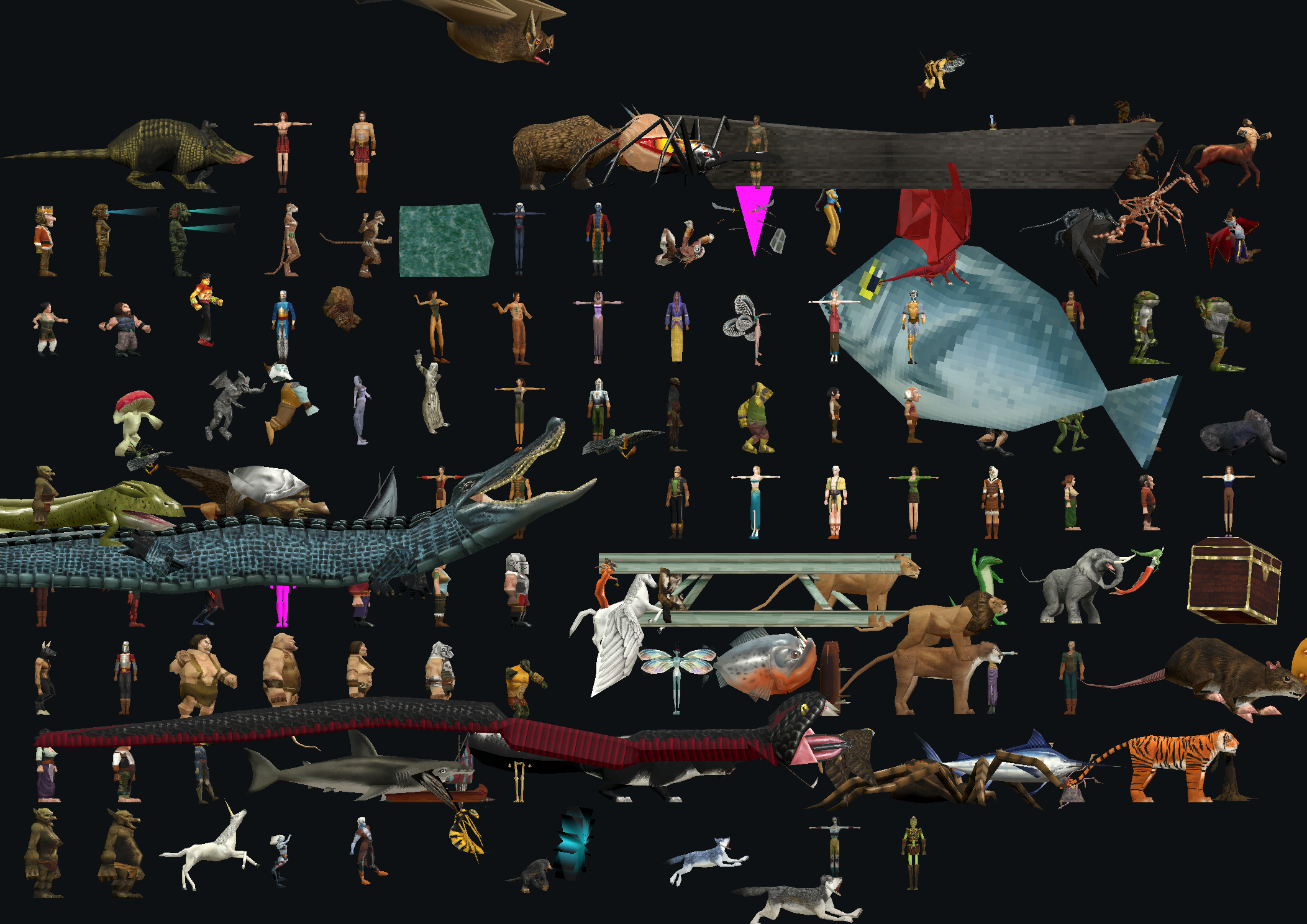
It’s a glorious mess-this picture, that is. There’s something uniquely profound about it, both signal and art all at once. Still, the fact that I can see every monster in the base game of EverQuest all at once in a browser is still mind blowing to me.
It’s a little bit of magic that continues to impress me.
It’s pretty amazing what you can pack in a browser. This is an article in the 1999 EverQuest in typescript port. You can read more about it here