
Growing up, I recall with some fondness the Saturday trip to the grocery-less so because of the errands and chores that came with it. What pulled me in was a lone arcade game (a NEO GEO one at that), which I played with such fervor that I never once demonstrated in school. When I sat down to write a second Saturday Plays article it suddenly brought the past forward-I was just at the grocery, and then I played some games. It’s a fine way to put some time together on a Saturday.
I really enjoyed the Saturday Plays article last week, so this is a great diversionary project for me. And it’s a strange thing-when I sit down to write and think about the other submissions, I end up with a collection of ideas that I bring over to my other projects. Each time I do the exercise, it unlocks little micro-learning opportunities for me. I have a link at the bottom of this article to that article that kick started this little subtopic of writing for me.
Today’s Play
Today I’ll covering Jake’s “Ride for Liberty” from Week2.
Site context
This play-through connects to the Summer Into AI 2026 Week 2 tracker and the local copy of Jake Strait’s Ride for Liberty submission.
Let’s break down how it works, and some really neat ideas I didn’t consider before.
Screen flow architecture
The screenflow of this app follows a standard title-game-win|lost flow state. One of the interesting thoughts is packing the character select on the cover screen. The gimmick is that each character gets a unique likeness that shows up “riding” the rocket as you traverse the stage.
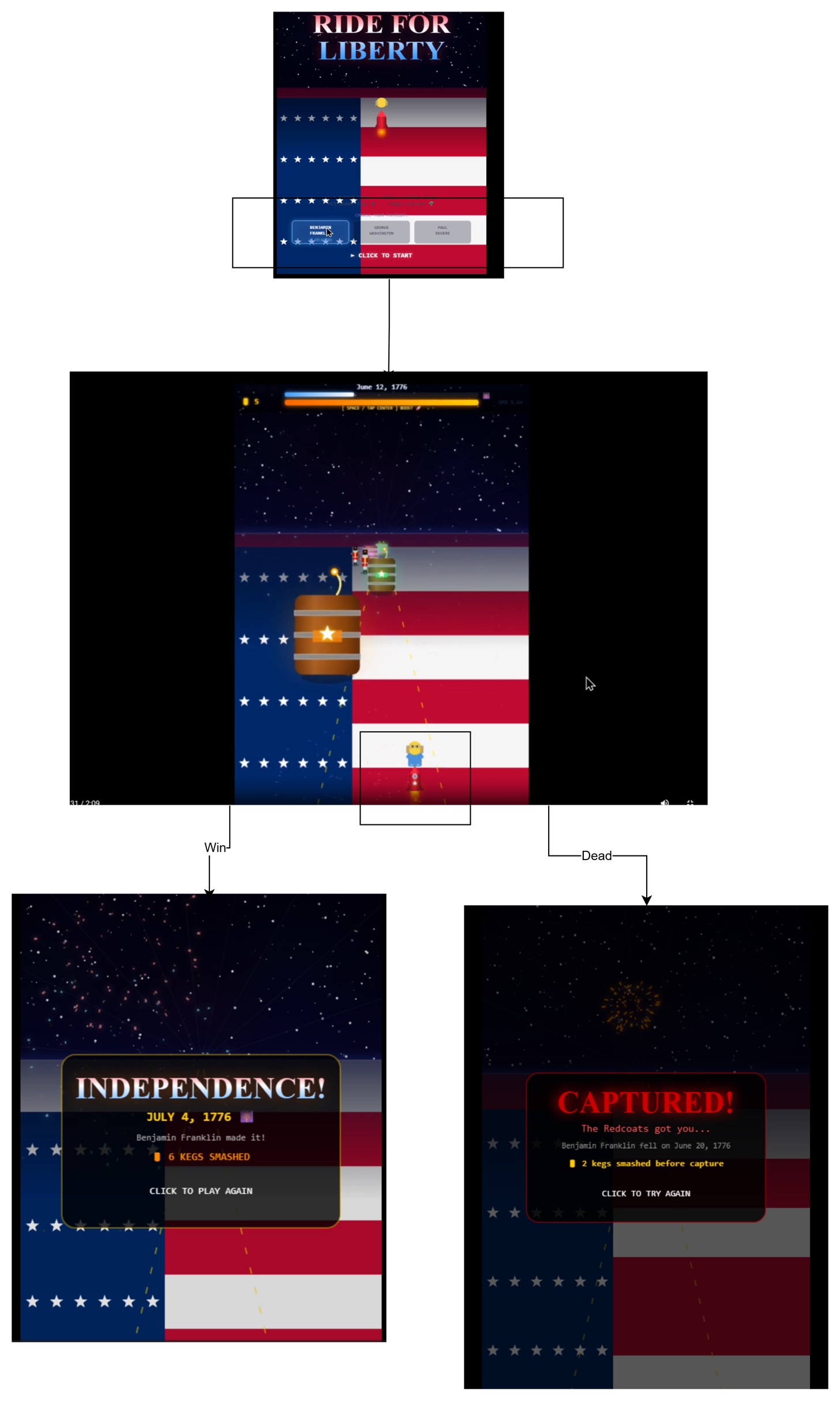
Unique 3D
One of the surprises to me was the quasi-three dimensional nature of this-and it’s visible in the gameplay video below. It was a surprise to me because I’d been stuck on how to solve a very similar aesthetic. I have a project inspired by the classic game Tempest that was trying to achieve a very similar effect, so it caught my eyes when the bones of that strange 2d is 3d like effect was on display. The way the control scheme works is that you get three lanes to ride-as you are riding a rocket, and the points are awarded by how many kegs you crash into. My first play thru I thought the goal was to avoid the kegs, which I remedied on a second playthru.
Particle Emitters
There’s an unbelievable amount of fireworks that play on the background of the stage as one progresses. What’s impressive is that I didn’t notice any obvious drain or performance hit due to these effects. They also weren’t distracting-sometimes too much flourish can pull away from the main game focus, but I didn’t really observe it. I think that’s because of the attention cone.
What I mean by this is that the gaze of attention is focused primarily on these boxes while playing. I don’t really find myself looking elsewhere-the visual cue of “is the rocket boost working or not” is readily availably by how fast I’m moving in the stage. And dodging works best if you spot where the objects are soon to be, not where they are.
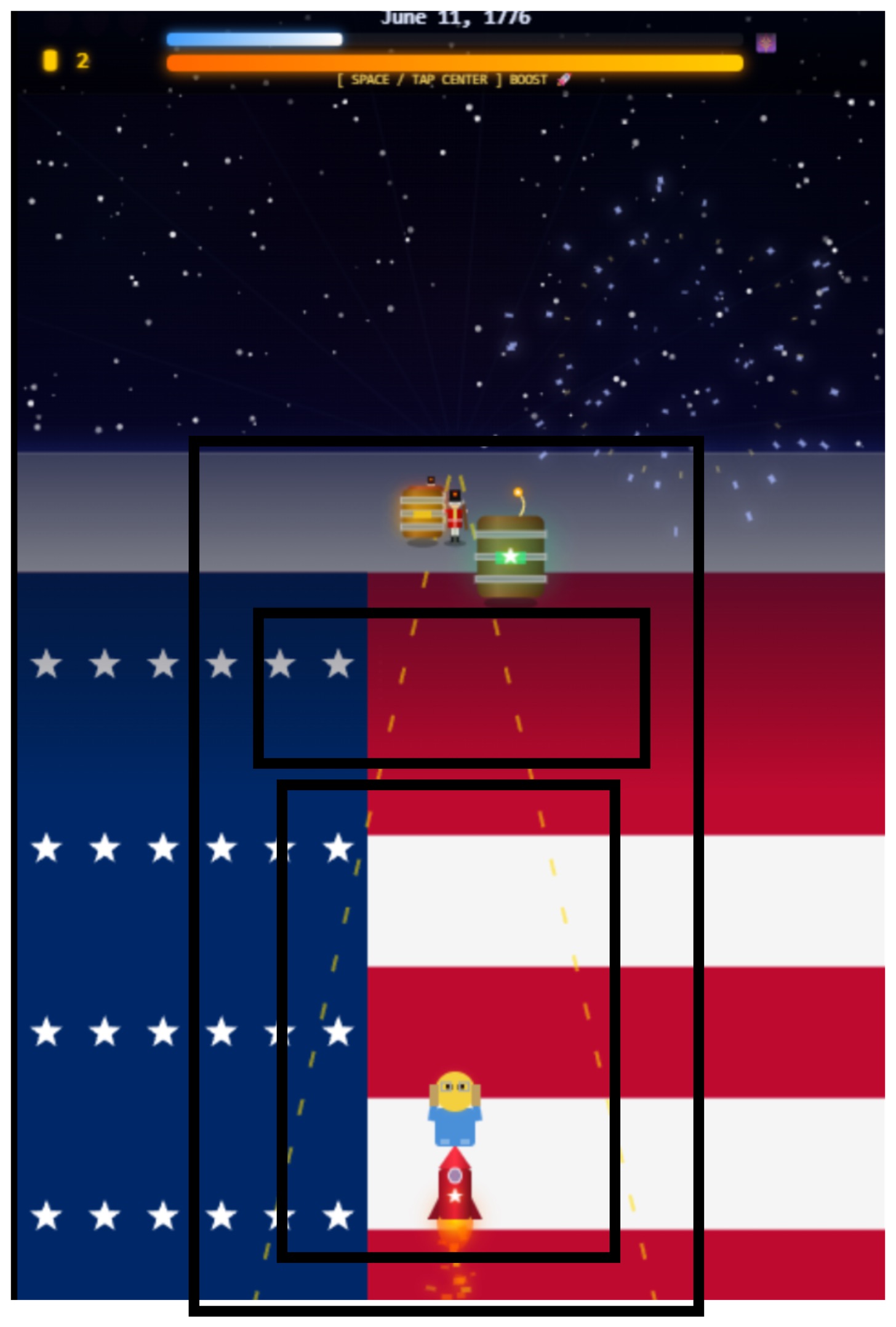
Because of this, the particles and fireworks splashes that emerge on the gameboard really aren’t distracting. And that’s a lesson for stagecraft I hadn’t really given thought to before. You can get away with going a little over the top with particle emitters or visual flair, but the trick to getting away with that? Don’t be where the player is living in the experience-shift it off to the side.
Gameplay Video
Gameplay video
The original Substack post includes an embedded gameplay video for this section. This local copy preserves the article and links back to the source so the video can be viewed there.
I created a board that took all my high-level notes on the Saturday Plays I’ve done so far and put tother together here. It’s pretty interesting to see how these are all setup and brought together. One of the things I’m noticing about this Summer into AI over Spring into AI, is that I’m seeing volume-far more than we’ve seen before. I’ve only started this Saturday Plays article series-and it’s just interesting to see how all these different types of apps are started to lay out.
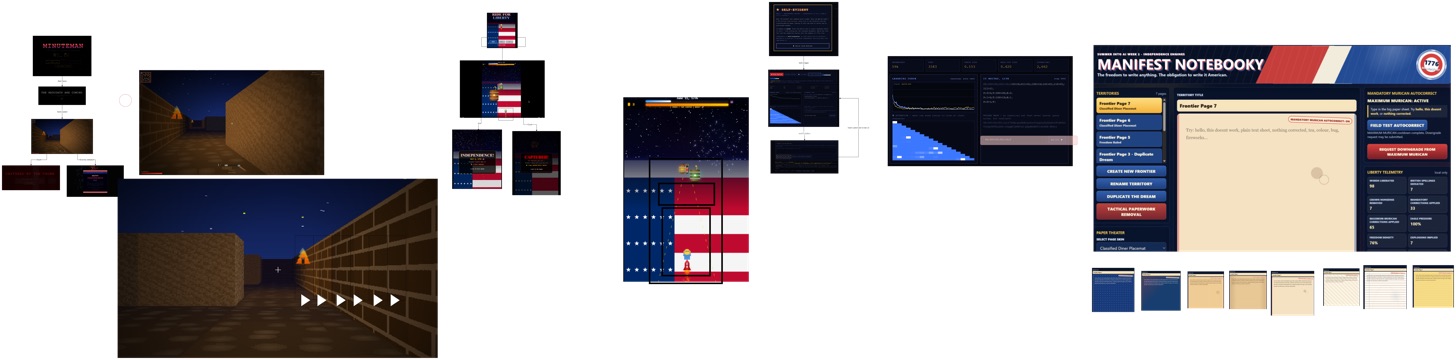
I didn’t expect to learn some new tricks or techniques by doing these reviews, but I am finding a lot of value in the activity. I’d encourage you to give it a try yourself. You might be surprised what you notice when you ask your brain to get on with the noticing.
Here’s a Coin to Continue
Read the article that started Saturday Plays.