Originally published as an Advisory Hour Substack post on 2026-08-03. This first-party site copy preserves the text, localizes public supporting media, and connects the record to its project trail.
Original post
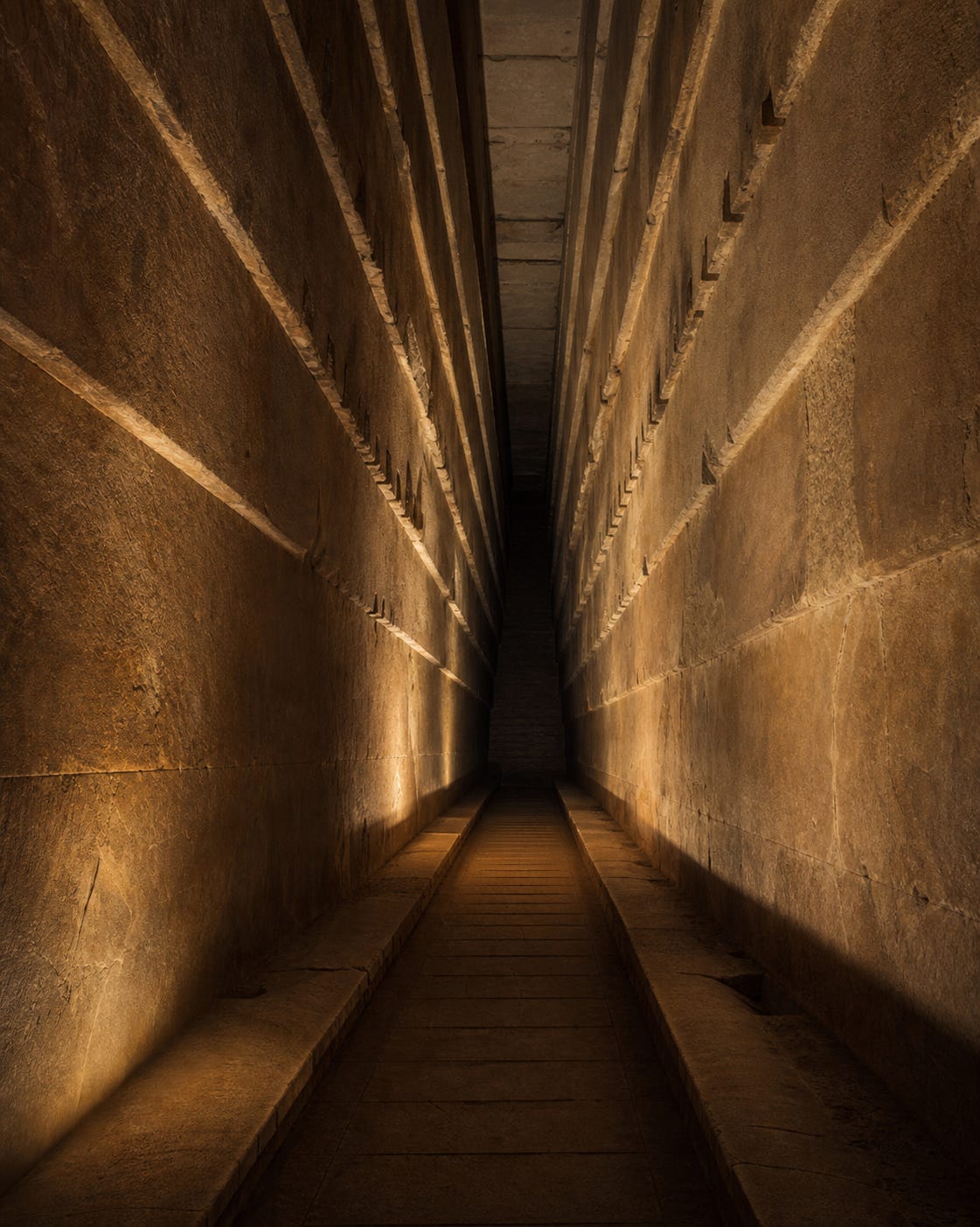
There’s a lot of research data on the pyramids online-the ancient Egyptian ones. Loose collections of radar scans, field notes, photography and more. You know what does really well with taking a mess of data like that and assembling it into something coherent-even if not fully 100% accurate? AI coding tools.
Sometimes it isn’t about the accuracy, but the story.
The Khufu Projects
The Khufu project is along the dimensions of what many of us did during the third week of the Summer into AI 2026 competition. The goal that week was to take public data and liberate it with a UI-although then the request was for more of a punk vibe. The week theme then was called “data.PUNK” and I still think about that from time to time.
The pyramid project works along those lines. The AI researched multiple datasources, pulled it all together, and then gave me a really nice way to just make sense of it. I wanted something that might be good enough to just let run on a kiosk, which is why there’s even a “demo” mode.
I didn’t know going into this what I’d expect to see. I assumed a pyramid and problems-problems with the AI modeling certain parts of the pyramid. And sure, there are things that aren’t right. However, it gets… interesting to see the assembly of research in one interactive experience.
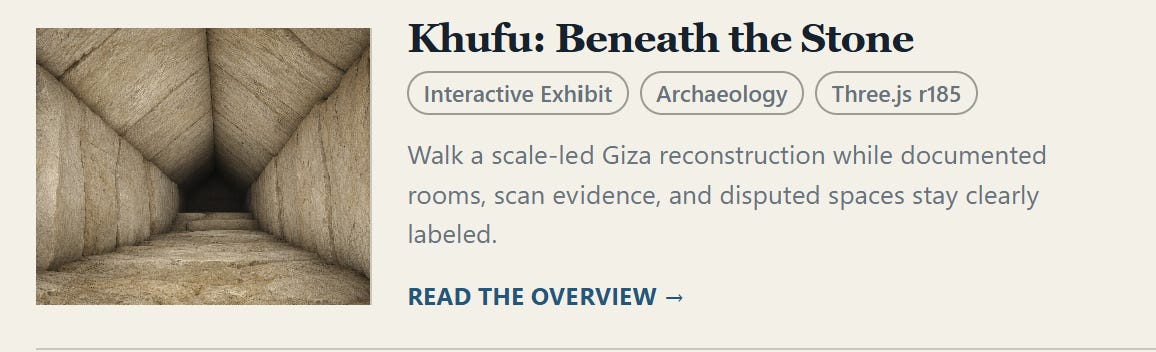
Loading the Experience
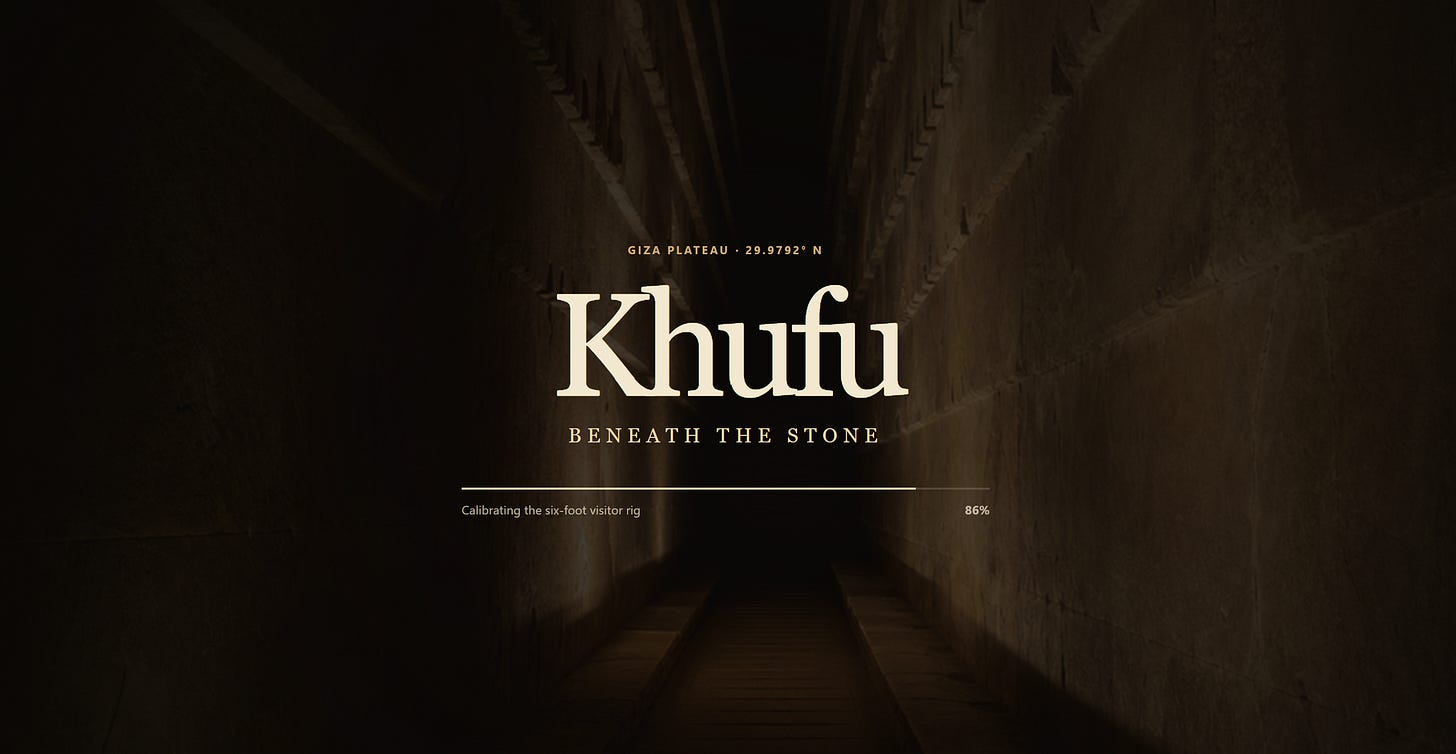
Loading into this experience is a high quality loading screen. I have come to appreciate the fine art of a nice looking loading screen. There’s a note you might catch while reading the loading text flip across, which is that the camera rig is calibrated to a six foot tall human. This is the standing unit of measurement for the experience. I had the AI attempt to build out everything as-if you’re a six foot tall human. This means that in some passageways, there’s crawling required. Enough so that the shafts connecting the different chambers feel less like passageways and more like they would have made far more sense if holding conduit, or bundles of wires connecting the different arms. In fact, the entire pyramid feels more like a machine running around the interpreted version.
The Main Menu
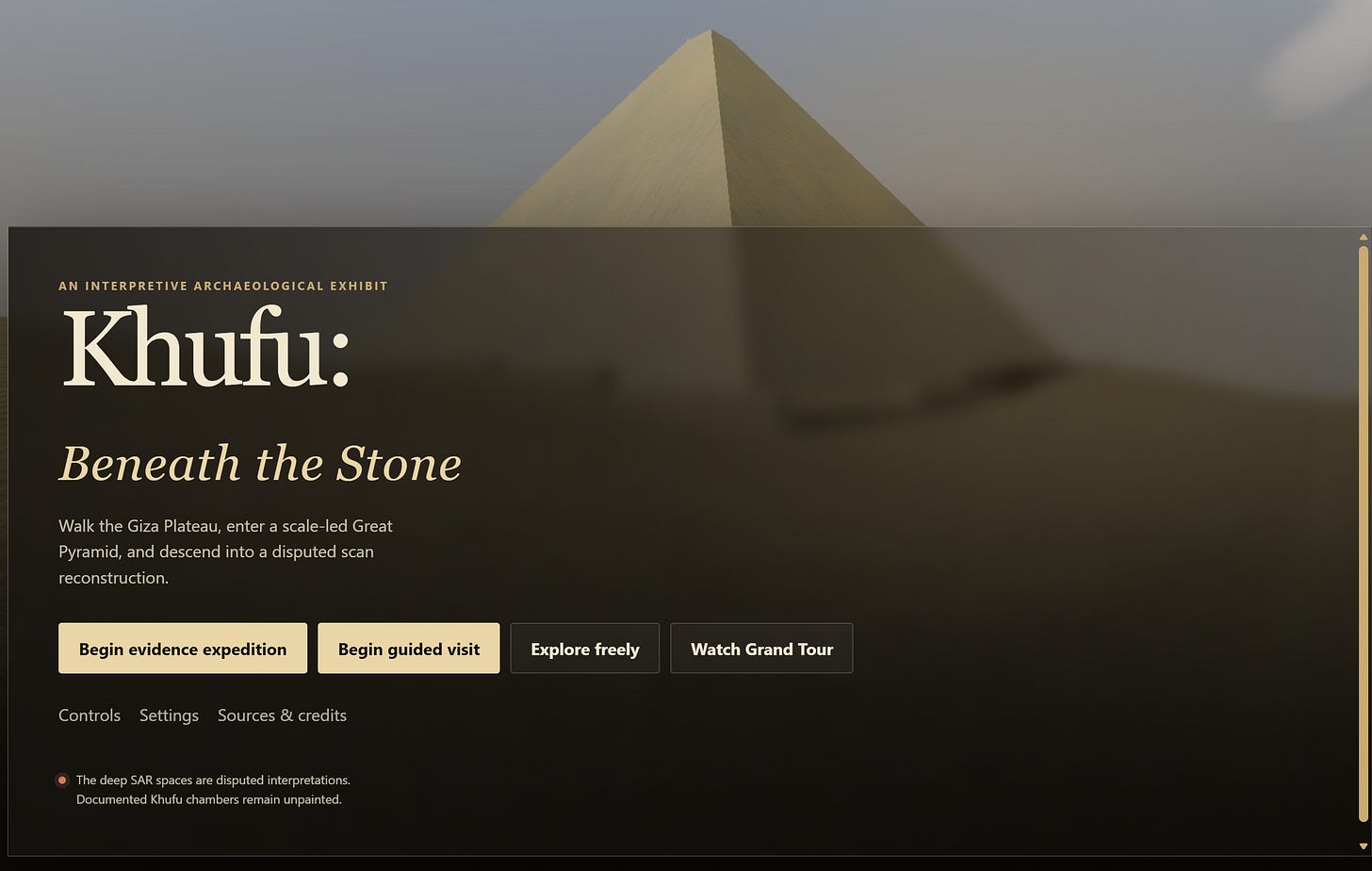
The main menu exposes the main capabilities of the site. The way this is constructed is that the AI is proving to the person experiencing the site the re-construction is accurate. You can even activate a grand tour, which is what I’ll cover today.. There’s also a Sources & credits to see all the data that feeds into this reconstruction. The sources include research notes on topics involving sound, as this experience includes a minor simulation exploring the question of the acoustic properties inside Khufu.
Sources & Credits
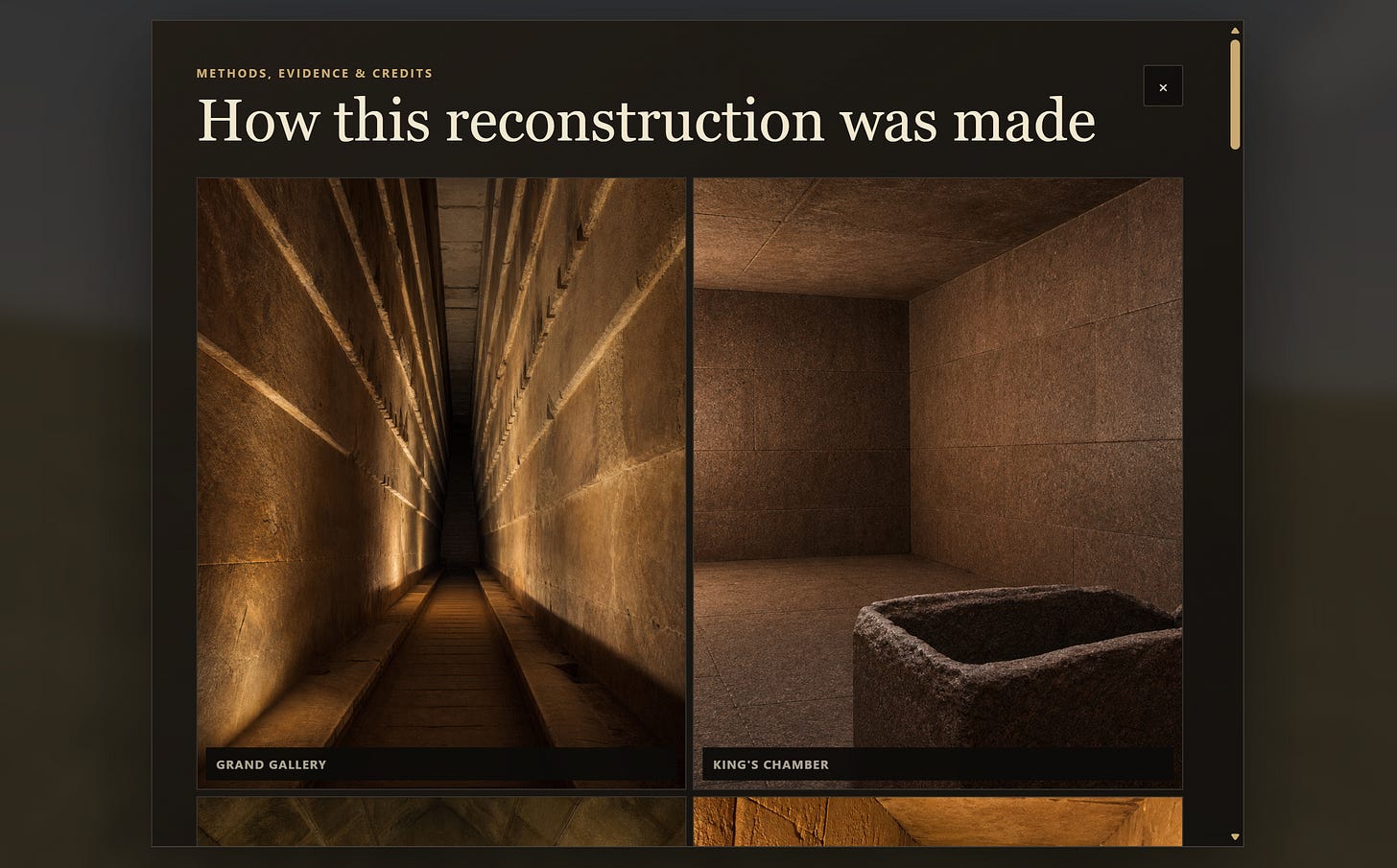

The Guided Tour
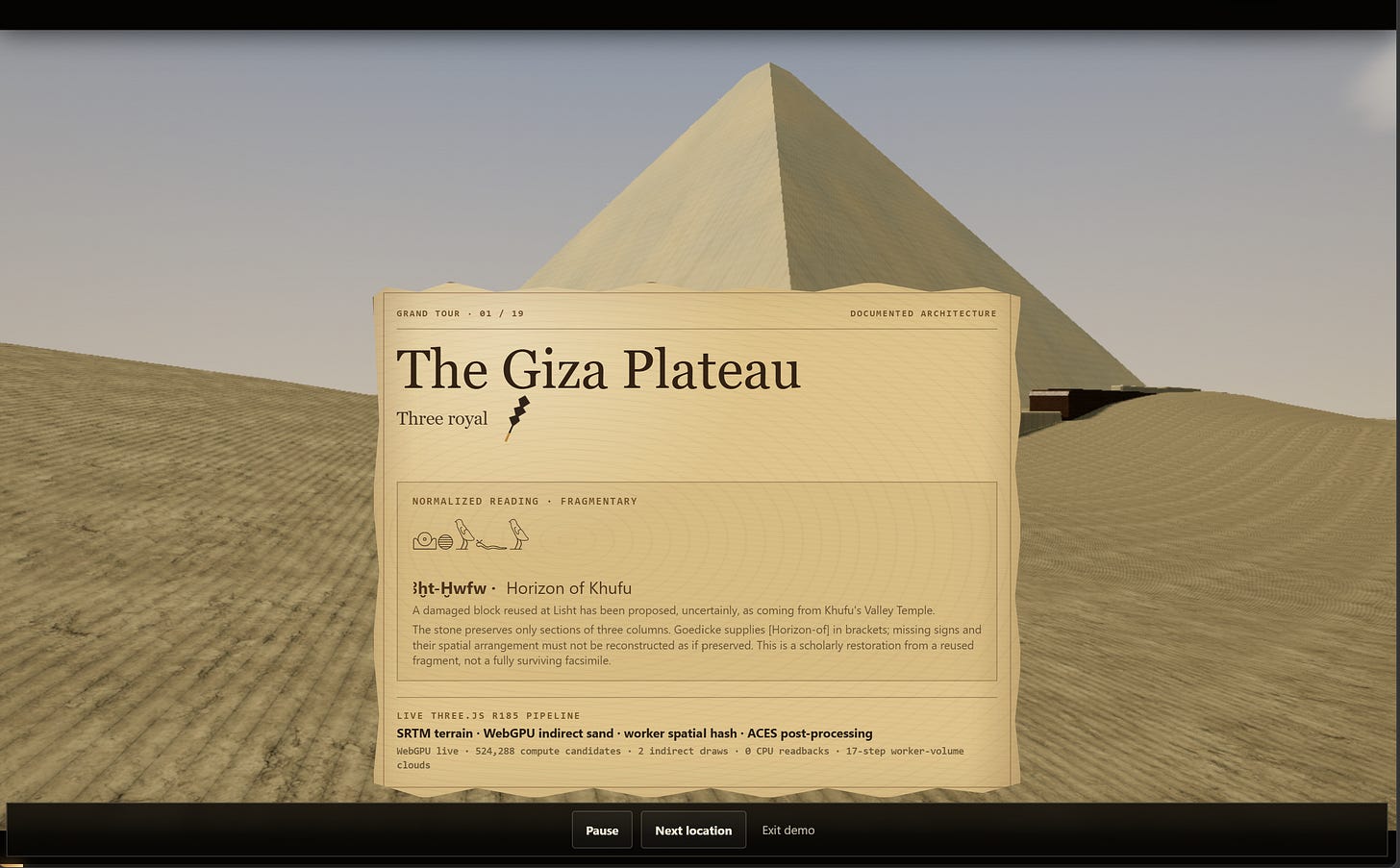
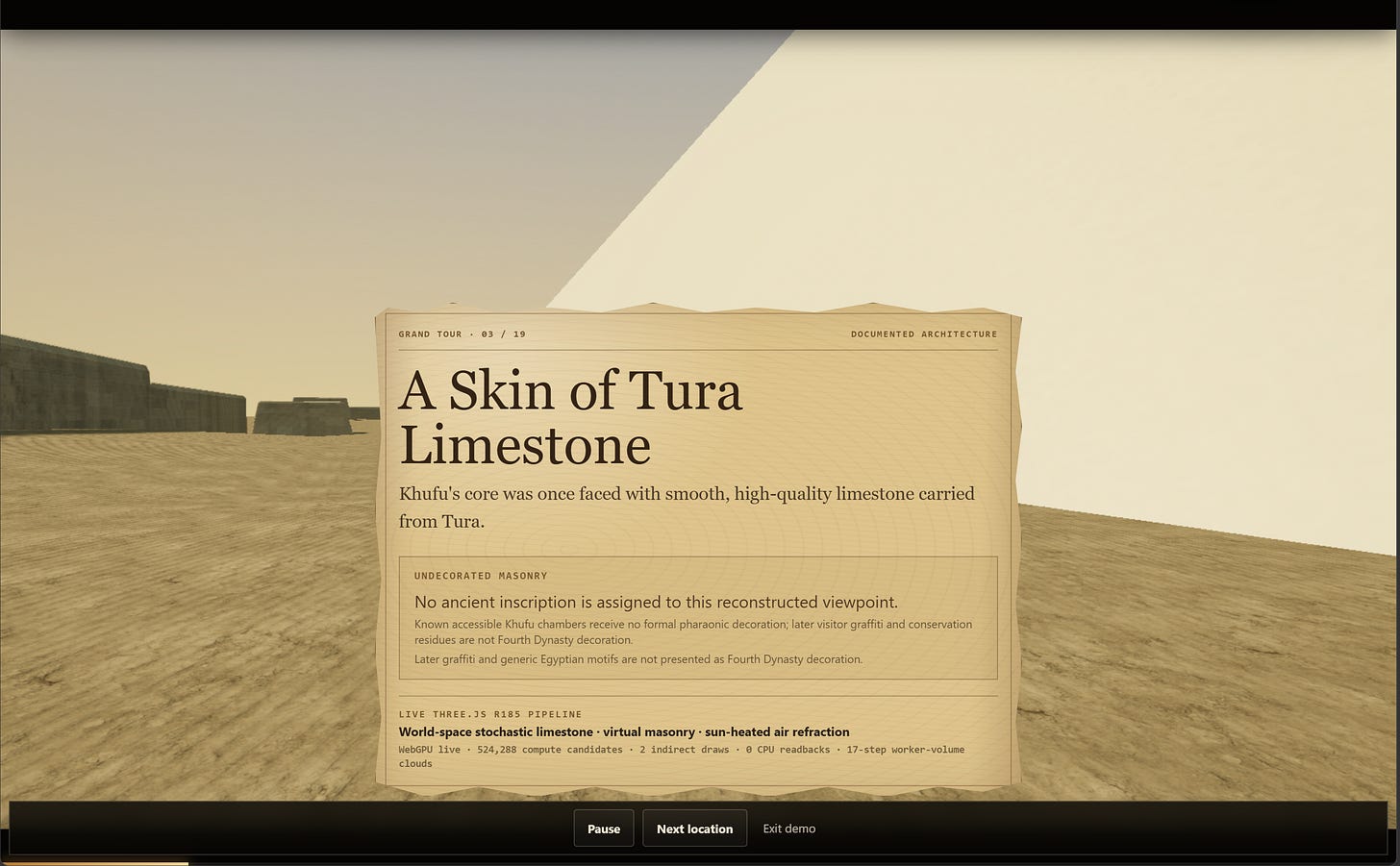
The guided tour takes you on the tour of the reconstruction. This includes on the inside of the pyramid, so you’re not just getting the exterior views but the entire construction of the pyramid. I estimate, having no real background in this, that maybe the accuracy level is higher than 30%, but far less than 95%. In looking over different photos I can see that the reconstruction is broadly accurate. It has me wonder what one could pull off with a better body of research and someone more versed in a given research domain.
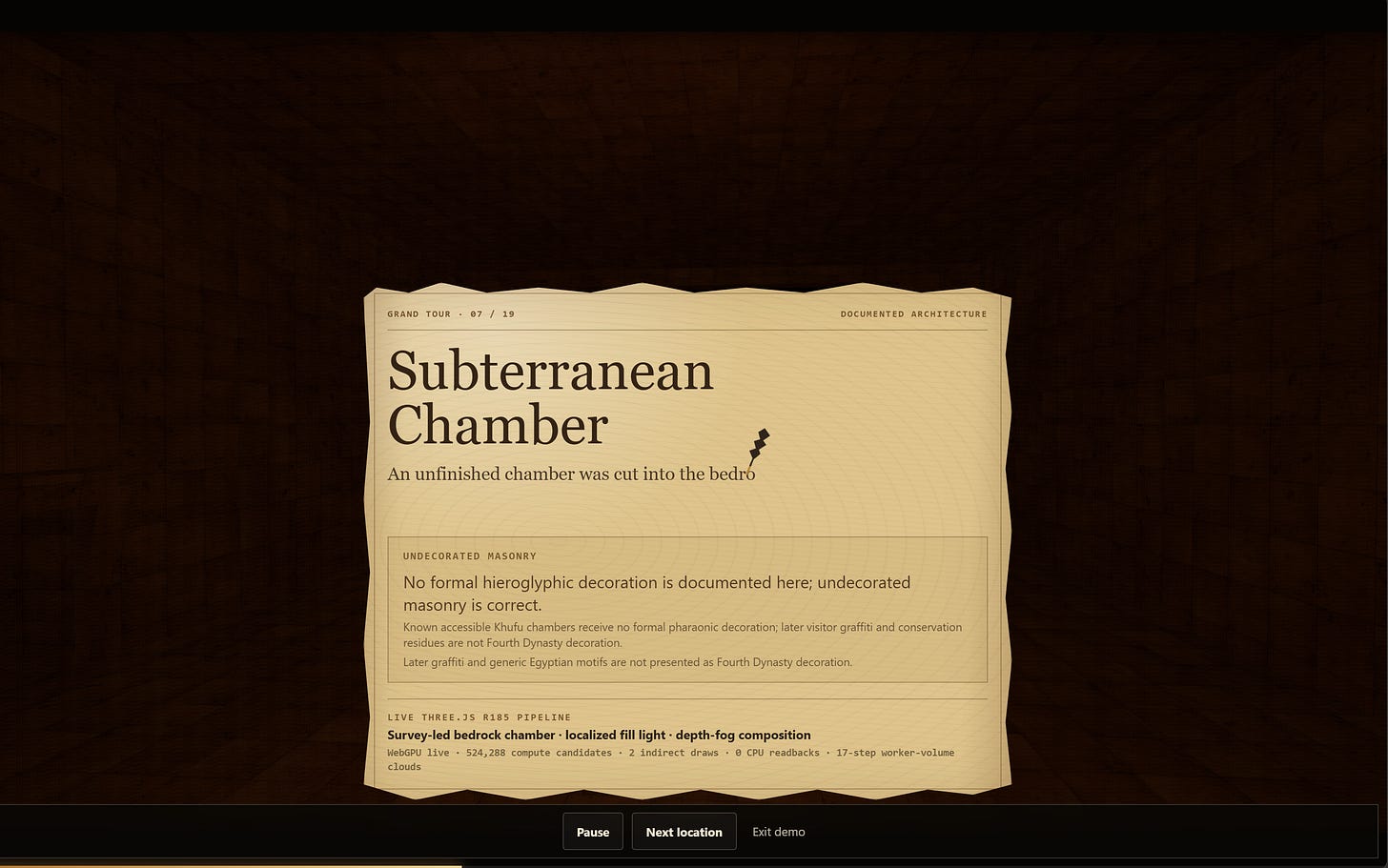

The Queen’s Chamber is the room that has given me the most pause, and what brought me around to the idea that the Khufu pyramid sure has this machine-like vibe. The construction of this room is quite strange-it could be the interpretation of AI, sure. It is, however, a weird trip thru the pyramid to free-form roam it (which you can do).
The Errors and Omissions
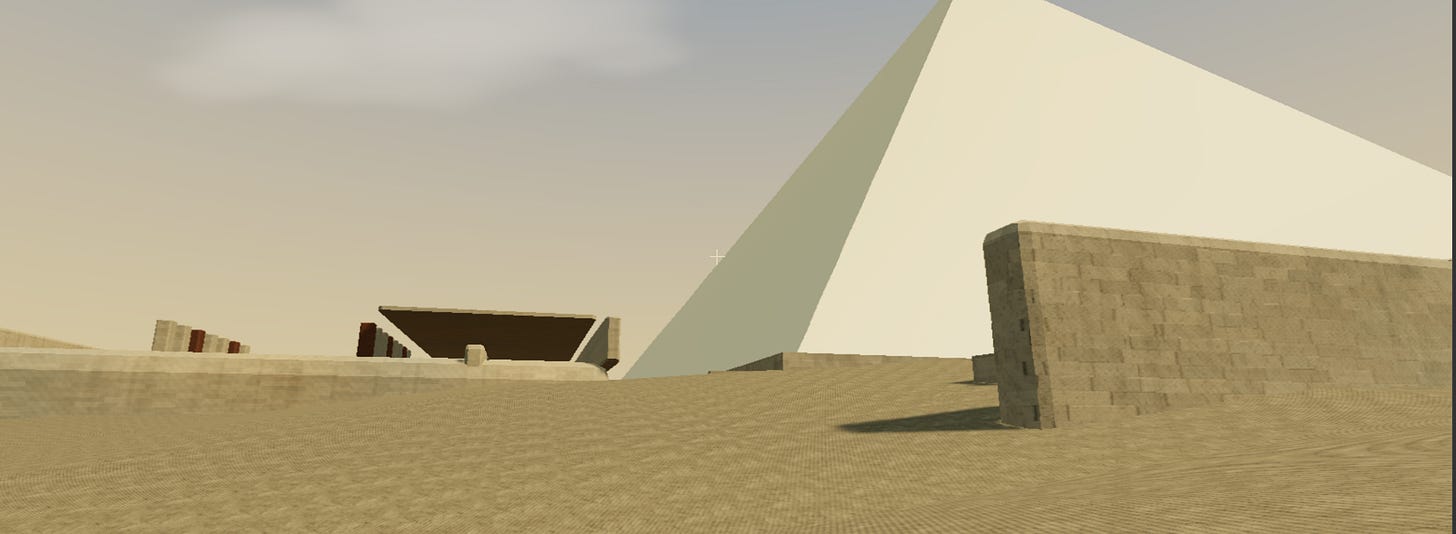
Geometry may just disappear into the sand. The above view had an entire construction that just went missing. This is the same scene if you stand in the area for a few minutes.
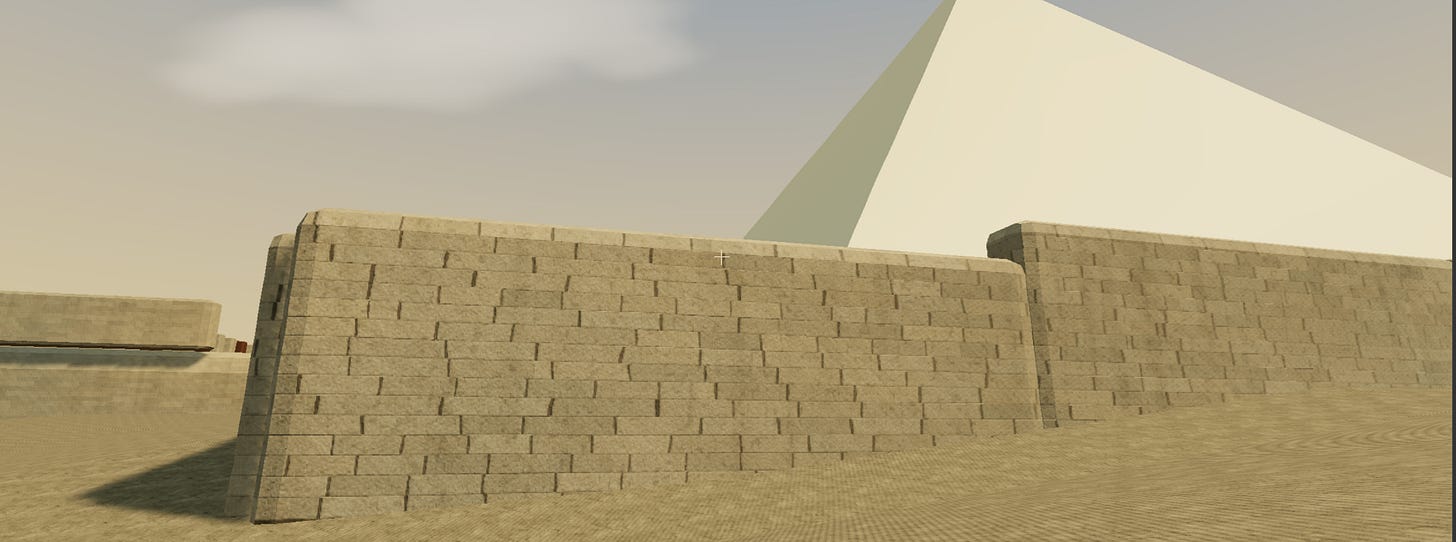
There are problems with this build, but it’s far enough over the “good enough” slop line that it makes sense to publish. The problems range from the simple things like “why don’t these passageways fully connect together” to exteriors that are flicking, missing or rendering bugs beyond. From time to time, the shader cache in the browser may even fully unload and all the great looking textures and effects just disappear. Some of the bugs are more irritating than the others, but considering the scale of this and that it runs in the browser? It’s at a good spot. Here’s what I mean. There’s so much of ancient egypt reconstructed in this scene, that even I haven’t found my way over to it all.
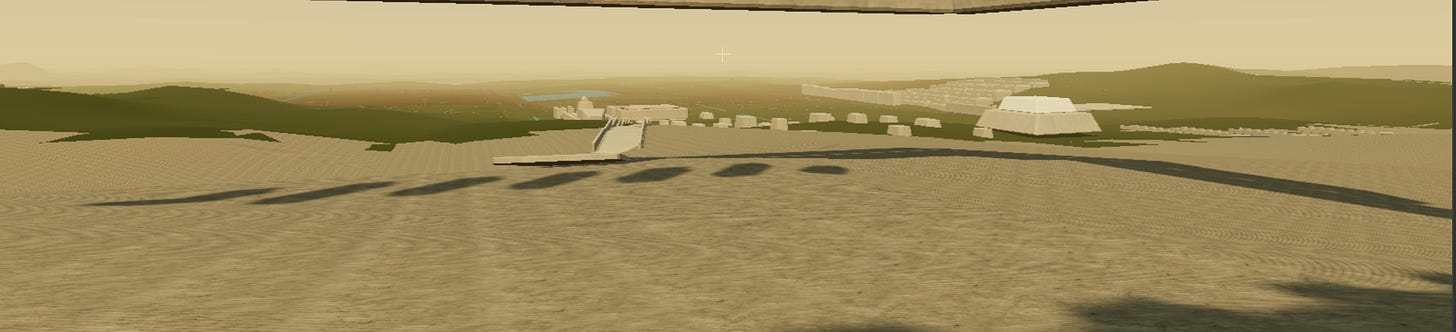
I gave the ai a pretty broad prompt about reconstructing the area from the research it found online. So who even knows what’s all out there.
Mobile vs Desktop
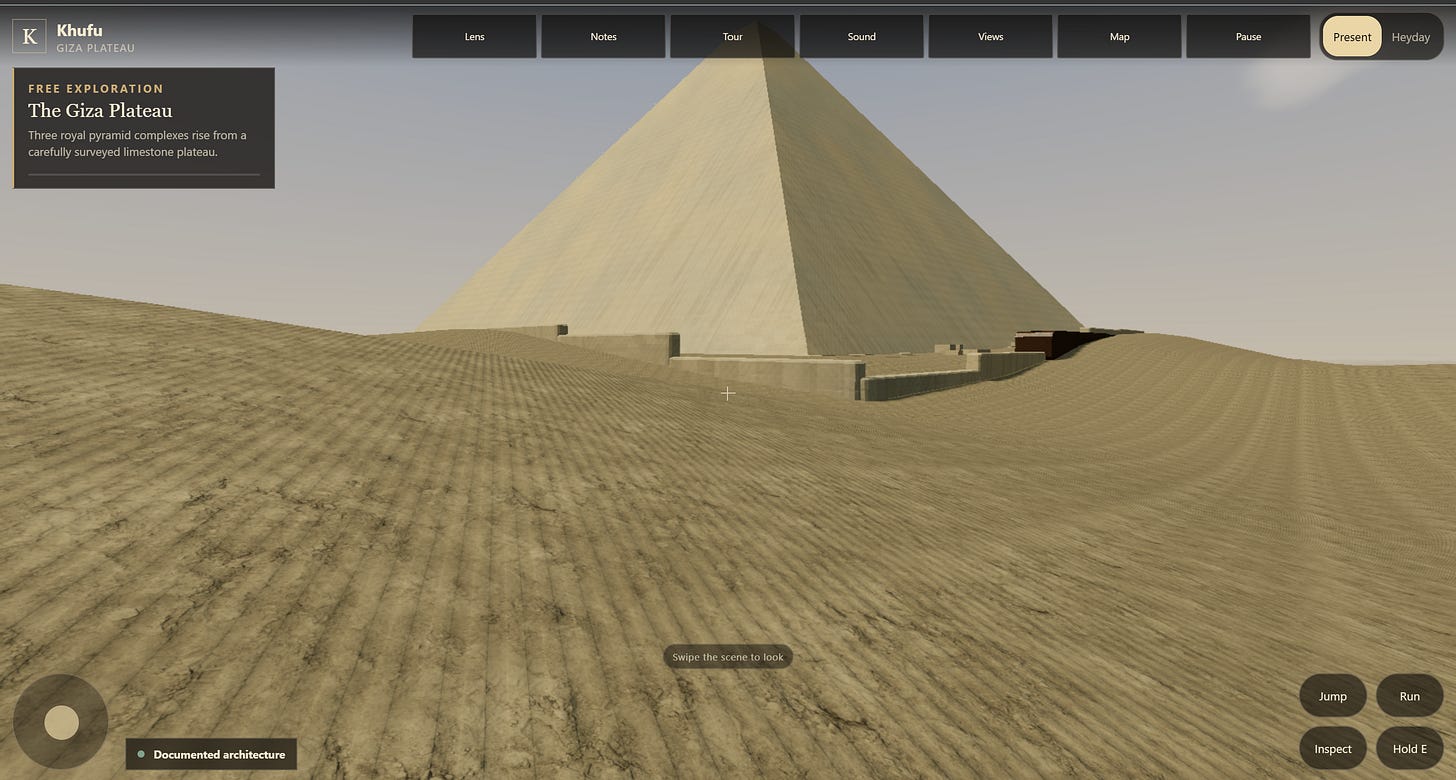
The mobile experience is in the category of “should work” and “tested on my phone”. However, I think the experience makes more sense on a desktop machine. The graphics are better for machines that can handle all the shader related work going on.
In the next article in this series I’ll start covering some of the chambers and other areas of the scene.
Connected work
- Khufu: Beneath the Stone: Read the project overview and its reconstruction policy.
- Launch Khufu: Walk the scale-led browser reconstruction of the Great Pyramid.
- Imagined Places for the Khufu Exhibit: See the concept images that explored the exhibit’s possible spaces.